23 August 2012

Review: Lipsynch

Lipsynch
Arts Centre Melbourne, Ex Machnia and Théâtre Sans Frontières
4 August 2012
State Theatre, Arts Centre Melbourne


Critics criticise because theatre this exquisite exists.

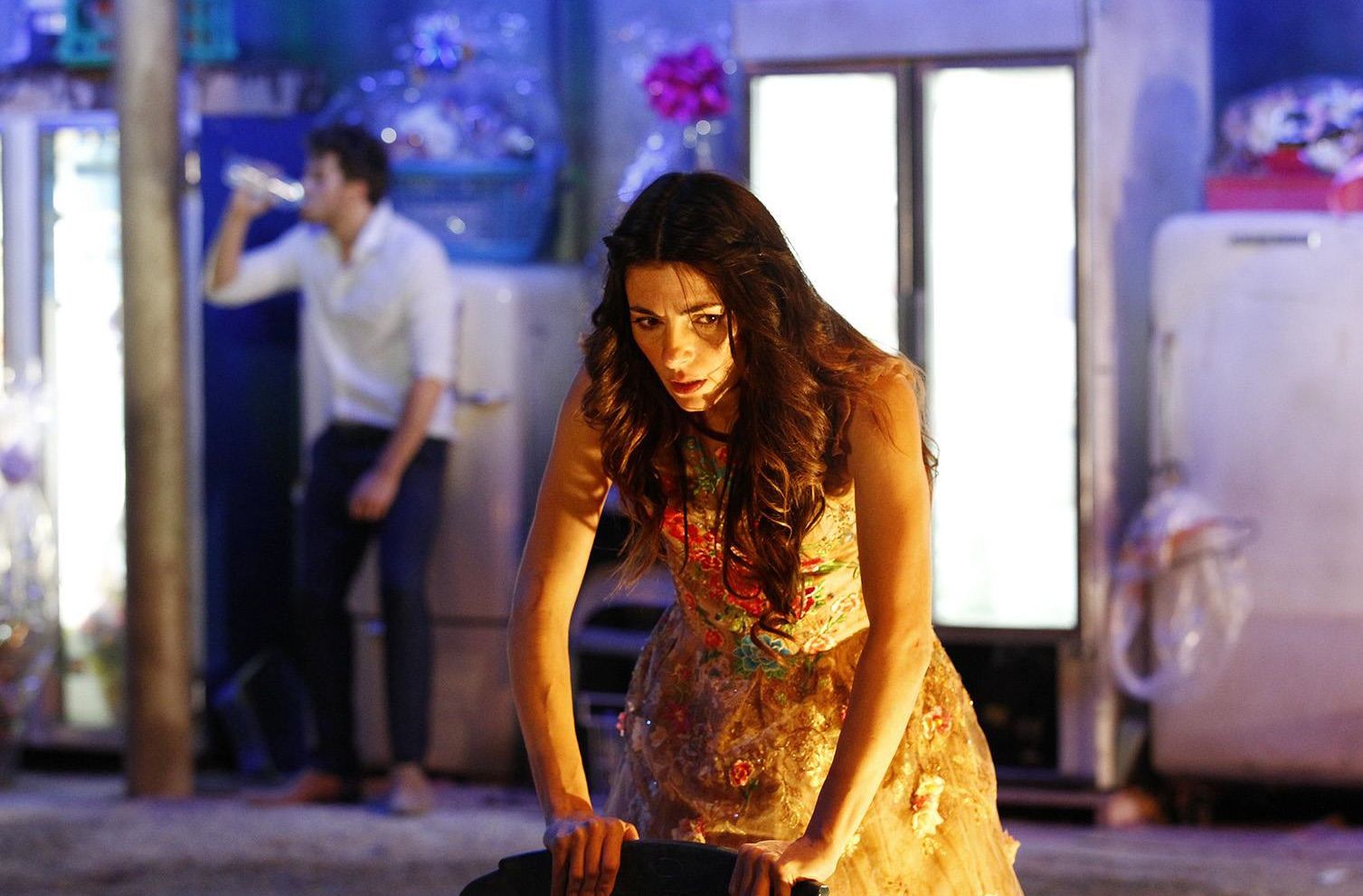
Robert LePage's Lipsynch asks for nine hours of your time, but there's no need to be scared. Unlike watching a box set or spending a day at work, there are intervals with time to talk with friends and strangers and to share a comradery that only those who were there will understand.

As Gorecki's harrowing "Symphony Of Sorrowful Songs" echos from a soprano's lone performance, a young woman is found dead in her plane seat, still holding her crying baby. What follows explores nine lives whose stories are explicitly or implicitly affected by this heart-breaking cry. Told in multiple languages, over many years and countries, some links feel tenuous, especially as false clues are planted, but as the ninth hour approaches, they come together with a mix of surprise and inevitability that demands complicity in its heartbreak and heals with its beauty.

Contrasting an intimate naturalism that feels like film and an ingenious design that celebrates theatre, Canadian director LePage and his performers/co-writers began the creation of this epic meditation with the human voice and the confusion between voice, speech and language.

Anyone who has sung or laughed or cried knows how a sound can say more than words can dare.  The themes are set with the dissonance of a controlled singing voice and the instinctual crying of the baby and move through sounds like lipsynching movies, a farting/groaning corpse, the voice of Kenwood appliances, a Scottish detective resenting his French-speaking sat nav, the voices inside a head and an unspoken story that begins in hour one and ends at hour nine.

Each is remarkable in its reflection on the voice and its transcendence over words and is delicately balanced by a different visual theme and theatrical technique for each of the nine stories. There's one that takes place mostly on public transport, one in a recording studio, one in a bookshop in the snow and one drives around London. Each is so different, that it's as exciting to discover the visual theme for each story as it is to find out whose story is being told.

It's story has often been described as high-class melodrama or soap, but this dismisses its complexity. It's coincidence and connections are so tightly written that it almost demands a second viewing just to re-visit all the moments that didn't seem important at the time, but came rushing back at the end

The cast play one of the central nine and multiple roles. Frédérike Bédard, Carlos Belda, Rebecca Blankenship, Lise Castonguay, John Cobb, Nuria Garcia, Sarah Kemp,  Rick Miller and Hans Piesbergen are the original cast and creators – with LePage and dramaturg Marie Gignac in 2007, when it was a eye-blinking five hours – and are performing in Melbourne. Their performances come from a knowledge of their characters that makes it easy to forget they are acting as they never bring undue attention to themselves or to the story's clues. 

If you've ever watched Buddhist monks make a sand mandala, the creators focus on the intricate beauty  and minutia of a segment before moving to the next. It's only when it's finished that the patterns and breathtaking beauty is revealed, then it's then swept away. Lipsynch reminded me of a mandala.

The detail and craft is astonishing, but its only at the end that it's almost perfect balance is revealed.

The biggest disappointment was the slabs of empty seats (shame on you Melbourne) and the unforgivable surtitle synching. There's no perfection in theatre or life, but I left Lipsynch somehow elated and drained and if I wasn't away this weekend, I'd go back for another nine hours.

This was on aussietheatre.com

just home response

14 August 2012

Review: The Pride

The Pride
Red Stitch Actors Theatre
29 July 2012
Red Stitch
to 18 August
redstitch.net


As Red Stitch's The Pride opens with a Philip Glass string quartet and two sharply-dressed men staring at each other across a spotless room, there's no hope that it's about a group a lions. And when a wife appears, it's all over red rover in terms of surprise.

Alternating between the UK in the 50s and the nows – although from the design it could be the 60s or 70s (were skirts that short in the 50s?) –  a threesome with the same names dovetail stories about how life as a gay man (with gorgeous hag, of course) has got better.

This positive and embracing premise supports characters who are full of doubt, fear and self-disgust and the production's passion for the "issue" is earnest and genuine, but The Pride doesn't move much further than the issue.

Director Gary Abrahams finds the moments of heartbreak and the balance of the humour, but with overly-passionate performances, the dialogue feels like a series of angry lectures, with the likes of the only-gay-men-understand-the-difference-between-emotional-and-physical-sex one, the AIDS one, the it's-ok-to-say-queer one, the how-dare-youngsters-use-gay-to-mean-something-else one and the deep-down-I-knew one.

The heart of Alexi Kaye Cambell's 2008 play (which won some impressive UK awards) and the emotional punch of its broken souls trying to find hope gets lost in the worthy lecturing. And who is it speaking to? If it's to silly old straight people who have no idea – they aren't in the audience to be told how small minded they are. It feels like it's yelling at the audience, "We're here we're queer: Get used to it", while its supportive audience are trying to say, "We know, we love you: Lets have a drink".

Ultimately The Pride is about honesty and being true to yourself with un underlying theme that defining anyone by their sexuality is ridiculous. And this is where this production is the most frustrating. There seems no reason for the attraction between either couple, other than they like cock. Without showing the love or the reason for the love, it becomes an eye-rolling night about men who are defined by their sexuality.

And it's all happening on a set that is so shabbily put together that its intelligent concept is destroyed by the glad wrap windows, tinfoil wall and stapled carpet. Sure a carpet flap and visible staples have nothing to so with the artistic integrity of a work, but why have anything that distracts from the world on the stage, especially something that is so easy to fix? The tiny things are like salt in a meal: when it's perfect, it's invisible, but too much or little ruins it.

I've already read The Pride described as a "gay play". Like gay marriage/relationship/anything (other than Golden Gaytime), this little adjective continues to support the notion that homosexuality needs to be defined because it's different and not normal. And that sucks. I don't give a toss about seeing a gay play; I want to see a play.


09 August 2012

Review: UnAustralia

UnAustralia
La Mama
1 August  2012
La Mama Courthouse
to 19 August
lamama.com.au


When the publicity for a show beginning with "I'm not a racist, but...", I get ready to say "I'm not a critic, but...".

Unaustralia is set on Sydney's Cronulla beach and explores a fictional story leading up to the race riots of 2005. It's a bit like Channel 10s The Shire, but with less botox and much better.

The night begins with sight of Ken Roach's design. It's one of the best I've seen in the Courthouse, with floating surfboards, sand and a beach wall that instantly transport us to seaside Sydney and surprises with its projections.

Here blonde Aussie Simone, Lebanese Ali and Aboriginal Mannie love their daily surf where they trade stories about losing their virginity and things that matter. Meanwhile Ali's brother, cousin and sister come from Punchbowl on weekends and end up fighting with the bikini/Speedo clad Shire locals, and a politician (with a heart of slime) and a SBS journo (mostly interested in her own breasts) take advantage of the racial tension.

With many storylines, Reg Cribb's script wants to cover so much ground that it's hard to find the character and story that draws us through its complexity. The strongest and most engaging story is the Simone–Mannie–Nadia (Ali's sister) romantic triangle, and the subplots about the pollie and his cronies could go without losing any emotional impact. Sometimes, stuff you love has to be cut to make a story better.

As expected, there's too much preaching to the converted (yes, racism is bad), but the core characters connect because they are more than their stereotype. However, this depth isn't equally applied to the  the mindless Aussie chicks and lifeguards, flag-wearing thugs and cartoony pollie.

This kind of work is created to change attitudes and show a truth that is too often ignored in our media, but it will only work everyone on the stage comes from a broad and honest base. Racist violence and intolerance isn't restricted to the stupid. As long as the audience think "well, that's not me", the message is lost.

The heart of Unaustralia comes from its large cast, who are passionate about its message and its truth. Opening night nerves brought some inconsistency and scrappy scene changes broke the tension, but all this will tighten up as the run continues and its belief that we can create a better place to live will glow.

Xavier O'Shannessy talks about performing in UnAustralia.

Photo by Ben Fon

This review appears on AussieTheatre.com

06 August 2012

Chat: Ben Grant, La Mama

The Shrink and Swell of Knots
La Mama
8–19 August 2012
lamama.com.au

Ben Grant created and performs in The Shrink and Swell of Knots, which opens at La Mama on 8 August .

A man starts building his own coffin, but decides to turn it into a raft in a work described as “an energetic, challenging and optimistic show about struggle, filled with music and ideas, practical information and poetry, transformation and grunt”.


What three words best describe your show?
Original, masculine and surprising.

Do you remember the first show you saw at La Mama?
The Wood Box in 1989.

What is one of your favourite shows you’ve seen at La Mama?
Coranderrk: We Will Show The Country.

I saw it a lot because I made the music.

What do you love about working at La Mama?
The people.

What do you love most about this show?
It’s mentally complex and physically simple.

Where is the best coffee in Carlton?
Tiamo 1.

Who would you love to see in your audience one night?
Mum and Dad, which is lucky as they’re coming.

What do you like to do after a performance?
Relax.

What was your first time on a stage?
When I was four, I played a god. It’s all been downhill from there.

Do you have any pre-show rituals?
A physical and vocal warm up.

What’s some great theatre advice you’ve used?
You don’t have to feel a damn thing.

What punishment do you think is fit for audience members who don’t turn their phones off during performances?
A bad credit rating.

What’s your favourite gelati flavour?
Nougat.

What role/character do you really want to play one day?
Pablo Picasso (stay tuned…)

Do you read reviews?
Sadly yes.

Do you know of any secret parking spots near the theatres (although it’s such a short walk from the Melbourne uni tram stop on Swanston Street, so driving isn’t necessary)?
Sadly no.

What are the best books you’ve read recently?
Theatre And The Body by Colette Conroy, A Scarecrow’s Bible by Martin Hyatt and A Study In Scarlet by Arthur Conan Doyle.

What question do you wish I’d asked?
Why did you write The Shrink And Swell Of Knots?

How would you answer it?
To see if it was possible to give a young person good advice.

This was on AussieTheatre.com

05 August 2012

Today is the last chance to go to Hell


Hell House
Arts House and Back to Back Theatre

Today is your last chance to go to Hell.


Hell Houses are American conservative Christian ghost trains that take participants on a devil of ride to  hell and beyond with visits to an AIDS funeral, an abortion, a teen suicide and all sorts of ungodly behaviour before the feathery white hope of angels and the saviour. 

They are thought to have been created in the 1970s and Back to Back's house is a staged version of Pastor Robert's Hell House, which is a downloadable script and kit. Presented at a "religious artefact", 50 community volunteers re-create it as the good Pastor decrees; it's almost like verbatim theatre.

The context of the staging and performance brings up far more issues than the content of the performance and each run ends with a forum. Provocation and Belief are over, but today's is about Morality.

I have much more to say about it, but best get along and experience it before the chance is gone.

Details

And a final word from Rowan Atkinson.

04 August 2012

Just home from Lipsynch

Just in from Robert LePage's Lipsynch.


I need a drink, a cry, a sleep or a dance before I can begin a coherent response, but can I simply say that the reason why people like me criticise theatre is because theatre this exquisite exists.

At the end I was somehow emotionally wrung out and elated.  (Make sure you have tissues.)

My friends and I couldn't stop talking about what we'd just experienced.

There were times when the audience were barely breathing and I've never seen a whole room gets to its feet in such unison to cheer.

LePage and company were last in Melbourne in 2010 with The Blue Dragon. I loved it and didn't understand the criticism of other reviews. Now I do, and if I'd seen Dragon after experiencing Lipsynch, I'd have been disappointed.

Yes, it's nine hours, but so is a day at work or nine eps of a TV series. There are plenty of breaks and I swear there was no one in that audience who wouldn't have happily sat for another nine hours.

Yes, it's expensive, but the cheaper tickets aren't much more than the MTC or the opera and it's like comparing a Fredo Frog to a hand-made Belgium chocolate decorated with gold leaf.

If you're involved in making theatre or telling stories in any way, do what you can to see this show, even if it's just to understand why critics are happy to criticise.

Lipsynch is on at the State Theatre, Melbourne Arts Centre tomorrow at 1pm and next Saturday and Sunday. Details here.

Arts Centre, with so many empty seats (shame on you Melbourne), is there something that can be done to get our arts community into them?

review

03 August 2012

Review: Eat, Pray, Love

Eat Pray Love
Barry Humphries Farewell tour
Dainty Group
19 July
Her  Majesty's Theatre
to 4 August
dameednafarewell.com


I have to let go one of my ongoing theatre dreams.

For years, I've fantasised about being picked on by Dame Edna. I've got purple hair, I'm from Adelaide, I lean towards mutton-dressed-as-lamb, go to the theatre and read  Eat Pray Love* before a trip to Ubud in Bali: I'm perfect Edna fodder.

But I wasn't what she was after (and I wasn't up the front).  And she's on her last tour. Unless Barry forces her back.

Barry Humphries is a unique mind who thankfully decided to use his genius for satire.

Since a meek and patriotic housewife called Edna appeared in 1955, his characters have left us cringing with embarrassed joy as we've recognised our relatives and friends and maybe refused to see ourselves in his astute grasp of Australia's culturally vapid middle class.

The night opens with Sir Les Patterson and a poo joke. And that's as classy as it gets. Sir Les welcomes us to his backyard in an Hawian shirt, a pair of Crocs and the familiar bulge that used to make my grandmother blush.  He's no longer our Cultural Attache and thinks he'll try life as a celebrity chef, so he squishes some Aussie rissoles, makes a good stiff Pavlova sound filthy, sings about how he can live without tumeric but won't say no to cumin, and there is no one else who can rhyme snow peas with slopies.

Sir Les really is the last who can do it. He's from a time when racism was funny. It was. I die a little bit every time I remember the jokes I laughed at as a child. We used to laughed with Les and what better farewell than to laugh at an attitude that deserves to be flushed away with his ongoing diarrhoea. And that's before the jokes about vagina decliners and a son-in-law joke that I thankfully wouldn't have understood as a child.

As we farewell Les, Barry introduces Gerry, a pervy priest who is entranced with Les's young Balinese pianist, but he's forgotten as Sandy Stone arrives. I was never a fan of Sandy, but his poignant and unexpectedly moving farewell has left him one of my favourites, who I'll think of every time I visit friends in Glen Iris or drive past the Essendon airport.

But it's Edna everyone wants to see.

She always has us at "Hello Possums" and it's impossible to be disappointed.

She's gloriously mean, wonderfully self involved and still quicker and sharper than anyone I can think of. No one else could make the colour neutral a highlight of the evening.

Eat, Pray, Love is a book by a middle class woman who travels to countries starting with I to eat and find herself a better shag than the one she left. Its self-indulgence is worthy of our Dame, who had to learn to love herself as much as we love her and brings images like the Dali Lama getting a back, crack and sack and jokes about unfashionable East Ubud. It was nearly worth reading the book to get the jokes.

If you haven't seen Barry live, you will regret it if you don't. He's been one of our greatest for over 50 years. Part of the fun of the live show is that patrons up the front will end up on the stage and if you're one of the lucky ones, you'll have a dinner story for life and a polaroid pic to take home and frame. The rest of the plebs just get to wave gladdies.

Eat, Pray, Laugh has nearly finished in home town Melbourne, then it's off to New Zealand and the Gold Coast before resting up for Adelaide and Perth early next year.

*And yes I am ashamed and refused to see the film.


Review: Blood Wedding

Blood Wedding
Malthouse Theatre
26 July 2012
Merlyn Theatre, The Malthouse
to 19 August
malthousetheatre.com.au


I wonder what Federico García Lorca would think about Blood Wedding being performed in Australia 80 years after he wrote it.

His work is so connected to Spain before the 1936–39 Civil War (it is believed he was assassinated by right wing forces days before the war broke out), but great writing comes from truth, and truth is what makes the personal universal. His writing doesn't need an understanding of the politics or the society it came from to tell its story.

Blood Wedding is summarised in its title. Young lovers want to marry, but there are old family issues and unresolved loves; it never offers hope that it's going to end well. For all its politics and anger, Lorca writes about suffering and grief and the utter absurdity of fighting over things that ultimately mean nothing when a love (partner/child/sibling/parent/friend) is destroyed. No wonder Lorca still reaches us.

Director Marion Potts connects the story to Spain with a bilingual adaption, by Ranters Theatre's Raimondo Cortese.  Even though this leaves most not understanding all the words of text and loses a fair chunk of the symbolism and poetry, it's a story that is easy to follow and the dual language gives a beautiful connection with the original writing that is rarely achieved with translation.

This duality of connection and contradiction is continued with a cast including prominent Spanish actors (Irene Del Pilar Gomez, Mariola Fuentes, Ruth Sanco Huerga) and locals (Silvia Colloca, Nicole De Silva, Ivan Donato, Matias Stevens, Greg Ulfan, David Valencia). There's an inconsistency in the overall performances, but it's endearing rather than distracting. Potts's direction seems to always start with character and by letting her cast find their unique connection to the character, the uneven passions always belong to characters.

The Sisters Hayes create the tone by bringing the languages and experiences together with a design that manages to be kitschly fun and dramatically epic. It somehow evokes the closeness of backyard urban Australia and the empty distance of rural Spain with vast wall of patterned bricks (made for Paul Jackson's always exquisite lighting), a row of fridges, a floor of dirt and the universal old-person floral recliner chair covered in protective plastic. Its intricacy draws the audience close and it contradiction instantly allows for the breathing space of laughs amongst the angst and inevitable grief.

I think Lorca would be astonished and proud and excited to see this production (and he'd love Melbourne). It's a production that shows the soul of Lorca and, even if it doesn't emotionally reach as strongly as it could, it's one to see for its understanding and connection and wholeness.

This review was on AussieTheatre.com

Photo by Jeff Busby


31 July 2012

Review: Triangle

Triangle
MKA
25 July
MKA Pop Up Theatre, North Melbourne
to 4 August
mka.org.au


Lesbian vampires. Do I need to say more?

Lesbian vampires in North Fitzroy.

A play with lesbian vampires, set in North Fitzroy, performed in an empty North Melbourne (really Kensington) warehouse by MKA. What more could you want?

And there is more. There's Piedimontes (the greatest worst supermarket), Chopper, Vince Colosimo, 4WDs that have never been as far as St Kilda, the guy who sells The Big Issue, the gardens where many a virginity has been lost and a soy-latte-addicted baby called Finnigan.

I love that theatre like this exists.

I love that its writing has been workshopped and developed and tightened,  and that it's creepy and beautiful and blood thirsty, and that its humour lets us laugh at our selves and inner-city community.  (Even if I transposed it to the Carlisle Street Coles in East St Kilda.)

I love that director Tanya Dickson (JATO) finds the theatre in the story's structure and works so closely with the design team.

I love that designer Eugyeene Teh has made another corner of this warehouse inseparable from this work and that he uses carpet squares. I love that Rob Sowinski's lighting and Russell Goldsmith's sound are such a part of the story telling.

I love that actors Elizabeth Nabben and Janine Watson found the dead hearts and bleeding souls of their characters and didn't let us dismiss their recognisable cliched outer selves.

Triangle is not going to be the work that takes writer Glyn Roberts (Horror Face) to the world (yet), but who cares when the world for many is that North Fitzroy triangle and it's captured with a mixture of cynicism and love that's as welcome as a marked-down fruit bun wrapped in plastic from Piedi's when you're really hungry and want to save your change for a pear cider later in the evening.

I love that Melbourne theatre is so much more than the ongoing big-worded tiff about Queen Lear and that The Triangle was so much better than staying in with a pizza and watching the Masterchef final, which is what I so nearly did.

You may now go and re-watch The Hunger and wonder why straight men think so much about lesbian vampires.

This review appeared on AussieTheatre.com

Photo by Sarah Walker


28 July 2012

Must for THIS weekend

This is a Door
Pop up Playground, Theatre Works
27 July 2012
Theatre Works
to 29 July


There are rumours that Cameron Woodhead and I tried to exchange a pash last night.

I'm not confirming or denying anything because what happens at Play Club, stays at Play Club.

But I know that it was the most fun I've had in a theatre and I want to go back and do it all again.

Pop Up Playground are Robert Reid (serious playwright), Sayraphim Lothian (public art guru) and  Ben McKenzie (uber geek). They've been playing about town for the last few months and This is a Door is an unmissable chance to join in with a weekend of games and play at Theatre Works.

It's time to run away from the computer and play with real people. Turn off your phone and play with real friends. Just join in and play.

The playground is Theatre Works space that's decked out as a carnival. Games Master Ben welcomed everyone in a top hat, tails and Dr-Who-as-owls t-shirt and introduced the Game Runners who will guide and help and tickle you if you're not laughing*.

Some games are easy, some involve thinking and strategising, some are cooperative and us competitive types are well catered for.

And if you need a break or just want to watch, there are craft tables. Craft tables!

I want craft tables at every theatre now.  We could make stuff while waiting for friends to arrive, craft is more fun than drinking at interval and how better to express your true feelings about a show than through craft. In fact, no more wordy dull reviews. Can someone just sit us down at a craft table at the end of an opening night (with a glass of wine, of course) and let our inner-children show what we really think. Forget the blog, maybe I should just have a theatre scrapbook.


But back to the games. Last night I got to ruin a gay wedding, pitched a big watermelon tourist attraction, was second runner-up for Prom Queen (and if I'd listened more carefully to the rules, I would have made it!), was turned into a zombie and ingeniously initiated into a cult.

And that was only a taste of the games on offer. I missed the intrigue of London's Burning (I was at the craft table) and so wanted to play the one with glow sticks and fluro vests and the one with balloons.

Today's 11.00 session has already started,
But there's 1.30, 6.30 and 9.00
Or tomorrow (Sunday)  there are 11.00, 1.30 sessions and Playful Salon (arty discussion of games and playing) at 3.30.

As grown ups, we sometimes forget how much fun it is to play and how much better we feel when we have real fun with real people.

All the details are here. I promise you'll love it. And if you know someone who really needs to smile and laugh, buy them a a ticket as well.

* This also may or may not be true.


25 July 2012

Chat: Xavier O’Shannessy, La Mama

Unaustralia
La Mama Courthouse
1 August – 19 September 2012

review
“I see their faces. They don’t care if ya surf. They don’t care if ya work with them. To them, you’re a stinkin’ terrorist.”
Unaustralia by Reg Cribb is a story about a devout Muslim teenager who loves to surf. When his brother fights with life guards, a too-familiar racial battle begins on an Australian-dream beach.

Cribb won the Patrick White Playwrights’ Award in 2001 and was shortlisted for the QLD Premier’s Literary Award for his play The Return, which he adapted into the AFI nominated film, Last Train to Freo. His 2003 play Last Cab to Darwin won the QLD Premier’s Literary Award, the Patrick White Playwrights’ Award, the WA Premier’s Award and the WA Equity Award for Best New Script.

Melbourne actor Xavier O’Shannessy is making his La Mama debut in Unaustralia. He says, “I wonder when we, as a country, will wake up and accept that – like every modern nation built on the displacement of an indigenous population and subsequent waves of migration – we face complex and ever present racial tensions. When will we stop sweeping our racism, bigotry and discontent under the carpet at every opportunity and covering it with half-truths about our so called tolerant, welcoming and progressive past?”


Do you remember the first show you saw at La Mama?
No but I do remember being blown away by the intimacy of the experience.

What is one of your favourite shows you’ve seen at La Mama?
The Hamlet Machine.

What La Mama show do you wish you’d seen?
Most of the ones that I’ve missed.

What do you love about working at La Mama?
This is my first time.

What do you love most about this show?
Playing a second-generation seventeen-year-old Lebanese-Australian rapper. It’s a huge adjustment and really bloody fun.

Where is the best coffee in Carlton?
Carlton Esspresso, or is it called DOC? Or are they two different places?

Who would you love to see in your audience one night?
Full houses would be nice.

Is there anyone you don’t want to see in the audience?
It would be pretty intimidating to look out and see any second-generation Lebanese-Australian rappers in the audience.

What do you like to do after a performance?
I don’t like feeling too full on stage so I don’t eat a lot leading up to a show. But I’m constantly hungry, it’s a catch 22. So, after a show, I get home, curl up in bed and gorge. Probably not very healthy.

What was your first time on a stage?
I’m pretty sure it was my primary school concert called Frame, from what I can remember, it was a redux of Fame the Musical but with lots of picture frames.

Do you have any pre-show rituals?
It depends on the show. Some times I just rock up, do my vocal warm up and head on stage. Other times I spend ages preparing. I try not to get too neurotic though.

What’s some great theatre advice you’ve used?
Don’t try. Either do it, or don’t do it.

What punishment do you think is fit for audience members who don’t turn their phones off during performances?
They should have to sit through every terrible school musical ever made, end to end.

What’s your favourite gelati flavour?
Please don’t make me choose. I can’t deal with choice.

What role/character do you really want to play one day?
One that gives me cause to quit my day job.

Matinees: love or loathe?
Eh, they’re not so bad.

Do you read reviews?
I’ve not had any. Are you offering to write one? Thanks!

Do you know of any secret parking spots near the theatres (although it’s such a short walk from the Melbourne uni tram stop on Swanston Street, so driving isn’t necessary)?
I suppose I should point out just how accessible La Mama is via public transport. This was the point of the question, right?

What’s the best book you’ve read recently?
You know, I’ve picked some real lemons lately. But I have this compulsive thing where I have to finish every book that I start. It can make bed time pretty frustrating. That said, Mother Tongue by Bill Bryson was interesting.

What question do you wish I’d asked?
Would you like me to give you $1415?

How would you answer it?
Yes, but don’t give it to me directly, donate it to our Pozible campaign. Here is the link.

This was on AussieTheatre.com

19 July 2012

Review: Queen Lear

Queen Lear
MTC
12 July 2012
Sumner Theatre
to 18 August
mtc.com.au


Queen Lear was always going to be a bitch to review.

Men and women are different beasts who adore and loathe each other because we see the world in slightly different ways. Shakespeare's women aren't as richly fascinating as his men, so the gender swap isn't that unusual (Kate Mulvany's recent Cassius comes to mind), but to do so successfully means that every relationship to Lear has to change in subtle ways that together change the story.

It's here that Rachel McDonald, as dramaturg and director, is most successful. Too often the on-stage relationships in Shakespeare are ignored for the sake of original character, but McDonald's Lear is led by the changing status and relationships that are often much clearer that her story.

The relationship between mother Lear (Robyn Nevin) and daughters Reagan (Belinda McClory) and Goneril (Genevieve Picot) starts with the bitter angry resentment that comes from not being loved enough by the person who's meant to love you the most. It's personal and touching and a father could not make Goneril cry in quite the same way. (I haven't mentioned youngest daughter Cordelia because I have no idea what was going on with her and gave up trying to understand.) The most unexpectedly moving relationship is between Kent (Robert Menzies) and Lear as Kent tries to protect and respect his Queen, and Greg Stone brings a surprising depth to his wheelchair-bound Albany by focussing on how his relationship with his wife Goneril changes.

Niklas Pajanti's lighting is exquisite in its creation of the void-like world and its momentary glimpses of characters as they came in and out of the dark. It made the stage look beautiful and intriguing and helps make sense of a design (Tracy Grant Lord) that baffles.

The stage has depth and levels that are beautiful to look at, but offer a confusing world. Maybe the hanging chains bound them to the gods; perhaps Edgar's bike and naked shower were his last hints of freedom – but why was there a giant phallus that grew and shrank and ejaculated pretty fools in white nighties?

McDonald's program notes say, "It is like a science-fiction world ... simultaneously ancient, contemporary and retro." This explains why the costumes were a bit Bride of Frankenstein meets Blake's Seven and Mad Men, but by drawing on so many aesthetics, Lear's world is merely a mish-mash of ideas that distract – often comically – from the telling of the story. It may be a stronger telling with just the costumes and the lighting.

But no matter what, it's Lear we go to see.

Robyn Nevin was always going to be Lear like no other. And she is. The night opens magnificently with a woman with undisputed power. She loves being Queen and the accompanying parties and gorgeous frocks; she never considers that her power will change when she splits the property between the kids. As the two elder daughters learnt how to behave from their mum,  everything is taken from mum and her anger mixes with dementia as she fights to maintain her mask and keep the hurting old lady hidden.  Her fool is placed in her head and appears as versions of her daughters who help create her lucidity in the madness; if only they didn't keep popping out of the giant penis.

For all the oddness of Queen Lear, when Queen Robyn is on stage, the rest makes more sense.

Photo by Jeff Busby

This review appeared on AussieTheatre.com.

NOW, head to TheatreNotes to read what everyone else has to say.

And Alison's reaction to Julian Meyrick's rant about the evils of the blogosphere.

(If the links hit paywall: Google.)