Showing posts with label Katie Sfetkidis. Show all posts

09 December 2019

What Melbourne Loved in 2019, part 6

Katie, Yvonne and Daniel are today's guests.

Every year, people tell me how they are angry at themselves for doing this in their head and not going any further. Remember that all it has to be in one moment (and everyone has their dodgy grammar edited). All you have to do is fill in this form.

Katie Sfetkidis
Artist, lighting designer


Katie Sfetkidis. Photo by Marcel Feillafe
 
Favourite moments in 2019.
2019 has been amazing , even though I was away for a large chunk of the year, I have still see some amazing work!

Raina Peterson and Govind Pillai's Third Nature. One of the most sensual and erotic shows I have ever seen. Just exquisite.

The Rabble's Unwoman. I love this company and I love this show. Visually striking and super political. I found this show incredibly complex and overwhelming. I have such great admiration for these company of incredible women and hope to be able to see this show again.

Sound art at The Substation. This programming at The Substation has been really wonderful this year, highlights wwereas seeing William Basinksi and Merzbow. I also really enjoyed the quirky cabinet of curiosities that was the Violin Generator.

Those who Rock by Joseph O’Farrell (JOF). What a rush! There was something so amazing about seeing hundreds of guitar players from around Melbourne take over the stage at Hammer Hall. Ultimate highlight was the finale; nothing can beat seeing over 300 guitar amps onstage whilst the audience sang along.

Looking forward to in 2020.
I am looking forward to seeing some exciting collaborations for Asia TOPA including post’s Oedipus Schmoedipus and Adena Jacobs's The Seen and Unseen.

Next Wave festival: I just love the theme for this year's festiva' – A Government of Artists and can’t wait to how the artists responds to it.

Also on my list is: K-Box by Ra Champan, Go to Hell with Paul Capsis and iOTA, Torch the Place by Ben Eltham and La Boite’s adaptation of St Joan of The Stockyards directed by Sanja Simic.

For my own work, I can’t wait to work with my best friend and collaborator Stephen Nicolazzo on Orlando and Loaded. Both these works are ultimate favourite texts of mine and it is such a treat to get to reimagine them for the stage.

SM: Katie has been out of Melbourne for most of the year, including with The Director, which was one of my absolute favourite shows from last year. But she was back for Aphids and Mish Grigor's recent Exit Strategies at Arts House. I loved this show for many reasons, including how Katie's lighting defined the distinct spaces on the stage – that corridor of light –, created mood and let us move in time. What we feel when we watch shows is so often created by elements of the design, and so often it's not noticed because it sneaks into our brains unconsciously.

Yvonne Virsik
Director, producer; Artistic Director MUST (Monash Uni Student Theatre)

Yvonne Virsik

Favourite moments in 2019.
Moments, with lots of realisations, in no particular order:

In Slaughterhouse Five, adapted from Vonnegut by Fleur Kilpatrick: when an actor drew a light switch on a blackboard, pressed it and turned all the stage lights off (MUST and Theatre Works).

Realising when watching MTC's Golden Shield that it was a new Australian work of epic scale by a young woman of colour (Anchuli Felicia King), and on The Sumner stage, and one of the best things I felt I had seen all year.

In Gender Euphoria (remounted at MIAF), during Nikki Viveca's monologue: realising that I didn't think I'd ever seen a personal story integrated so beautifully into a cabaret work.

Sharing the pure sheer, generous joy of performance from Jue and Poh in Equation at Signal at Melbourne Fringe.

UnHOWsed (Theatre Works, Tashmadada and Voices of the South Side): realising something on another level about homelessness, particularly during the extended shower sequence.

Those images in Colossus (Stephanie Lake, MIAF /Arts Centre Melbourne remount).

The joyous (seemingly spontaneous) concert in the alley after the final performance of Calamity Jane at Comedy Theatre.

Realising I was experiencing a pure, challenging discomfort in Malthouse's Underground Railroad Game.

Realising just what a brilliant job my table's 'personal banker' was doing, and how reliant we were upon them in the interactive game/performance experience of MUST's Do Not Collect $200 (created by Harley Hefford and team, based on a previous iteration).

Climbers at MUST:written by Elly D'Arcy and co directed by her and Natalie Speechley:  seeing one of the most compelling new texts I've read come to life.

When in the Q & A after A_tistic's Helping Hands at La Mama: man said the show had completely transformed his understanding of his son's neurodiversity and how he would endeavour to communicate with him from now on.

The train scene with the distressed mother and child in Anthem (MIAF): incredibly powerful and disconcerting.

Just some (more) of the shows I loved, in no particular order:

The Bloomshed's Paradise Lost at The Butterfly Club: hilarious, gloriously pointy and brilliantly realised.

Wake in Fright at Malthouse: Pure, electric theatre;the power of text, actor and director powerfully collaborating to crystallize their story.

Cock directed by Beng Oh at fortyfivedownstairs: the power of text, actors and director  collaborating to crystallize their story.

Love and Shit by Dee and Cornelius at fortyfivedownstairs: as above.

Sweet Phoebe directed by Mark Wilson at Red Stitch: as above.

Oil by Ella Hickson, directed by Ella Caldwell at Red Stitch: as above.

I'm a Phoenix, Bitch by Bryony Kimmings at  Arts Centre Melbourne in Melbourne Fringe: devastating story and performance.

Patrick Collins, Mime Consultant: a great, fun, smart, slick show from Patrick and his director, Justin Gardam.

Love + at Melbourne Fringe: a layered, beautifully told story about AI and human interaction

A View from the Bridge at MTC: See MTC, you don't have to have all the bells and whistles, just powerful choices.

Unwoman by The Rabble at The Substation: Those images! And incredible text and performances in act two.

Sublimal Massage by Marcus McKenzie at Melbourne Fringe: a super-sharp provocational unpackign of us and out attitudes to art and pop culture; surreal yet highly accessible.

The Drill by Womens Circus, AD Penelope Bartlau: A stunning, surprising, shared community experience; very special to get the tour of the spaces we didn't see during our particular journey.

Grand Finale by Hofesh Shechter at MIAF:  REQUIRES CAPITALS TO INDICATE ITS PURE THEATRICAL POWER!

Looking forward to in 2020.
You've heard enough from me - all of it!

SM: Yvonne's direction of Dishinbition by Christopher Bryant at MUST. Her direction lets the writer's voice be so clear and she finds ways for her actors (who are often relatively inexperienced) to bring the parts of themselves to the characters that complete the characters.


Daniel Clarke
Executive Producer, Programming at Queensland Performing Arts Centre; on leave from his role as Creative Producer, Theatre and Contemporary Performance at Arts Centre Melbourne
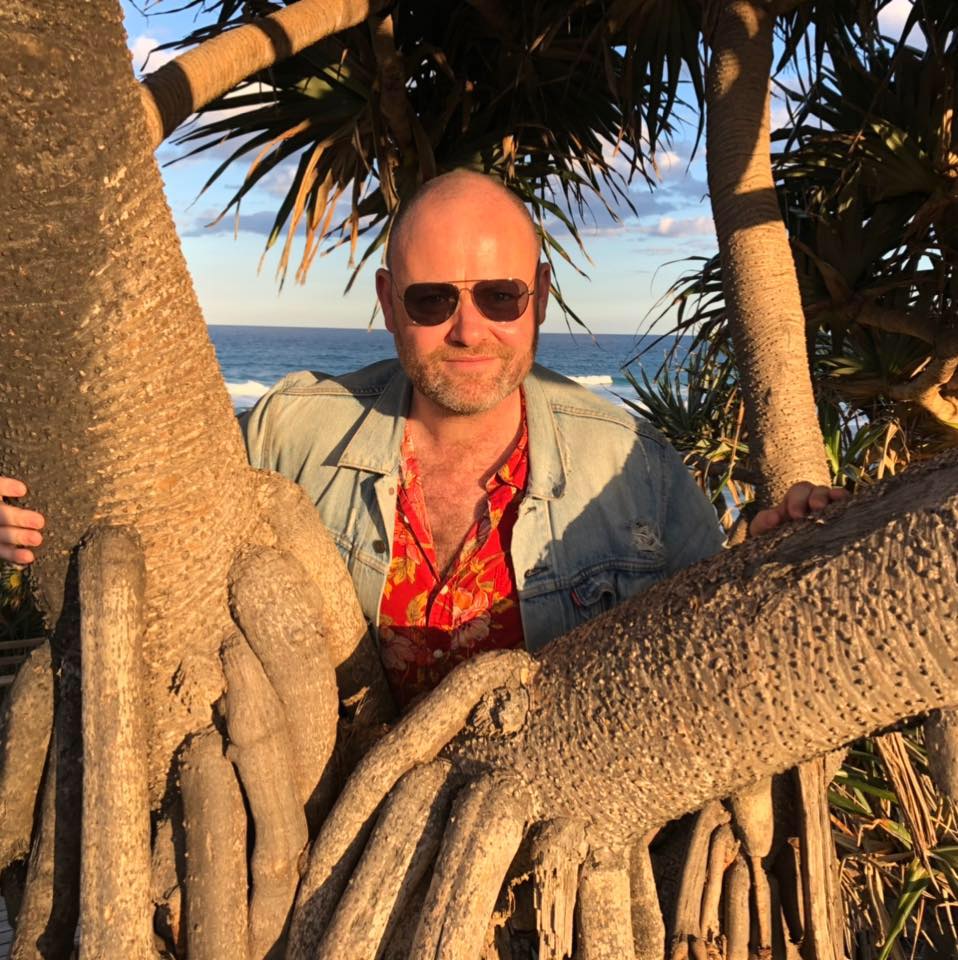
Daniel Clarke
Wake in Fright by Declan Greene and Zahra Newman at Malthouse was an extraordinary work; completely thrilling and so exciting. I literally had jaw-dropping moments throughout the whole piece and I left the theatre shaking. Incredible.

I was completely bowled over by Counting and Cracking by Belvoir at Adelaide Festival. I was moved to tears many times, but also to joy that this story was being told and grateful to Belvoir for investing the resources and care to make it. For me, this was one of the most relevant, contemporary Australian plays in years. A hugely ambitious work; a unique, inspiring, cultural collaboration; a great work that matters now. A work that can speak to so many people; a significant contribution to our culture.

Other highlights include Harry Clayton Wright’s Sex Education, Are we not drawn onward to a new era by Ontroerend Goed and Seasick by Alana Mitchel at Edinburgh Fringe; Noni Hazlehurst and Yael Stone in The Beauty Queen of Leenane at STC;  Battersea Arts Centre’s Frankenstein: How to Make a Monster; Things I know to be True by Andrew Bovell  at Belvoir Street; and Ainsley Melham’s performance in Kiss of the Spider Woman at MTC – what a star!

Oh and how could I not mention Harry Potter and The Cursed Child and Come from Away: both brilliant.

Looking forward to in 2020
Louise Bezzina’s first Brisbane Festival.
Michelle Law’s Miss Peony at Belvoir in Sydney.
Stephen Nicolazzo’s Loaded at Malthouse.
Sisters Grimm’s musical of The Sovereign Wife at Hayes Theatre Company in Sydney..


SM: To say that Dan's had a humongous year is still an understatement. Without him we wouldn't have had Gender Euphoria or Anthem or I'm a Phoenix, Bitch. He finds ways to bring the the best indendepdent artists and theatre to main stages and creates spaces where new work can be developed, never taking "it can't be done" for an answer.

02 August 2017

Review: Merciless Gods

Merciless Gods
Little Ones Theatre and Darebin Arts Speakeasy 
28 July 2017
Northcote Town Hall
to 5 August
darebinarts.com.au
littleonestheatre.com.au

Jennifer Vuletic. Merciless Gods. Photo by Sarah Walker

Yesterday there were only a handful of tickets available for Little Ones Theatre's Merciless Gods at the Northcote Town Hall, so they've snuck in an extra matinee on Saturday (August 5). Book now because otherwise you will have to go to Sydney to see it at Griffin in November. Really, it's that good.

Director Stephen Nicolazzo approached Melbourne-based author Christos Tsiolkas to adapt his series of short stories, Merciless Gods (released in 2014 but is a collection of older work), he said yes, and long-time Little One's collaborator Dan Giovannini wrote the script.

So much of the strength of Little Ones Theatre's work comes from an ongoing collaboration with a core group of artists. And, as an arts writer, it's been pretty amazing to watch this group of artists find each other and develop over the years. One of the many reasons to see new work and emerging artists is that rare opportunity to see how original voices develop in on our stages.

As all good Melbourians have read at least one of Tsiolkas's books (The Slap, Dead Europe, Head On), there's an immediate familiarity with Merciless Gods – the first story onstage story about five middle class friends could be easily re-cast from the audience. The work feels like being inside one of Tsiolkas's books, but what makes this adaption so remarkable is that it's nothing like reading Tsiolkas on the page.

There's no attempt to recreate the sense of place in his books. Tsiolkas evokes and uses place so effectively in his writing. Northcote, Brighton and Moorabin in The Slap could be no other suburbs, but as a reader you don't need to know where you are to understand the attitudes that define the area. On stage, place is mentioned but it's only seen through the design by Eugyeene Teh (set and costume) and Kate Sfetkidis (lighting).

With a colbolt blue wedge that literally stabs into the audience from a red curtain that's somewhere between blood red and fuck-me lipstick-red (Teh's use of colour to create emotion is always incredible), the eight worlds/stories place the audience as those merciless gods who watch and may want the unthinkable to take place in front of their passive gaze.

Instead of being comfortable in place, ranging from suburban backyard to a gay sauna, Giovannini's script lets us into the hearts and heads of the characters. There's no sitting back and letting environment control actions and this lets these stories find a humanity in people who are often ignored or seen as defective or inhumane humans.

These stories are about characters and people who are rarely seen on our stages and in our stories, or  those who are invisible or ignored in our lives. Along with the queer and Australian immigrant stories expected from Tsiolkas, are people whose circumstances or behaviours leave them fading or invisible. There's a middle aged woman dealing with her teenage son beginning to treat her like she's nothing, an older women watching male gay porn, a man in prison for a violent crime, a man who's chosen to end his life surrounded by his family.

Each are stories that confront – it's difficult to feel for someone whose behviour makes us want to ignore or hate them – but the production doesn't try to shock. Shock lets us distance ourself from characters. By finding common emotions and thoughts – we know the pain of grief, the irrationality of wanting revenge, the blindness of love –, it's much harder to say "that would never be me or mine".

All of which could fall apart if the cast (Sapidah Kian, Peter Paltos, Paul Blenheim, Brigid Gallacher, Charles Purcell and the incredible Jennifer Vuletic) didn't bring themselves to their characters. Again, they don't let the abhorrent or simply annoying behaviours of their characters create distance, and all find a personal connection with character that lets the audience find their own connection.

It's this connection that Nicolozzo ensures is always on the stage and this disturbs far more than anything the characters do. It's easy to connect with lovely people; it's confronting to connect with – and easily laugh with – people who you'd never look at in the street or are happy to pretend don't exist.


16 April 2015

Review: Meme Girls

Meme Girls
Malthouse Theatre
9 April 2015
Beckett Theatre
to 2 May
malthousetheatre.com.au

Meme Girls. Art Simone & Ash Flanders. Photo by Pia Johnson

YouTube is only ten years old. Like Facebook and Twitter, it's already hard to imagine life without it. And enough people have now grown up thinking that opening your life and your secrets to the world isn't strange. Meme Girls at Malthouse Theatre is about searching for identity by confiding to strangers on the internet.

Created by Stephen Nicolazzo, Ash Flanders and Marion Potts, the idea came from Flanders's 2011–12 solo show that was directed by Nicolazzo, Negative Energy Inc. For all its self-questioning and stories about his mum, Heather, and boyfriend, Daniel, the piece was unexpectedly defined by his performance of the Horse Woman from the tv show Judge Judy.

It was astonishing. Flanders captured the heartbreak of the woman and found the pin-head spot of balance where poignancy and parody meet to create something that transcends both.

This was a drag verbatim performance of a nobody talking to a camera that doesn't care about the death of her horses!

Meme Girls is more of this and then far more.

While it's not easy to distract from Flanders when he's on a stage, the design by Eugyeene Teh (set and costume) and Katie Sfetkidis (lighting) is equally as captivating and beautiful. Part–rabbit hole, part Bond-film opening sequence, part–da Vinci Vitruvian Man, it's pure theatre and nothing like a tiny YouTube screen.

And Teh continues his exquisite use of monochrome design: this year, it's aqua. Except Flanders who wears a white pair of tails, and his assistant, drag queen stage kitty Art Simon, in nose-bleed heels and a black corset that shows off an enviable chest.  

All with a re-mixed pop soundtrack by THE SWEATS where Flanders uses those years of fronting an 80s cover band to great use; his "Confide in Me" puts Kylie to utter shame.

But in this world, Flanders isn't Kylie, he's women from You Tube.

Meme Girls.  Ash Flanders & Art Simone. Photo by Pia Johnson 

He's women who have used this anonymous-not-anonymous platform to confide in the comfort of strangers and open themselves to endless abuse. From an atrocious singer who didn't make it though the American Idol auditions to a 68-year-old woman who's about to become homeless, their confessions and their genuine pain are fascinating. And even if we don't actively troll them, we've shared their videos and laughed at them. 

And this is where Meme Girls is unique. Whereby in Negative Energy, Flanders used the Horse Woman to talk about himself, in Meme Girls it's more like the woman are using him. Even though it's a showcase work, it's not about Ash. And even while it's far more about Nicolazzo and his vision, aesthetic and obsessions, the woman still control the mood and heart of the piece.

It's easy to laugh at the Meme Girls and it's easy to bask in the glorious camp-cum-high-art vision on the stage (and Ash), but it's impossible to forget the world where it comes from and to be left wondering if we're the mean girls.

This was on AussieTheatre.com.

28 August 2014

Last chance: Thérèse Raquin

Thérèse Raquin
Dirty Pretty Theatre & Theatreworks
sometimes last week
to 30 August
theatreworks.org.au

Photo by Lachlan Woods

With a raised stage, red velvetish curtain and promise of an interval, Thérèse Raquin makes Theatre Works feel as old-school proscenium-arch (without the arch) theatre as it can. As the curtain opens, the sense of occasion and the mixed expectations of hooped-frock theatre are immediate.

Thérèse Raquin was the first major novel (1867) by the Paris-based Émile Zola. Zola later wrote a play version and the story has been adapted for many films. Gary Abrahams wrote and directed this adaption of the novel.

Not-long-gone-20 Thérèse (Elizabeth Nabben) is married to her sickly and self-obsessed cousin Camille (Paul Blenheim) after living with him and his aunt (Marta Kaczmarek) since she was a child. They've moved to Paris where old friends (Rhys McConnochie, Edwina Samuels and Oliver Coleman) are found and Camille's friend Laurent (Aaron Walton) becomes Thérèse's special friend. When social and economic circumstances don't allow you to flee, there's only one option for the lovers: kill Camille.

Very influenced by Darwin, Zola's called his writing Naturalism because it's about the control and impact of social and environmental conditions. He said he wrote about temperaments rather than characters and asks if his characters could really choose how they behave given their circumstances.

It's easy to see his stories as unearned and predictable melodrama but remember that when Zola wrote, this type of story was new; we seen it so many times since because these tipping-over-the-top stories reflect a truth that continues to connect.

What makes this production so watchable and enthralling is that Abrahams's writing and direction find the wafter-thin balance in tone that lets the characters be real and recognisable enough to make their own choices (sorry Zola) while still being caught in a world they can't escape from. If the tone slipped even a semi-tone the wrong way, it'd be too much melodrama or too much documentary re-inactment. (It's not really comparable, but it reminded me of the first season of Downton Abbey: pure soap but riveting.)

The note-perfect cast maintain Zola's goal of not making any character stand out and each approach their performance with enough of now and themselves to ensure that their stories feel as real as they can. They're not showing us 1860s Paris, they're taking us to an 1860's Paris that shares our knowledge and sensibilities.

All are supported by a design (Jacob Battista: set, Katie Sfetkidis: lighting) that create a claustrophobic Paris flat that feels both light and gloomy and transforms to a water-filled lake with a touch of simple genius. There's just enough room for Chloe Greaves's hooped skirts, which also ensure that we know it's a production about today. And all are led emotionally by live original music from Christopher De Groot.

Thérèse Raquin is big-story, big-skirted, historical naturalism that never feels caught in the conventions or expectations of big-story, big-skirted, historical naturalism. It finishes on Saturday.


19 February 2014

Review: Evolution, Revolution and the Mail Order Bride

Evolution, Revolution and the Mail Order Bride
8 February 2014
fortyfive downstairs
to 16 February
fortyfivedownstairs.com


Performer–composer–singer–writer Zulya Kamalova's Evolution, Revolution and the Mail Order Bride is three stories about three women that explore how the suppression of the feminine affects evolution, a revolution and a mail order bride.

Kamalova is a remarkable talent. Her voice is like an indulgent homemade caramel that no one can say no to, she lets her characters be their unique selves, and her music made me feel a bit like it was the 1920s and she was contemporary of Kurt Weill. Her composition is more personal and broader in style to Weill (and she writes her own lyrics), but he was the first composer I thought of when I heard her four piece orchestra (Erkki Veltheim, Charlotte Jacke, Justin Marshall and Donald Stewart).

Director Maude Davey has brought as much meaning as possible to the piece by working with a complex design (Adrienne Chisholm) that sprawls around the fortyfive downstairs carven like a lost op shop in a forest and creates some mesmerising visuals with projections (Michael Carmody) and lighting (Katie Sfetkidis), but, for all that is beautiful and complex about it, there's little sense of story in the interwoven lives.

Telling us what happened isn't a story. Telling us what you believe isn't a story. This work seems so intent on being a lesson (that's explained on the poster and told to people who are already on side), that it's difficult to find a way to care about and connect to the characters and their lives because their plot is so controlled.

Kamalova enchants with her songs and music, but maybe there's enough character, emotion and heart in every song to share what needs to be told without the explanatory monologues.

Photo by Sarah Walker.

This was on AussieTheatre.com.

17 November 2013

Review: Summertime in the Garden of Eden

Summertime in the Garden of Eden
Sisters Grimm and Theatre Works
10 November 2013
Theatre Works
to 16 November (and then to GriffinTheatre in Sydney)
theatreworks.org.au


Last year, the Sisters Grimm put on a show in a backyard shed in Thornbury. They pushed the crap aside and brought in some op shop curtains and folding chairs. It was nigh on impossible to get one of those seats and Melbourne was split into those who saw Summertime in the Garden of Eden and those who did not.

But – praise be – Summertime's deep south has returned to Melbourne's inner south and there might be some tickets left for the Theatre Works season, but get in quick because ticket sales prove that missing it isn't an option, unless you go to Sydney for the Griffin season.

Declan Greene and Ash Flanders formed the Sisters because they were bored to tears by the dullness of mainstream  theatre. From making venues out of any available space, they're now being invited onto mainstream stages (Little Mercy recently went to the STC and The Sovereign Wife was created for the MTC's Neon program), but they have consistently ensured that they embrace the extra budget and broader audience with the same mix of disdain and love that got them there in the first place.

Summertime (written by Greene and Flanders) is a Gone-With-the-Wind-cum-Tennessee-Williams Georgia. The rumblings of war and change are heard, but mean little as Daisy Mae (Agent Cleave), Big Daddy (Bessie Holland), Mammy (Genevieve Giuffre) and Daisy's beau (Peter Paltos) prepare for the return of prodigal sister Honey Sue (Olympia Bukkakis).

Saying more about gender, race and class (and theatre audiences) than a posh university full of earnest arts students, their shocking secrets are revealed in a story that makes perfect sense in the world where debutantes have full beards and a golliwog doll is cheered.

And, being a Sisters's show, it's tear-wiping painfully funny. It's not easy to laugh at the likes of Big Daddy's abuse of Mammy and the revelation of what Honey Sue saw in the greenhouse, but it's impossible not to.

Following the shed-chic of its first outing, first-time Sister and designer Marg Horwell had to create a new world to bring it into a theatre.  In this south, the cotton is high, the horse is crocheted and the flowering plant holders are macrame, and – along with Katie Sfetkidis's emotion-churning lighting – this overwhelmingly beautiful world re-defines high-camp trash with a look that's as outrageously glorious and sharply intelligent as its writing.

And the costumes! From Mammy's white trash wigger garb to dangerously swirly hooped dresses and a finger licking Big Daddy, the costumes show character with a glance and suit each performer so much that it's hard to imagine anyone else wearing them.

And the cast! With Greene's direction keeping the story tight and forcing everyone to the edge of no return, they balance a pin head between caricature and originality that teases with its familiarity and turns to run squealing into the unexpected. And their endless pain and repression is shriekingly funny.

I loved the backyard chooks and VB fridge of the shed show, but all little Sisters grow up to discard their training bras and dance in a bigger world. Summertime in the Garden of Eden is as shocking and hilarious as any of their earlier works, but they've transformed their atrocious aesthetic into something exquisite.

This was on AussieTheatre.com.