30 June 2009

Avenue Q

Avenue Q
Arts Asia Pacific
4 June 2009
The Comedy Theatre


Strip down to your felt, put your finger “there” and be as loud as the hell you want, as you joyously scream for Avenue Q. Or at least click away from the porn for a minute.

We’ve been waiting, we’ve been hoping and now Melbourne has seen Australia’s first Avenue Q - and it was worth the wait. Too often the big shows have had the life and soul McDisneyfied out of them, but this Avenue is as fresh Lucy T Slut, as original Brian’s joke and as nasty as Mrs Thisletwat.

If you haven’t heard “It sux to be me”, “If you were gay”,  "The internet is for porn" or “Everyone’s a little bit racist”, Avenue Q is Sesame St for grown ups, with people and puppets, monsters and humans all living on a less-than-posh New York street.

As the Street is about learning about life, so is the Avenue. And there are still plenty of lessons to be learnt once you’ve left college, be it about unemployment, homelessness, racism, swine flu or what you’d do if you were the cutest little black kid on TV and became a broke has-been by the time you hit puberty.

The Q subversively exposes the layer of our lives that suck (suck as in “bad”, not as in suck like Rod’s girlfriend from Canada – who sucks like a Hoover). But schadenfreude (don’t worry you’ll learn all about it) always makes us feel better, and there’s plenty of misfortune to laugh at on the Avenue, as love can go wrong, you’ll have no purpose in life, be worried about being a homo-whatever and or be stuck with a fucking BA in English – and I’m not talking about the audience..

Under the mighty fine direction of Jonathan Biggins, the Australian cast are a dream, all following the lead of Mitchel Butel as Rod and Princeton. Every time I see Butel on a stage, I want to join the Mitchel fan club and force lesser performers to sit and watch him until they too begin to get what being on a stage is all about. Even with his hand up a puppet, you forget about the performer and only see the character.

Avenue Q will let you laugh til you cry and cry til you laugh. I’m still singing “Fine, Fine Line” and think I want to stop shaving and grow a layer of all over fur, just so I can hang out with the Bad Idea Bears and surf the net with Trekkie.

Or just see it for the sex. And yes, now you can click back to the porn.

This review originally appeared on AussieTheatre.com.

A Commercial Farce

A Commercial Farce
Malthouse Theatre
14 June 2009
Beckett Theatre, CUB Malthouse


I was a bit worried when A Commercial Farce opened with a “you being perfect and me being crap” phone call between a husband and wife, but then came the banana skin, the whack in the nuts and the breaking of the number one comedy rule.

I keep missing Peter Houghton’s plays. I don’t mean to and I will make sure that I don’t miss another one, because A Commercial Farce is the best piece of theatre comic writing I’ve seen in a long time. What bliss to sit in a theatre and just laugh and laugh and laugh.

It’s the night before opening night and director Bill (Houghton) is trying to force-rehearse TV stud Jules (Luke Ryan) into his first stage role, a “pay by the laugh” commercial farce by Crackburn.

Anyone who has ever worked with a cocky, young telly actor will wiggle in their seat with recognition, if only for the moment when Bill explains the innuendo. Ryan’s Jules is a horror. He’s everything cringeable about celebrity, good looks and no real talent. And to create such a perfect monster, reveals the Luke as the Jules’ antithesis. Only the very best actors can create credible bad acting.

On stage, Houghton is just as perfect as Bill, who is over the thrill of theatre, but knows too much to get out. Houghton wrote Jules and Bill as the two sides of himself. There’s a slab of “Oh my God I’m middle aged” indulgence in Bill, but it’s balanced by the youthful smugness of Jules, leaving quite a balanced playwright in the middle!

Bill screams at Jules that audiences don’t care about theme and form - they care about character and story. I want to snog Houghton for the observation, but even more so because A Commercial Farce is a never-ending joke about theme and form that never forgets the story or the characters. Under Aidan Fennessy’s meticulous (so good it’s almost invisible) direction, the timing, the expectation and the jokes are never allowed to overpower the two men. The heart of this work is the two people at the centre of the whirlpool of jokes, and we don’t want either of them to be sucked in and drown.

This review originally appeared on AussieTheatre.com.

The Birthday Party

The Birthday Party
Melbourne Theatre Company
24 June 2009
Fairfax Studio, The Arts Centre


Once a creator’s name has become an adjective, it’s difficult to approach their work without falling into a pit of cliché or frustrating audiences by avoiding expectations – but MTCs The Birthday Party successfully avoids being Pinteresque, whilst capturing the essence of this unforgettable work.

Some folk don’t like Pinter. I’m not one of them, but I am wary of approaching new productions. With well known, and over-studied plays (from Shakespeare to Brecht to Miller), it’s rare to see a production that doesn’t try so hard to re-interpret, over analyse or completely re-think the intent and purpose of its writing that it gets lost in it’s own quest for originality.

As this Party has re-located from generic-UK to generic-NSW coast, there is a degree of Australianising and tweaking of Pinter’s script, which includes The Canberra Times (an odd, but quite funny choice for a seaside community to read), wonderful souvenir tea towels, town names changed, the inclusion of an Indigenous language poem and an Australian cast.

There are new layers explored and revealed, but its gift to us is its simplicity. Without obvious over work and comparison, this Birthday Party feels like no one else has done it before. Julian Meyrick’s direction masters a pace and tempo that feels natural, but is always under his precise control, allowing him to create the all-important sense of unease.

The cast show us their characters if they were written just for them. Their on stage relationships are intimate and complex, their world is real and we care about every one of them. Gregory Fryer and Pauline Whyman bring an often missed likeability to Petey and Meg – I could have watched these two talk about breakfast for hours. As Goldberg and McCann, Marshall Napier and Glenn Shea balance humour and mystery with menace and threat, and Jada Albert's (Lulu) is on her way to being one of our best performers. Which leaves Stanley. Isaac Drandic’s performance is good but, compared to the rest of the cast, it felt too “acted” and too controlled. Stanley kept jolting us back to the play and away from the story.

The uniqueness of this production brings a freshness to Pinter’s work, without losing the truth that lies in its confusion. It’s a wonderful introduction to one of the most influential western playwrights of the late twentieth century, a production you dare not miss if you love the work, and one that may even convince detractors to re-think their opinion.


This review originally appeared on AussieTheatre.com.

Burlesque Hour Legends

Burlesque Hour Legends
Finucane and Smith
25 June 2009
forty five downstairs


I’m searching for a superlative that hasn’t been used to describe The Burlesque Hour. Reviewers from all over the world rave every time this show appears. Created in Melbourne, it’s back home as The Burlesque Hour Legends and I’m trawling my thesaurus for any word that comes near to grasping the wildness, the sassiness, the spectacle, the irony and the understanding behind the show that continues to leave my brain wet and wanting more.

The term burlesque is readily applied to anything that shows a bit of nude and, too often, this results in moments that leave some of the audience feeling uncomfortable, inadequate or just sad that women continue to let themselves be seen as something less than a whole person. It’s not easy to take the exploitation and the wank factor away from strip.

This is where director Jackie Smith and performer Moira Finucane stepped in and, with other like-minded performers, perfected a style that has re-defined burlesque as political, inspirational and liberating. Strip is, of course, about exposure, but the exposure of bodies doesn’t compare to the exposure of secrets, of longings and of the unexpected. It’s still also totally hot and squeal-out-loud hilarious.

Don’t give it a miss this year because you’ve seen this show before. Legends is mostly new material and has an overall more rounded and complete feel about it. The regular performers explore some of their favourite themes from new perspectives and new guests try out their ideas. This does mean that some of the most loved moments are missing, but the new compensates for the loss of the old.

Yumi Umiumare’s new pieces are extraordinary. With characters including a lost and manic Tokyo pop singer and an office worker (or an executive) trapped in a suit of regret and longing, her Butoh inspired choreography is unsettling in its ability to grasp the essence of a character and expand it to a point that it’s almost overwhelming. I’m looking forward to her solo show at Malthouse in August.

Maude Davey changes the pace with dancing words, discussing her grandmother’s cunt, and her faded showgirl’s “Say Goodbye” must be what Mark Seymour’s unconscious was thinking when he wrote the urban anthem.

Then there’s Moira Finucane, whose new Veil act may well be responsible for making smoking an acceptable social habit again. With Jackie Smith, she continues to create work that challenges every boring and clichéd notion of femininity and sexuality. Her electrifying grotesques are powerful, terrifying and disturbing, but they affirm that the real grotesques are those who want women to look like 20-year-old size 0s, cook like their mums and fuck like blow up dolls.

And that’s just week one and two! The Burlesque Hour Legends changes every two weeks. The incredible Azaria Universe returns on July 12, as the marvellous Maude leaves, along with swinging Jess Love. But plan for at least three Burlesque trips in order to see the special guests. The blissful Paul Capsis joins the girls from 9 to 19 July, then Toni Lamond (yes Toni Lamond!) will be confirming her own legendary status from 23 July to 2 August. Which only leaves until July 11 to see Ursula Martinez. Ursula has been seen at La Clique with her nearly-ethnic dilemma and her perfected the red hanky strip, but she brings more to Legends, with an opening act that sets the room on fire.

Photo by Jodie Hutchinson

This review originally appeared on AussieTheatre.com.

18 June 2009

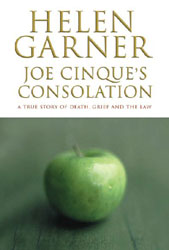
Book Review: Joe Cinque’s Consolation

Joe Cinque’s Consolation
Helen Garner, 2004, Pan Macmillan, Australia
June 2009

http://www.bookdepository.com/?a_aid=SometimesMelbourne
“I can’t promise to write the book you want, Mrs Cinque’, I said. ‘I’d have to listen to both sides. I would never want to do anything that made you suffer more – but I can’t promise not to – because whatever anyone writes will hurt you.”
Helen Garner, Joe Cinque’s Consolation
On Sunday 26 October 1997, Joe Cinque died from an overdose of Rohypnol and heroin. He died in the bedroom of his inner-suburban Canberra townhouse, after a dinner party where his girlfriend, Anu Singh, had told her friends she was planning to kill herself. Singh was convicted of his manslaughter, and her friend, Madhavi Rao, was found not guilty of any charges relating to his death. When Helen Garner’s book Joe Cinque’s Consolation was released in 2004, Singh was on parole, Rao was living overseas under a new name and Cinque was still dead.

“Joe Cinque is dead” is the mantra guiding Garner and her reader through her book. After five years of research and deliberation, Garner wrote her story, describing the trials and the characters with a personal narrative that reflects on the case, the law, her involvement with the families and her ongoing dilemma about whether to write and what to write about.

Intertwined amongst the facts and the dramatisations are glimpses of Garner’s life, including her recent divorce, her new flat in Sydney, her demented mother, her taxi drivers and even the affront to her ego when Dr Singh (Anu’s father) dared to suggest that he could help pay for the publication of a book.

Garner positions herself as a “normal” person reflecting on the nature of the legal system, and it is this position that sets the tone of her book and directs the attention and sympathies of the reader.

What is the crime?

Writing an investigative, non-fiction or true crime book gives an author the freedom to approach a story differently from the factual reporting of a print journalist. Generally written after an event, true crime writers tend to have the enviable knowledge of hindsight, a full public record and the personal accounts of those involved.

With the “whodunit” question usually already answered, author’s try to answer a “why” - why they “dunit” or why the system failed. Garner was unable to answer why Singh killed Cinque or why no one stopped her, so she questioned the legal system and the nature of justice.

The assumption of innocence?

The Australian legal system is built on the assumption of innocence. Australian arrestees “have the right to remain silent”, with the burden of proof on the prosecution to establish guilt. Singh and Rao did not have to prove their innocence, so and neither spoke at their trials, denying reporters, spectators and Garner their voices or perspectives.

The cases were tried in the ACT, which allows the defense the choice of a jury or judge trial. Singh and Rao’s defense teams chose a judge over the emotional decision of a jury. As Justice Ken Crispin made his decisions based on the evidence presented, Garner questions the laws of evidence, such as why the prosecutor’s psychiatrists could not examine Singh, but her defense team had full access and therefore able to present more credible evidence. The answer remains that Australian courts assume innocence, but the emotions of a grieving family blur its clarity.

Garner’s “fantasy of journalistic even-handedness” gave way when the system supported the silence of the defendants and when Singh and Rao maintained their rightful silence by denying Garner’s interview requests. At this point, Garner describes her decision not to write the book and lets the reader believe that her decision was overturned by a meeting with Maria Cinque (Joe’s mother) and what, may have, started as a true crime reportage book, became a quest, as Garner told The 7.30 Report in 2004, to “restore some dignity to Joe Cinque”.

Getting to know Joe?

Joe Cinque’s Consolation is about Joe Cinque. He is described by his family and friends as a loving, devoted and loyal, and Garner never appears to seek any alternative opinions.

The same rose-coloured glasses are not applied to Garner’s portrait of Singh. Garner describes her first impressions of Joe and Anu from a photo in a newspaper.

“He held his chin up with a shy, almost defensive smile, while the girl in his embrace turned her head to beam into the camera with the ease of someone accustomed to being adored and to looking good in photos…Anu Singh raised my girl-hackles in a bristle. Joe Cinque provoked a blur of warmth… These were my instinctive responses, and over the ensuing years, as I hacked a path through this terrible storm they remained remarkable stable.”

This photo was printed in a newspaper and easily found on the internet, but is not reproduced in the book. With the exception of a small black and white picture of Joe, there are no photos in Garner’s book (which is unusual for true crime), which leaves the reader with little choice, but to accept Garner’s descriptions and interpretations.

Getting to know Anu?

Family and friends recount Joe, but there is no corresponding portrait by people who love Anu. She is described by her appearance on the security tape after her arrest and as a woman wearing high heels and adjusting her hair at her trial.

Garner’s descriptions of Singh and the dramatisations of the events leading to Cinque’s death leave a negative, almost stereotypical, picture of a cold, manipulative, irrational woman – a character designed to raise a reader’s “girl-hackles”.

Singh’s verdict and sentencing were based on a defense of diminished responsibility due to psychological illness, but Garner gently dismisses the medical evidence by joking with the “young journalists” covering the trial that eating disorders and paranoia are normal for 20-somethings. She reports the medical evidence, but never lets the reader get close enough to explore or understand it.

She distances and distracts the reader further by comparing her own adolescent choices (her manipulation of men and her decision to hide an abortion from her parents) to Singh’s behaviour. This cleverly leads the reader to compare their own life choices to Singh’s and search for a time when they behaved irrationally. Garner assumes that her readers cannot see themselves taking a life.

Hearing Anu?

On the release of the book in 2004, Anu Singh was also very aware that her voice is missing from the account and was interviewed, in her parent’s home, by Phillip Adams for ABC radio’s Late Night Live.
Adams shares with Singh that her character in the book is “terrifying” and that “Lady Macbeth comes off better”. Singh admits that she can see herself in Garner’s “unfortunate”, description, but it’s “very exaggerated … because she hasn’t spoken to me and she decided on what I was like by a photo”.

Singh insists that she would have been happy to talk to Garner, but that her request (documented in the book) came at a time when she was physically and mentally unable, and wishes that Garner had asked her again.

Singh’s real voice in the radio interview is quite different from her dramatised voice in the book. Her Australian accent doesn’t place her as Indian (a fact regularly discussed by Garner) and she speaks with a rationality and calmness denied her semi-fictional self. Adams’s interview continues to seek the same answer denied to Garner and he asks Singh why she killed Joe Cinque. Singh answers:

“There’s absolutely no legitimate or rational motivation at all. And the few days prior to that, my memories of it, is still a little bit hazy and the details are sketchy. But, I can’t. It’s terrible being in a state of mental health wellbeing, and trying to put myself back there, and determine what was going on and what I was thinking.”

Singh gives the same answer put forward by her defense seven years earlier.

Would Maria kill Anu?

Adams also interviewed Joe’s parents, Maria and Nino Cinque. After watching them at the trials and sitting in their Newcastle home with Garner, the Cinques’s voices are recognized like old friends. They tell Adams that they are “very happy” with Garner’s book and the story they share with Adams is almost exactly that which Garner reports.

They are naturally still in pain, they still want justice and do not believe that Singh was “sick”. Singh told Adams that she was interested in pursuing a program of restorative justice and he brought a message to the Cinques:

Phillip Adams: Well as I said, I bring you a message from Anu, who extends to you her profound regrets and wants to in fact involve you, if it were possible, in a restorative justice program, and your answer is No?

Maria Cinque: No way, no. She can rot in hell, forever. She said she was going to kill herself, what she is waiting for?I
In Garner’s book, Garner records Maria Cinque’s declarations that she would run over Anu Singh if she saw her on the street and wishes Singh would follow through with her talk of suicide.

Much of the book questions the inaction of Singh and Cinque’s friends as Singh talked about Joe’s death. The case attracted so much attention because “farewell” dinners held at Singh and Cinque’s house. She had often talked of suicide and even discussed taking Joe with her, but none of the friends in contact with Singh over that week did anything to stop her, even when it was known that she had injected her partner with heroin.

Rao was the only friend charged, while others were called as witnesses. Again, Garner dismisses the process of the law that deemed these friends and acquaintances free from responsibility or legal guilt. She dramatised conversations and events leading up to the death, based on the evidence presented in the courts, rather than reporting the facts third hand, bringing the reader as close as possible to the situation where these young people appear incapable of doing the right thing.

The friend characters are young, intelligent law students, studying at Australia’s national university, and some involved are practicing professionals today. Garner is appalled by the “gross fact” that women trade sex for drugs and draws attention the homeless, “junkies” wandering Canberra’s Garema place. Her description of drug users is hopeless, mindless and wasted people, and she does not appear to believe that a heroin user can be a middle class, active member of our society – let alone an intelligent student.

Drugs were a part of Singh’s university and social culture. No one involved seemed shocked or concerned about Singh’s drug use or her talk of suicide, as it wasn’t considered unusual. Singh herself said she was surprised at how many people talked about suicide with her.

Viewed from a point after the death of Cinque, it is easy to see when and how people could have stepped in and possibly prevented his death, but according to the evidence, no one believed that Singh was ever going to act, seeing her erratic behaviour as a result of her eating disorder and her drug use.

Clearly Garner believes that Maria Cinque had no real intention of running over Anu Singh, as this conversation is reported as a poignant reminder of the mother’s grief. Garner doesn’t stop Maria Cinque from driving a car, as no one stopped Anu Singh.

Conclusion

Despite the legally conclusive results of Anu Singh and Madhavi Rao’s trials, Helen Garner does not know why Joe Cinque died and wants her readers to question the justice received by his family.

Singh’s right to remain silent and her decision to remain silent leave little room for Garner to present an opinion that could see her positively or even with empathy or understanding, and Rao is discussed as someone totally in Singh’s control. Even without their active participation, there was evidence and opinion that could have led Garner to different conclusions, but it is doubtful that alternative conclusions would have pleased the Cinques.

The writer’s journey through Joe Cinque’s Consolation vividly describes the Cinques’s grief and the senseless nature of Joe’s death, and she joins his family in their anger towards the legal system and their belief that justice has not been served. Her personal reflections and observations bring the reader intimately into her personal experience and ensure that the appealing and loving Joe Cinque will not be forgotten by anyone who reads the book.


Review of Criminology, a play based on the same case.

30 May 2009

Someone Who’ll Watch Over Me

Someone Who’ll Watch Over Me
West East Theatre

10 May 2009
fortyfive downstairs


An American, an Irishman and an Englishman walk into Beirut and find themselves locked in cell together for four and a half years.

Based on real events, Someone Who’ll Watch Over Me is the premiere production of West East Theatre, formed by Trent Baker and Richard Stables. This internationally awarded work by Irish dramatist Frank McGuinness is an obvious choice for actors wanting something hearty to grow facial hair for and, at nearly three hours, this piece of black, gritty realism is an actor’s dream script – but, as a watcher, I felt left out.

Someone Who’ll Watch Over Me explores how Adam (Stables), Edward (Baker) and Michael (Ezra Bix) survive their brutal incarceration. The cellar-like atmosphere of fortyfive downstairs is the perfect venue to create a sense of dank claustrophobia, so I wonder why the design made the place look so big and airy. It’s hard to feel their lack of space when the windows behind them make the cell look endless and the wall of light is a joke once it’s broken. As the cell felt too big, the captors lacked threat. There wasn’t a sense of “them” – their abductors – and the work could just as easily have been three blokes stuck in a cellar waiting for the zombies or the aliens to move away from the door.

I want to know why this was a story for me. I’m aware that I’m not a middle-aged man locked away, but this is a work that freely explores abandonment, frustration, boredom, hatred, family, love, friendship, freedom and loyalty – all of which are for me – and everyone else. The interpretation seemed so caught up in being real, that the big picture, the universality, was missing. The direction and performances seemed to concentrate on the micro of each scene, even each line, so that that the macro was lost. It didn’t take long to be able to predict the earnest hand gestures, the conscious pace and rhythm, or the moment when a performer would actively look away – because he’d stared too long at another actor and that wasn’t natural.

Each scene was so meticulously created, that it lessened the impact of the work as a whole. When music was unexpectedly used to underline emotion, it distracted from the emotion, as it had no place in the world already created for us and had not been established as part of the language. The night seemed so much about the performances, that the story was secondary. Even if they were the greatest performances ever; if we’re just admiring actors, rather than watching characters we care about and being drawn into their world – what is the point?

This review originally appeared on AussieTheatre.com.

The Delusionist

The Delusionist
La Mama

9 May 2009
La Mama Theatre

Director, Lauren Clair, and performer, Curtis Fernandez, developed The Delusionist as a response to well known contemporary communications that were monitored, edited and interpreted for us by media. The concept is great, but I’m not sure that it’s a piece of theatre.

Dressed in a formal tuxedo, Fernandez deconstructs “speeches” by presenting them out of context as just their words. Among others, we get to hear George Bush’s response to the 911 attacks, Robert Farquharson’s interview with the police (after he escaped, but sons died after their car drove into a damn), our Nicole’s Oscar acceptance and our Kylie’s pop hit “Locomation”.

It’s fascinating to hear these words again, but without the passion, conviction and emotion of the original telling, they all felt kind of flat (yes, even “Locomotion”!) and as most were well known, or at least their speakers were, I immediately filled in the original context.

I was searching for some connection between the choices. Some were written, some were conversations or interviews, one was from a book, one was a mime and one was written by Stock, Aitken and Waterman for a soap starlet. There were only three that I would classify as a “speech”. The best connection I could come up with was that they were known to a certain type of middle aged, middle class urbanite who might regularly attend La Mama. As for ending with a “speech” from the dramaturge’s play - it just didn’t make sense, as it had no context for the audience to relate to and felt a bit like it was trying to show us what a “good” speech was.

Intellectualising aside, Fernandez’s performance is enjoyable, appealing and a lot of fun, but I couldn’t figure out what I was meant to be watching.

This review originally appeared on AussieTheatre.com.

The Keeper

The Keeper
La Mama

9 May 2009, season
La Mama Theatre


Never doubt the power of simple, evocative story telling. Like the best bedtime story or campfire yarn, The Keeper gently lulls us into a beautiful, mysterious world and never leaves out the scary or the sad bits.

Chrissie Shaw and Penelope Bartlau developed a tale about the desolate life endured by families on Australian lighthouse islands. This life is viscerally created with a bath of white sea-salt rocks, found objects, undecorated Matryoshka (Russian nesting) dolls and Connie.

As the trusted narrator, Shaw tells us Connie’s story, with tales of loss, hope, danger, despair and acceptance. Shaw is the only person on the stage, who never asks or expects us to watch her perform; but helps us to travel to the islands and discover their secrets for ourselves. The skill of amazing narration is to be forgotten, and it’s Shaw’s strength and consistency that let us care about a non-descript wooden doll.

Director Bartlau creates depth and impact through the simplicity of the objects and puppets. The Keeper is never about re-creating a storm or death, but about giving us the essence of each experience, so that we can create the emotion for ourselves. The striking poignancy of a handful of red rocks is enough to create a silence that is only worn away by the wave-like sound of the moving salt rocks.

This is theatre that respects its audience and trusts in the power and originality of the watchers’ imaginations.

This review originally appeared on AussieTheatre.com.

Optimism

Optimism
Malthouse Theatre, Edinburgh International Festival, Sydney Theatre Company and Sydney Festival
30 May 2009
Merlyn Theatre, CUB Malthouse


When the next generation of theatre writers wax lyrical about Australian Theatre in the mid- to late-noughties, the Kantor-Malthouse style will not be forgotten. Since 2004, Kantor has led Playbox to Malthouse and invigorated one of Australia’s favourite companies.

Kantor’s style is to re-fashion a classic work with a very-now re-write, cast a well-known performer (preferably not an actor) alongside some very experienced ones (preferably with names like Barry, Alison and Francis) and some great newcomers, throw in a collection of songs from Kantor’s CD collection and hope that Anna Tregloan can design it. Sometimes it works a treat (Sleeping Beauty) and other times I’m left wondering (Woyzeck).

In Optimism, Voltaire’s Candide gets the Tom Wright script treatment; Frank Woodley is the outsider; Otto, Whyte and Greenslade are on board; 40-somethings cringe because we know the words to Haysi Fantaysee’s “Shiny Shiny” and growl because the program notes didn’t list the right name of The Go-Between’s song; and Tregloan let the stage fly with a wonderful use of giant fans and plastic curtains.

All the top-notch ingredients are there, but I was still left wondering.

The songs are a hoot and the performances worthy of Australia’s Got Talent - but do they serve the story? The mix-tape of contemporary music in Sleeping Beauty showed character and moved the story, but here they felt like they were chosen for their joke value, or to let an unused cast member sing, or to prove that Barry Otto knows he can’t dance. The took us away of the story and each time it was harder to come back to a point of empathy and caring.

Story telling is about caring. Now I’ve loved Frank Woodley since he was a Found Object back in the 80s and find myself singing his “get on the bus” ad each time I get on a tram. ‘”Frank” is one of our great comic characters and was the ideal cho ice for the optimistic and confused Candide. But it’s still Frank. Frank talks to the audience, improvises beautifully, causes his fellow-performers to giggle and lets us all laugh at the fun he’s having – but then it’s back to the “play”, and it’s still Frank we’re watching, not Candide. It’s hardto care about Candide, when we know it’s Frank playing. Woodley is a terrific performer and I would love to have seen what Optimism could have been if he’d been given some really strong direction and been made to leave Frank outside with a pile of comics and one of those never-ending packets of Tim Tams.

No artistic director will ever please us all or get it right every time. I don’t like every decision Kantor makes for Malthouse, but I love that he takes risks, nurtures our independent companies and lets some incredible artists shine. What frustrates me is that I can see what he wants his shows to be. I can see the thought process, the ideas, the research and the intelligence behind his choices, but too often the amazing show that is running in his head, isn’t running on the stage.

Optimism is off to the Edinburgh International Festival in August and will be at the Sydney Festival next year. Works like this need time with audiences to settle and develop, so of course I’m optimistic that the festival audiences are in for a treat and hope that I get the chance to see what it becomes.

This review originally appeared on AussieTheatre.com.

A Little Night Music

A Little Night Music
Opera Australia

15 May 2009
State Theatre, the Arts Centre


I had never seen a full production of A Little Night Music until now and Opera Australia’s version has supported my wonder at the Stephen Sondheim’s mastery, but it wasn’t this production that convinced me of its greatness.

As a remount of the original 1973 Broadway production (directed by Hal Prince), Opera Australia’s version is worth seeing for the historical value. The gorgeous and slightly ironic design still colours and supports the work perfectly and the evening lets us see how fulfilling and rewarding A Little Night Music can, and should, be.

Sondheim tears through to our souls and grasps the real emotions that drive us. A Little Night Music is about lust, passion and love. Act 1 oozes sex: Madame Armfeldt tells her granddaughter how she shagged kings, Désirée Armfeldt laughs with her old lover about her latest lover’s talents, the married Charlotte and Carl-Magnus Malcolm freely chat about his lover – and that’s a mere scratch of the surface. Everyone’s action is driven by their sexual desires and wants, even of its fear of sex or remembering what it once was - but everyone is with the wrong person - Charlotte and Ann confide, everyday is “A Little Death” as “Love’s disgusting, Love’s insane, A humiliating business”. Act 2 lets the need for love take over and this is where Sondheim’s remarkable knowledge into human motivation takes hold. This is in the music, in the lyrics and in the book – I just wish I’d seen more of it on the stage. For all the talent, what was missing was the lust, passion and love.

Conductor Andrew Greene is the star of the production, pitching and controlling the music to sustain and pace the emotion of the work, in a way not fully reflected in the performances. Vocally, the well-trained and experienced cast are ideal, with the mix of opera and music theatre voices adding a curious dimension to the characters. The refreshing and contrasting vocal qualities of Lucy Maunder (Ann) and Kate Maree Hoolihan (Petra) are especially welcome.

However, the inspired casting is Sigrid Thornton as Désirée. Thornton is by no means a singer, and never pretends that she is. Dramatically and emotionally she is on another level to the rest of the cast (with the exception of Nancye Hayes, whose Madame Armfeldt is perfect). Désirée is the character who we care about and the one who we believe. Thornton approaches her songs as her character and this is what nails it every time. It doesn’t matter if she barely sings “Send in the Clowns”, because she shows the irony of Désirée’s bitter hurt, regret and despair.

This thorough approach to character was missing elsewhere. There is no emotional consistency on the stage, as everyone seems to have their own interpretation of the work, especially with the male casting. Not one man on that stage let me believe that they were faintly interested in these women, let alone that they wanted them naked or that they loved them.

A Sondheim song is as powerful and enlightening as a Shakespeare soliloquy. We are privileged to see the hidden feelings of the characters; their secret thoughts and dilemmas that they would never tell anyone else. Early in Act 1, Fredrik considers “ravishing” (today we’d say raping) his teenage, virgin wife (who is terrified of sex); while Henrik, his depressed (and suicidal) son, despairs about his “intolerable” life, as he his dismissed by everyone who should love him. It’s not just about singing it well – it’s about showing us the raw emotion of the character.

I loved Stuart Maunder’s direction of The Pirates of Penzance, as it captured the fun and overall joke of Gilbert and Sullivan’s work. But you don’t direct, perform or even compare G & S to Sondheim. The heart of Sondheim is the drama and passion of complex, damaged souls. It’s filled with irony and comedy (it even reflects a French farce) – but it’s never a joke.

I wondered if I was being overly critical of a production that really does have a lot of marvellous aspects to it, until Google found me a YouTube clip of Sondheim directing an actor (his words) singing Henrik’s “Later”. I’m not comfortable comparing our national opera company’s production to a short YouTube video – but in a few minutes, Sondheim himself showed me how this production missed the mark.

Opera Australia is our funded, supported flagship opera company. With the astonishing artistic talent and skill available, and the ongoing support of audiences and funding bodies, this company should be consistently creating the best productions in the country and I shouldn’t find a YouTube video more emotionally rewarding.


This review originally appeared on AussieTheatre.com.


Teuila Postcards

Teuila Postcards
Polytoxic and Arts House
13 May 2009
North Melbourne Town Hall


Polytoxic’s collection of cheesy Teuila Postcards finds the satire in a glorious trip to picturesque, idyllic Samoa.

Created and performed by Brisbane-based Efeso Fa’anana, Lisa Fa’alafi and Leah Shelton (Polytoxic), combine Polynesian, contemporary and street dance with a sketch show style of intelligent comedy.

As we jump on board our bargain holiday to Samoa (or anywhere in the South Pacific or, for that matter, anywhere out of our social/cultural comfort zone), Teuila Postcards dazzles us with its gorgeousness and gently reveals the subtle (and not so subtle) racism that island visitors bring with them.

Of course, no one in the audience would ever judge, laugh at or criticise someone for their difference – unless they’re from Tonga. As Melbournians crave Sydney jokes and Australians rib the Kiwis, Samoans love a good Tonga joke – and so do we. Even if we don’t get the inherent cultural subtleties of these jokes, we love to laugh along with them, because we all like an inclusive giggle about difference. Yep, Polytoxic make their point very well.

For all its delightful colour and quirk, this trip explores issues beyond the standard western-tourist fascination with islands, such as being a Fa’fafine (Samoan male, who has been brought up and behaves like a woman) or a white islander. At times, the content is a bit obvious, but the unexpected is never far away, and the performers’ appeal smoothes any rough edges.

This review originally appeared on AussieTheatre.com.

Romeo and Juliet

Romeo and Juliet
Eagle’s Nest Theatre
16 May 2009
Northcote Town Hall

Eagle’s Nest Theatre give inexperienced and emerging actors the opportunity to get their teeth into some significant works and substantial roles, they bring new experimental works to the stage, and they perform VCE texts so that students get the chance to experience a a real play. Naturally, Shakespeare always gets a run and Romeo and Juliet is the Nest’s current hatchling.

For all that is great about this company, for their support of local artists, their passion and their determination, this Romeo and Juliet falls short.

Shakespeare is still performed today because his stories are some of the best every told. His reflection of human nature, of dilemma and of consequences is what all storytellers strive for. Each day there are experienced professionals destroying Shakespeare, because it’s so hard to get right. Productions with, generally, young and inexperienced casts, deserve a lot of forgiveness but this type of casting only works when there is a clear and shared vision for the production and a very strong director to guide them.

This Verona is Mod V Rockers 60s UK, but the interpretation went no further than costume and some fun-for-the-cast dances. The 60s culture and attitude didn’t permeate any other aspect of the production and I didn’t believe that their different music choices embodied any ancient and bitter rivalries. It may have been more authentic to have a more neutral setting in order to focus on the story.

There were many Direction 101 hints that could tighten the story and create the pace that was missing. Entrances and exits were sloppy and Act 2 lost tension simply because each scene started too early and ended too late. The drama is there, slowing the pace and extending the moments is what loses it.

Performance wise, everyone needed help with where to address soliloquies (the spot on the floor technique didn’t work), and the miming gestures should have been tempered, because we know what thrust, teat and even vessel mean, and “love’s light wings” – one of the most beautiful phrases ever written – never deserves little arm flaps.

I saw this show on what may have been their worst performance, as there was a very loud drag show next door. Every soul on that stage deserves a big hug and an even bigger drink for just getting though. Juliet especially, for, as she poisoned herself, we heard a queen singing (I swear this is true), “If I can’t have you, I don’t want nobody baby”. However, Romeo and Juliet is such a story that nothing should be able to distract us and this production needs to stop trying to be so original in order to concentrate on understanding and telling the story.

This review originally appeared on AussieTheatre.com.

Constance Yorkshire

Constance Yorkshire
Eagle’s Nest Theatre
23 May 2009
Northcote Town Hall

In a week where even I actively watched an A Current Affair interview (thank you Tracy Grimshaw), a work like Constance Yorkshire is a curious reflection of our obsession with watching crims, freaks and bogans and hearing their side of the story.

Local playwright Graham Downey has set his story in an 1890 Melbourne theatre, where entrepreneur Mr George Risley (Phil Roberts) is presenting an evening in conversation with Miss Constance Yorkshire (Jess Hackett), recently acquitted of murdering the Lamb family. As interviewer and narrator, Riseley mixes questions with exposition to tell Miss Yorkshire’s tale. With her (recently deceased) father’s unstable four-storey house, her dad’s quirky inventions, a nail in Mr Lamb’s head and an unescapable fire, there’s plenty to wonder about.

The whodunit mystery of the evening is played well with an Agatha Christie deduction style of clues. However, it’s clear that Risley knows the truth and is going to tell us, which takes away one of the cornerstones of great mystery story telling. The best mysteries are a three-way race between the audience (reader/viewer), the protagonist and the writer to reveal the truth. A red herring, a credible alternative theory or reasonable doubt about Risley might help to keep the narrative moving forward and the audience on the edge of their seats.

However, the heart of this story is the parallel mystery of why Risley is presenting Miss Yorkshire. Is he doing it to prove the court wrong, expose the true culprit or cash in on Yorkshire’s celebrity? As he knows the truth of the deaths, we wonder if it’s really about Charlotte, and, as she is consistently indignant, argumentative and stubborn (she reminds me of Shane Paxton), we really have to wonder why.

Unfortunately, this part of the story isn’t clear until the end and, by then, it feels a bit too deus ex machina-convenient. With a script that is so dialogue and exposition heavy, the characters need to tell and show us their story – not expecting us to listen to all of the words. So, if Risley’s motives are in then text, it’s too easy to miss them, which leaves the performers and directors (Roberts co-directed the work with Shannon Woollard) with a world of subtext to play with. There was a noticeable and well-directed change of status between Risley and Yorkshire that helped to tweak our curiosity, but not enough of the subtle status and power shifts to make us really begin to question what was going on.

The relationship between George and Charlotte needs to be the core of the story, leaving the mystery as the subplot and comic diversion of the evening. Roberts is a compelling performer, but sometimes needed to be a detached narrator by stepping back and letting the story belong to Charlotte, especially early in the work when the audience are deciding if they care about her and want to discover the truth. Hackett’s Yorkshire had some lovely moments, but needed more light and shade. Her sustained anger wasn’t credible, as it didn’t show us why she decided to be there in the first place, if she cared what the audience believed or what she thought about the man letting her tell her tale. And both performers needed to react to the each other. Too often, it felt like they were listening for their cue, rather than letting the characters listen to what the other was saying and reacting to what they heard.

These issues usually iron our over time, but short seasons and short rehearsals too often leave terrific shows faltering before they take off. I hope that Eagle’s Nest Theatre are able to let Constance Yorkshire have another run, as it could soar.

This review originally appeared on AussieTheatre.com.