30 July 2009

You’re Not The Boss of Me

You’re Not The Boss of Me
La Mama
7 July 2009
La Mama Courthouse


You’re Not The Boss Of Me opens with two children playing Bonka in a red cage. Bonka is everything. We don’t know what it is, we don’t know why they are there, but we fear the worst and hope for the best.

Director Adam J A Cass says in his program notes that he’s sucked in by theatre that surprises, stays one step ahead and doesn’t spoon feed. No wonder he jumped at the chance to direct Natasha Jacobs’ script.

You’re Not The Boss Of Me plays with playing and we hope the physical cage is a metaphor. We try to find the truth amongst the tricks, teases, games and dreams, then try to avoid it when we see it. Jacobs excels at creating unease and discomfort by only letting us glimpse the truth as it plays hide and seek in the story and in our understanding. She knows that what we imagine is so much more powerful than what we are told.

Jacobs knows every nuance of her script and her performance as the girl is riveting. This girl doesn’t want to drop her mask of control, not even to her only friend and hope, and it’s a rare performer that let’s the character keep her control, while letting the audience see the horror and fear that created the mask. Sam Hall, as her friend, equals Jacobs’ energy and gently reveals his character’s reality as his innocence slips away and he is forced to take control.

Cass’ direction is paced perfectly. The first act is full of movement, fun and hope that it’s all just a game, while the second act almost stills to a halt, as the hints of truth can no longer be hidden and the tension becomes beautifully uncomfortable. Directing actors to perform as children can be more difficult than directing children. If either performer were allowed to fall into the unforgiveable cliché of a comic child, the impact would be lost. He lets the children play, while bringing an adult understanding that the reasons for their play are complex and hidden.

The design team (Luke Stokes – set, Richard Vabre – lighting, Camilla McKewan – costume and Brooke Taylor – sound) create the unsettling caged world the children play in. The design lets the audience feel slightly confused, but, like the script, is open to many interpretations.

Unfortunately, the season has ended, but this is a work that deserves to be seen again.


This review originally appeared on AussieTheatre.com.

A Narrow Time For Angels

A Narrow Time For Angels
Lucy Freeman, Walking into Bars and The Store Room
7 July 2009
The Store Room

The Store Room has been presenting some of our most innovative and original independent theatre for ten years and opens its five-show 2009 season with A Narrow Time For Angels by Melbourne playwright Cerise De Gelder.

Apart from having one of the best titles ever, De Gelder’s script presents unexpected characters, creates comedy with situation and plot and sprinkles the absurdity with plenty of jokes. Structurally there are some questionable flashbacks and awkward exposition, but it’s pacy and funny enough to overcome any minor issues that may disappear in any re-writes.

However, the humour isn’t quite working on the stage yet. Lucy Freeman’s direction brings too much drama and reality into the ridiculous world. Maggie breaks into the morgue so she can find her dead ex-girlfriend’s body, but is interrupted by a ghost and a cute forensic mortician, and proceeds to tell a rambling tale of gambling, revenge, politicians and questions of fidelity when your ex-hooker girlfriend knows you need a lot of money quickly. There’s no room for soul searching and understanding; the success of this script depends on a non-stop build of joke and farcical plot. When the pace drops for the serious moments of character revelation, it gives the audience too much space and time to wonder if it’s all meant to be serious. If the comedy consistently leads everything, the empathy, understanding and the heartbreak will come much more effectively through laughter.

Marcella Russo, Hayley Butcher and Georgina Naidu are ideally cast, but each bring a different type of comedy to the stage. Naidu brings a clownish caricature to her multiple roles (we laugh at the performance), Russo lets Maggie see only the drama (we laugh at the situation) and Butcher lets Sam’s internal conflict make her choices (we laugh at the character). Each performance is equally as funny, but the different styles don’t always on the stage.

The joy of theatre is that every performance is different and A Narrow Time For Angels will settle and change as the season continues. Under the artistic direction of Todd Macdonald, The Store Room has presented the first performances of some the most remarkable scripts created in Melbourne and, as works need that first production to iron out the creases, it’s always worth a trip to North Fitzroy to see what’s being uncovered.

This review originally appeared on AussieTheatre.com.

Care Instructions

Care Instructions
Malthouse Theatre and Aphids
11 July 2009
Tower Theatre, CUB Malthouse


You know that annoying moment when you’re watching a play, movie or even reading a book and you realise you have no idea what’s going on because your brain wandered off?

I loved watching and listening to Care Instuctions. As someone who hates washing, it was almost cathartic to see the white sheets, the pink knickers and the black t-shirts cast aside with an intriguing mix of love and irreverence. The design is beautiful, the performer trio (Jane Bayly, Liz Jones and Caroline Lee) are divine and the language flows, splashes and meanders like creek made of music – but I wasn’t listening to the words and could not have told you what this show was about had I not read the program – and even then, I still missed the Sleeping Beauty references.

I know if I read Cynthia Troup’s script, I’d probably love it and could pontificate about the perfection of every metaphor, archetype and myth reference. This is a “writerly” script, which begs to be read. The words might be perfect on paper, but they become just sound on the stage. It was like listening to someone speak a language you don’t speak fluently, so that all you do is recognise the phrases and words that you understand, but you struggle to put them into context.

I kept trying to bring myself back to the script and the words (after all, I am rather fond of words and people who put them together well) but I kept getting lost. I didn’t mind being lost, as it was delightful to just watch – and I was vividly taken back to being a four-years-old and watching my teddy bear in the giant spin dryer at the laundromat – but I was felt like I was missing the essence of what was going on.

Writers, directors and all creators can never see their own work with the innocence and freshness of new eyes. It’s hard to see that other people have no idea what we are trying to say when it’s so clear in our heads. But maybe the enjoyment of Care Instructions isn’t in the understanding; perhaps we’re just meant to enjoy it.

This review originally appeared on AussieTheatre.com.

Happy Days

Happy Days
Malthouse Theatre
12 July 2009
Merlyn Theatre, CUB Malthouse


As I feel uncomfortably stuck to my ergonomic chair and unable to move from the confines of my desk and the growing pile of deadlines surrounding me, I have a soft spot for Winnie. Overwhelmed, out of control, unable to move and pouring forth words to someone who may not be listening; perhaps Beckett wrote Happy Days as an allegory for writers?

Writers tend to like Samuel Beckett, so do actors and people who love to natter about symbolism over a glass of Annie’s Lane Shiraz and a wedge of King Island Brie. So, of course, we love Malthouse Theatre’s Happy Days.

Director Michal Kantor lets Beckett’s words speak for themselves, while shaking up the purist opinions and giving us plenty of post-post-existentialist ideas to ponder.

If you missed out on an arts degree, Happy Days is another one of Beckett’s plays where nothing happens, but this protagonist is buried in a mound of earth. In this case, a post-apocalyptic, jagged mountain of earth supported with shards of broken existences. Anna Cordingley’s design brings an unexpected impact to the work. The deco sculptures, the endless sky curtain and the incessant circle of stage lights sustain our curiosity and wonder, while the artistry of Paul Jackson’s lighting floods the stage with emotion and changes our perspective.

At the centre of this visual gorgeousness sits Julie Forsyth as Winnie. Forsythe is already a legend for playing the same role for Anthill in the 80s and this performance confirms her status. Faced with a deteriorating world and a life without hope, Winnie still finds enjoyment in her routines and her conversations with her mostly silent husband (Peter Carroll) who lives behind her in a cave and has a pot of Vaseline to help kill some time. There’s a gun in Winnie’s bag if she ever needs it, but who would consider such an act when there’s so many other things to do? She is the eternal optimist, or the ultimate passive aggressive who turns her controlling aggression on to herself. Winnie never forgets to mention her migraines or remind herself to count her blessings; she knows that it sucks being buried in a mound of earth, but also knows that she had no choice. Forsythe’s cheery Winnie is hopeful and funny, but she also lets us glimpse Winnie’s inner-self, who only wears a smile so that no one knows that she’s defeated.

I love listening to post-show and interval audience conversations. Happy Days had the usual share of “It’s not my cup of tea”, “I stayed awake for most of it”, “I love that blue curtain” and “I prefer something with a story”. I wonder why these people come to see a Beckett. I also saw them at the MTCs current Pinter, where they said the same (just replace blue curtain with tea towels). If you know you don’t like Beckett, Kantor’s production isn’t going to convert you , so stay at home and enjoy Masterchef, and give your subscription ticket to a financially-strapped actor who can’t afford to go and really wants to see it.


This review originally appeared on AussieTheatre.com.

In A Dark, Dark House

In A Dark, Dark House
Red Stitch
24 July 2009
Red Stitch Actors Theatre

The great thing about seeing a Red Stitch show is knowing you are going to see an amazing script written by a playwright who loves theatre and understands the difference between writing to be read and writing to be performed. You’re also going to see the work of some of our best independent actors, directors and creators, who are involved because they love the emotional power of theatre. The opening production of Red Stitch’s 2009 Season Two is the Australian premiere of Neil La Bute’s In A Dark, Dark House.

American playwright and film director La Bute wants theatre that is unafraid. In 2008 he said to The Guardian: “Go back to the theatre, audience members everywhere, and get your hands dirty. Sit closer than you usually do. Smell the actors and make eye contact and let a little blood splash on your hem...Let us know that if we are brave enough to write about the stuff that matters, then you'll come and watch. I may never fight a battle, or run for office, or help an old lady across the street - but when I sit down and put pen to paper, I can promise to write about a subject of some importance, and to do so with honesty and courage. The time for fear and complacency is past. Bravery needs to make a comeback on both sides of the footlights, and fast.”

No wonder Red Stitch like him. In A Dark, Dark House is about the abuse, secrets and lies that bond and separate brothers Terry and Drew, and LaBute is unafraid to twist and turn the truth in this uncompromising and disturbing psychological drama.

The script pulls the audience through the story and refuses to let us go until the final moment. Director Wayne Pearn proves his detailed understanding of the script, but this knowledge is almost blocking the audience from the story. In his determination to make sure that we see every foreshadowing hint, he doesn’t let the script speak for itself and puts the audience in a position where we are too far ahead of the action. Because of some obvious sign posting with props and performances that underline the subtle clues, the Act 3 revelations are not surprising or unexpected. It’s so much more rewarding for an audience to think back and remember or re-interpret what we saw, rather than knowing the truth before its revealed to the characters.

Actors Dion Mills, Geordie Taylor and Eloise Mignon are as equally in touch with the script, but they are performing so intelligently that their process is too visible. Physical reactions are happening a split second before the character says or feels something. Characters are reacting to each other just before they actually hear what the other person says. I couldn’t “let the blood splash” on my hem, because I was watching and admiring their technique, rather than living with and feeling for the damaged souls they were portraying.

In A Dark, Dark House is already a terrific piece of theatre that may become astonishing. Everything is already there, but it need to turn the intensity down from a 9 to a 6, let the characters escape from the actors’ conscious thoughts, and trust that the script is so good that the audience don’t need to be “told” what to notice.

This review originally appeared on AussieTheatre.com.

Dead Men Tell A Thousand Tales

Dead Men Tell A Thousand Tales
Mikelangelo and The Black Sea Gentlemen
Sunday 26 July 2009
Toff in Town


If I ever go all Big Love and choose a polyandrous lifestyle, it will be with Mikelangelo and The Black Sea Gentlemen. In the meantime, the Gentlemen have been sharing their irresistible dark love around our townships in Dead Men Tell A Thousand Tales.

A night with the Gentlemen is rarely forgotten, as they continue to seduce the most hardened of souls with their deft combination of musical finesse, magic realism and perfectly coiffed hair. This new collection of tales and songs visits some shadowy places as the Gents taunt and defy death, but Mikelangelo loves his audience (and his Gentlemen) far too much to let us dwell too long in the darkness – and, anyway, he doesn’t like the attention to wander too far from his own humble magnificence.

It's been nine years since Mikelangelo began his collection of suave gentlemen musicians. His criteria being that they too had fled a Baltic nation, owned at least a fedora, a cravat and a fine suit – slightly less flashy than his own – and were sustained by a mix of testosterone, hope and a belief that originality will overcome populist and mundane offerings. (If Matt Preston were a musician, he surely would have joined the troupe.)

The early days found them crooning on street corners and any bar that offered them free shandies, but the Gentlemen now spend many months away from our shores, as distant entertainment venues demand they leave their antipodean home to present their exquisite musical offerings to the world, for there can be no other quintet of guitar, accordion, violin, clarinet and double bass that could ever be their equal.

If you missed the current tour, you could don your finest livery and follow them to the UK, or buy a copy of their new CD also called 'Dead Men Tell A Thousand Tales'. It is their most thematically complete recording that brings a complexity and maturity to the music that necessarily takes second place to the theatrics of the live show – and Mikelangelo promises that each shiny disk contains a perfect imprint of their five souls.

This review originally appeared on AussieTheatre.com.

Songs from Shockheaded Peter and Other Gory Verses (July 2009)

Songs from Shockheaded Peter and Other Gory Verses
The Tiger Lillies
29 July 2009
the Arts Centre
The Playhouse, the Arts Centre


Songs from Shockheaded Peter and Other Gory Verses is a night for Tiger Lillies fans. As a ‘best of’ with favourite moments from the last 20 years, it was adored by the fans, but seemed to miss the Tiger Lillies new comers.


One of the side effects of popularity and success is playing in bigger venues. The Brechtian-punk trio have played theatres all over the world, but until now, Melbourne has only had the privilege of intimate venues. Although it was lovely to see the trio framed in a proscenium with pretty lights and lots of arty fog, the gap between stage and audience was difficult to break in the Playhouse and it’s just wrong to watch this group without a drink in hand.

This distance wasn’t for lack of trying on the stage, but it was strange to watch them getting sniggers instead of guffaws and almost disturbing to sit amongst an audience who didn’t all think that they are wonderful. I’ve seen The Tiger Lillies a few times and this was the first time I’ve ever felt that the audience weren’t with them and in on the joke.

The active alienation of Martyn Jacques’ white faced, falsetto-singing character is from Brecht. We need the slight distance to hear what he is saying and empathise with the characters he is singing about, but this night didn’t have the enough moments when audience and performers connected.

The ongoing issues with the sound mix didn’t help. The music sounded rich and inviting, but the vocals and the lyrics were often lost. There were too many times when the only people laughing were fans predicting the joke. When the extremity and irony of their lyrics are missing, the songs come across as smutty and obvious. Without the clear context of the complete lyrics, a song like “Kick a Baby” makes no sense and is far more disturbing than it really is. In ‘Lust’ the only clear words were ‘cock’ and ’tit’, which turned painfully black song about nothing ever being good enough into an uncomfortable cross between an episode of ‘Are You Being Served’ and ‘Deadwood’.

The show settled after the interval, but the most wonderful moments of the night were reserved for the encore when it was Martyn, Adrian and Adrian with their fans. It’s no secret that I am fan (if I could choose to one last performance in my life it would be a toss up between Einstein on the Beach or a few hours of The Tiger Lillies) – so I loved every moment of the evening, but Songs from Shockheaded Peter and Other Gory Verses lacked the spark and the connection that make this group one of the most original cabaret performances around.


This review originally appeared on AussieTheatre.com.

Interview: Martyn Jacques

Martyn Jacques: The Tiger Lillies
Interview
July 2009


Celebrating 20 years of Brechtian-punk, The Tiger Lillies begin their Australian tour of Songs from Shockheaded Peter and Other Gory Verses on July 24 in Sydney, before visiting Melbourne, Canberra, Brisbane and Darwin. Anne-Marie Peard spoke with founder Martyn Jacques about his inspirations and his quest for originality.


Like anything truly addictive and mind altering, The Tiger Lillies are an acquired taste. Often described as debauched, macabre, obscene and sordid, their inspired punk cabaret continues to defy genre and balances on a summit of originality that many aspire to, but few dare reach.

“The mainstream for me is just utterly depressing and dull. I’m not interested in that kind of world”, said founder Martyn Jacques. “If you’re not trying to do something in some original, unique and exciting way, then it’s just not worth doing at all – for me.”

Jacques (vocals, accordion and piano), Adrian Stout (bass and saw) and Adrian Huge (percussion, kitchen utensils and toys) began their rejection of the seen-it-all-before in 1989. Their brief visit to Australia is part of a world tour celebrating those 20 years since their formation. After Australia, they go to New Zealand, Edinburgh, Prague, Budapest and New York. And that’s just the next month! Not bad for a band who spent the first few years playing in “tiny bars and wine cellars”.

Jacques explained his early ideas. “I found this old beaten up accordion and thought I’ll sing in a high voice (because I could always sing in a high voice) and I’d already been playing the piano for 15 years … My earliest inspirations were people like Bertolt Brecht and Kurt Weil, and The Threepenny Opera, and people like Jacques Brel and Edith Piaf and I thought of just mixing these things together … and brought in some Billy Holliday and blues and just went for it really.”

Fans embraced their unique vision and masterful musicianship and the bars were soon “filled with drunken fans”.

“We were trying to be original and develop an original style and an original sound and hoped that this originality would lead to us becoming successful.”

Broader success came as the “arty farty” set began to notice the crowds and soon the depraved trio were appearing at arts festivals and playing in theatres. The result is an ever-growing mass of fans who are very proud to be called members of The Tiger Lillies’ cult.

For Tiger Lillies’ virgins Jacques explained, “We’re entertainers. We try to actually amuse people and make them feel happy at the end of the evening, but we do it in a rather difficult and challenging way.”

The challenge that can quickly slap an unsuspecting patron in the face is that Jacques’ haunting falsetto voice sings about freaks, violence, death, blasphemy, addiction, bestiality and all possible combinations of the deadly sins.

Imagine if Brecht had written a Carry On film – as a musical – and Ken Loach had been asked to direct it. The resulting “Carry On One-Legged Transsexual Crack Whore” begins to scrape the surface of the images and wonders that emerge on a Tiger Lillies’ stage.

“We cover subject matter that is a bit dark and quite strange but a little bit more twisted and more perverse than your usual TV violence. We like unusual directions with strange characters and things.”

Characters like Masturbating Jimmy and Aunty Mable (an old, transsexual whore with a plastic leg) are very hard to forget. As are favourite songs like “Banging in the Nails”, “Cancer”, “Piss on Your Grave” and “Hamsters”.

The shock is turned up to eleven, but Jacques said, “I’d hate to perform and have everyone leave depressed.” The unexpected joy of The Tiger Lillies is that out of the putrid and rotting remains of their stories emerges an experience that is remarkably positive. It is challenging to describe how a song about kicking little babies down the stairs is rib-crackingly funny; perhaps by showing us the worst in the world, they are daring us to see the best.

The twentieth anniversary tour show is Songs from Shockheaded Peter and Other Gory Verses and features songs from ‘Shockheaded Peter’ and ‘The Gorey End’ – two of their most “commercial” albums (Jacques added the inverted commas) that are somewhat “nicer” (I added the inverted commas) than the likes of ‘Farmyard Filth’ or ‘The Brothel to the Cemetery’.

Shockheaded Peter started as a puppet theatre show that went on to win an Olivier Award. It was inspired by Heinrich Hoffman’s tales of naughty children who come to gruesome ends. Hoffman’s books are “sort of the Alice in Wonderland of Germany”, says Jacques, and the album is “a kind of absurd and ironic collection of songs based on this book ... (about) children dying doing innocuous things, like sucking their thumb and getting their thumbs cut off or walking along looking up into the sky and falling into a river and dying.”

The Gorey End is based on original works by underground writer and illustrator Edward Gorey, best known for his A-Z picture book of children meeting grisly ends, but Jacques insists that this album isn’t also about children dying, but simply about “people dying after doing fairly innocuous things, but they tend to drink gin and are prostitutes and things.”

Jacques meeting with the legendary Gorey sounds like a story from a Tiger Lillies’ song. Jacques said, “He was a fan, he really liked us and so he sent me this big box of unpublished manuscripts and asked if we’d like to do a show together. So we were going to do a show together, but unfortunately just before I was going to meet him, he died.”

As a fan, no doubt Gorey would still have been thrilled with the result. The Gorey End was also nominated for a Grammy for the Best Classical Crossover Album, as the other collaborators were the celebrated and influential Kronos Quartet. Kronos have spent the last 30 years expanding the range and context of the string quartet and are well known for their work with minimalist composers like Philip Glass, Terry Riley and Steve Reich. As Jacques said, “They are very game and are up for doing unusual and strange things.”

The Tiger Lillies world is unusual and strange, but one that still shakes the complacent and continues to fight the utterly dull.


You can listen to more of this interview the podcast of Joy 94.9’s The Outland Institute.


This article originally appeared on AussieTheatre.com.

30 June 2009

Avenue Q

Avenue Q
Arts Asia Pacific
4 June 2009
The Comedy Theatre


Strip down to your felt, put your finger “there” and be as loud as the hell you want, as you joyously scream for Avenue Q. Or at least click away from the porn for a minute.

We’ve been waiting, we’ve been hoping and now Melbourne has seen Australia’s first Avenue Q - and it was worth the wait. Too often the big shows have had the life and soul McDisneyfied out of them, but this Avenue is as fresh Lucy T Slut, as original Brian’s joke and as nasty as Mrs Thisletwat.

If you haven’t heard “It sux to be me”, “If you were gay”,  "The internet is for porn" or “Everyone’s a little bit racist”, Avenue Q is Sesame St for grown ups, with people and puppets, monsters and humans all living on a less-than-posh New York street.

As the Street is about learning about life, so is the Avenue. And there are still plenty of lessons to be learnt once you’ve left college, be it about unemployment, homelessness, racism, swine flu or what you’d do if you were the cutest little black kid on TV and became a broke has-been by the time you hit puberty.

The Q subversively exposes the layer of our lives that suck (suck as in “bad”, not as in suck like Rod’s girlfriend from Canada – who sucks like a Hoover). But schadenfreude (don’t worry you’ll learn all about it) always makes us feel better, and there’s plenty of misfortune to laugh at on the Avenue, as love can go wrong, you’ll have no purpose in life, be worried about being a homo-whatever and or be stuck with a fucking BA in English – and I’m not talking about the audience..

Under the mighty fine direction of Jonathan Biggins, the Australian cast are a dream, all following the lead of Mitchel Butel as Rod and Princeton. Every time I see Butel on a stage, I want to join the Mitchel fan club and force lesser performers to sit and watch him until they too begin to get what being on a stage is all about. Even with his hand up a puppet, you forget about the performer and only see the character.

Avenue Q will let you laugh til you cry and cry til you laugh. I’m still singing “Fine, Fine Line” and think I want to stop shaving and grow a layer of all over fur, just so I can hang out with the Bad Idea Bears and surf the net with Trekkie.

Or just see it for the sex. And yes, now you can click back to the porn.

This review originally appeared on AussieTheatre.com.

A Commercial Farce

A Commercial Farce
Malthouse Theatre
14 June 2009
Beckett Theatre, CUB Malthouse


I was a bit worried when A Commercial Farce opened with a “you being perfect and me being crap” phone call between a husband and wife, but then came the banana skin, the whack in the nuts and the breaking of the number one comedy rule.

I keep missing Peter Houghton’s plays. I don’t mean to and I will make sure that I don’t miss another one, because A Commercial Farce is the best piece of theatre comic writing I’ve seen in a long time. What bliss to sit in a theatre and just laugh and laugh and laugh.

It’s the night before opening night and director Bill (Houghton) is trying to force-rehearse TV stud Jules (Luke Ryan) into his first stage role, a “pay by the laugh” commercial farce by Crackburn.

Anyone who has ever worked with a cocky, young telly actor will wiggle in their seat with recognition, if only for the moment when Bill explains the innuendo. Ryan’s Jules is a horror. He’s everything cringeable about celebrity, good looks and no real talent. And to create such a perfect monster, reveals the Luke as the Jules’ antithesis. Only the very best actors can create credible bad acting.

On stage, Houghton is just as perfect as Bill, who is over the thrill of theatre, but knows too much to get out. Houghton wrote Jules and Bill as the two sides of himself. There’s a slab of “Oh my God I’m middle aged” indulgence in Bill, but it’s balanced by the youthful smugness of Jules, leaving quite a balanced playwright in the middle!

Bill screams at Jules that audiences don’t care about theme and form - they care about character and story. I want to snog Houghton for the observation, but even more so because A Commercial Farce is a never-ending joke about theme and form that never forgets the story or the characters. Under Aidan Fennessy’s meticulous (so good it’s almost invisible) direction, the timing, the expectation and the jokes are never allowed to overpower the two men. The heart of this work is the two people at the centre of the whirlpool of jokes, and we don’t want either of them to be sucked in and drown.

This review originally appeared on AussieTheatre.com.

The Birthday Party

The Birthday Party
Melbourne Theatre Company
24 June 2009
Fairfax Studio, The Arts Centre


Once a creator’s name has become an adjective, it’s difficult to approach their work without falling into a pit of cliché or frustrating audiences by avoiding expectations – but MTCs The Birthday Party successfully avoids being Pinteresque, whilst capturing the essence of this unforgettable work.

Some folk don’t like Pinter. I’m not one of them, but I am wary of approaching new productions. With well known, and over-studied plays (from Shakespeare to Brecht to Miller), it’s rare to see a production that doesn’t try so hard to re-interpret, over analyse or completely re-think the intent and purpose of its writing that it gets lost in it’s own quest for originality.

As this Party has re-located from generic-UK to generic-NSW coast, there is a degree of Australianising and tweaking of Pinter’s script, which includes The Canberra Times (an odd, but quite funny choice for a seaside community to read), wonderful souvenir tea towels, town names changed, the inclusion of an Indigenous language poem and an Australian cast.

There are new layers explored and revealed, but its gift to us is its simplicity. Without obvious over work and comparison, this Birthday Party feels like no one else has done it before. Julian Meyrick’s direction masters a pace and tempo that feels natural, but is always under his precise control, allowing him to create the all-important sense of unease.

The cast show us their characters if they were written just for them. Their on stage relationships are intimate and complex, their world is real and we care about every one of them. Gregory Fryer and Pauline Whyman bring an often missed likeability to Petey and Meg – I could have watched these two talk about breakfast for hours. As Goldberg and McCann, Marshall Napier and Glenn Shea balance humour and mystery with menace and threat, and Jada Albert's (Lulu) is on her way to being one of our best performers. Which leaves Stanley. Isaac Drandic’s performance is good but, compared to the rest of the cast, it felt too “acted” and too controlled. Stanley kept jolting us back to the play and away from the story.

The uniqueness of this production brings a freshness to Pinter’s work, without losing the truth that lies in its confusion. It’s a wonderful introduction to one of the most influential western playwrights of the late twentieth century, a production you dare not miss if you love the work, and one that may even convince detractors to re-think their opinion.


This review originally appeared on AussieTheatre.com.

Burlesque Hour Legends

Burlesque Hour Legends
Finucane and Smith
25 June 2009
forty five downstairs


I’m searching for a superlative that hasn’t been used to describe The Burlesque Hour. Reviewers from all over the world rave every time this show appears. Created in Melbourne, it’s back home as The Burlesque Hour Legends and I’m trawling my thesaurus for any word that comes near to grasping the wildness, the sassiness, the spectacle, the irony and the understanding behind the show that continues to leave my brain wet and wanting more.

The term burlesque is readily applied to anything that shows a bit of nude and, too often, this results in moments that leave some of the audience feeling uncomfortable, inadequate or just sad that women continue to let themselves be seen as something less than a whole person. It’s not easy to take the exploitation and the wank factor away from strip.

This is where director Jackie Smith and performer Moira Finucane stepped in and, with other like-minded performers, perfected a style that has re-defined burlesque as political, inspirational and liberating. Strip is, of course, about exposure, but the exposure of bodies doesn’t compare to the exposure of secrets, of longings and of the unexpected. It’s still also totally hot and squeal-out-loud hilarious.

Don’t give it a miss this year because you’ve seen this show before. Legends is mostly new material and has an overall more rounded and complete feel about it. The regular performers explore some of their favourite themes from new perspectives and new guests try out their ideas. This does mean that some of the most loved moments are missing, but the new compensates for the loss of the old.

Yumi Umiumare’s new pieces are extraordinary. With characters including a lost and manic Tokyo pop singer and an office worker (or an executive) trapped in a suit of regret and longing, her Butoh inspired choreography is unsettling in its ability to grasp the essence of a character and expand it to a point that it’s almost overwhelming. I’m looking forward to her solo show at Malthouse in August.

Maude Davey changes the pace with dancing words, discussing her grandmother’s cunt, and her faded showgirl’s “Say Goodbye” must be what Mark Seymour’s unconscious was thinking when he wrote the urban anthem.

Then there’s Moira Finucane, whose new Veil act may well be responsible for making smoking an acceptable social habit again. With Jackie Smith, she continues to create work that challenges every boring and clichéd notion of femininity and sexuality. Her electrifying grotesques are powerful, terrifying and disturbing, but they affirm that the real grotesques are those who want women to look like 20-year-old size 0s, cook like their mums and fuck like blow up dolls.

And that’s just week one and two! The Burlesque Hour Legends changes every two weeks. The incredible Azaria Universe returns on July 12, as the marvellous Maude leaves, along with swinging Jess Love. But plan for at least three Burlesque trips in order to see the special guests. The blissful Paul Capsis joins the girls from 9 to 19 July, then Toni Lamond (yes Toni Lamond!) will be confirming her own legendary status from 23 July to 2 August. Which only leaves until July 11 to see Ursula Martinez. Ursula has been seen at La Clique with her nearly-ethnic dilemma and her perfected the red hanky strip, but she brings more to Legends, with an opening act that sets the room on fire.

Photo by Jodie Hutchinson

This review originally appeared on AussieTheatre.com.

18 June 2009

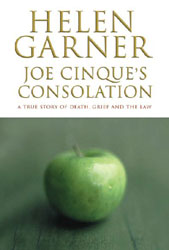
Book Review: Joe Cinque’s Consolation

Joe Cinque’s Consolation
Helen Garner, 2004, Pan Macmillan, Australia
June 2009

http://www.bookdepository.com/?a_aid=SometimesMelbourne
“I can’t promise to write the book you want, Mrs Cinque’, I said. ‘I’d have to listen to both sides. I would never want to do anything that made you suffer more – but I can’t promise not to – because whatever anyone writes will hurt you.”
Helen Garner, Joe Cinque’s Consolation
On Sunday 26 October 1997, Joe Cinque died from an overdose of Rohypnol and heroin. He died in the bedroom of his inner-suburban Canberra townhouse, after a dinner party where his girlfriend, Anu Singh, had told her friends she was planning to kill herself. Singh was convicted of his manslaughter, and her friend, Madhavi Rao, was found not guilty of any charges relating to his death. When Helen Garner’s book Joe Cinque’s Consolation was released in 2004, Singh was on parole, Rao was living overseas under a new name and Cinque was still dead.

“Joe Cinque is dead” is the mantra guiding Garner and her reader through her book. After five years of research and deliberation, Garner wrote her story, describing the trials and the characters with a personal narrative that reflects on the case, the law, her involvement with the families and her ongoing dilemma about whether to write and what to write about.

Intertwined amongst the facts and the dramatisations are glimpses of Garner’s life, including her recent divorce, her new flat in Sydney, her demented mother, her taxi drivers and even the affront to her ego when Dr Singh (Anu’s father) dared to suggest that he could help pay for the publication of a book.

Garner positions herself as a “normal” person reflecting on the nature of the legal system, and it is this position that sets the tone of her book and directs the attention and sympathies of the reader.

What is the crime?

Writing an investigative, non-fiction or true crime book gives an author the freedom to approach a story differently from the factual reporting of a print journalist. Generally written after an event, true crime writers tend to have the enviable knowledge of hindsight, a full public record and the personal accounts of those involved.

With the “whodunit” question usually already answered, author’s try to answer a “why” - why they “dunit” or why the system failed. Garner was unable to answer why Singh killed Cinque or why no one stopped her, so she questioned the legal system and the nature of justice.

The assumption of innocence?

The Australian legal system is built on the assumption of innocence. Australian arrestees “have the right to remain silent”, with the burden of proof on the prosecution to establish guilt. Singh and Rao did not have to prove their innocence, so and neither spoke at their trials, denying reporters, spectators and Garner their voices or perspectives.

The cases were tried in the ACT, which allows the defense the choice of a jury or judge trial. Singh and Rao’s defense teams chose a judge over the emotional decision of a jury. As Justice Ken Crispin made his decisions based on the evidence presented, Garner questions the laws of evidence, such as why the prosecutor’s psychiatrists could not examine Singh, but her defense team had full access and therefore able to present more credible evidence. The answer remains that Australian courts assume innocence, but the emotions of a grieving family blur its clarity.

Garner’s “fantasy of journalistic even-handedness” gave way when the system supported the silence of the defendants and when Singh and Rao maintained their rightful silence by denying Garner’s interview requests. At this point, Garner describes her decision not to write the book and lets the reader believe that her decision was overturned by a meeting with Maria Cinque (Joe’s mother) and what, may have, started as a true crime reportage book, became a quest, as Garner told The 7.30 Report in 2004, to “restore some dignity to Joe Cinque”.

Getting to know Joe?

Joe Cinque’s Consolation is about Joe Cinque. He is described by his family and friends as a loving, devoted and loyal, and Garner never appears to seek any alternative opinions.

The same rose-coloured glasses are not applied to Garner’s portrait of Singh. Garner describes her first impressions of Joe and Anu from a photo in a newspaper.

“He held his chin up with a shy, almost defensive smile, while the girl in his embrace turned her head to beam into the camera with the ease of someone accustomed to being adored and to looking good in photos…Anu Singh raised my girl-hackles in a bristle. Joe Cinque provoked a blur of warmth… These were my instinctive responses, and over the ensuing years, as I hacked a path through this terrible storm they remained remarkable stable.”

This photo was printed in a newspaper and easily found on the internet, but is not reproduced in the book. With the exception of a small black and white picture of Joe, there are no photos in Garner’s book (which is unusual for true crime), which leaves the reader with little choice, but to accept Garner’s descriptions and interpretations.

Getting to know Anu?

Family and friends recount Joe, but there is no corresponding portrait by people who love Anu. She is described by her appearance on the security tape after her arrest and as a woman wearing high heels and adjusting her hair at her trial.

Garner’s descriptions of Singh and the dramatisations of the events leading to Cinque’s death leave a negative, almost stereotypical, picture of a cold, manipulative, irrational woman – a character designed to raise a reader’s “girl-hackles”.

Singh’s verdict and sentencing were based on a defense of diminished responsibility due to psychological illness, but Garner gently dismisses the medical evidence by joking with the “young journalists” covering the trial that eating disorders and paranoia are normal for 20-somethings. She reports the medical evidence, but never lets the reader get close enough to explore or understand it.

She distances and distracts the reader further by comparing her own adolescent choices (her manipulation of men and her decision to hide an abortion from her parents) to Singh’s behaviour. This cleverly leads the reader to compare their own life choices to Singh’s and search for a time when they behaved irrationally. Garner assumes that her readers cannot see themselves taking a life.

Hearing Anu?

On the release of the book in 2004, Anu Singh was also very aware that her voice is missing from the account and was interviewed, in her parent’s home, by Phillip Adams for ABC radio’s Late Night Live.
Adams shares with Singh that her character in the book is “terrifying” and that “Lady Macbeth comes off better”. Singh admits that she can see herself in Garner’s “unfortunate”, description, but it’s “very exaggerated … because she hasn’t spoken to me and she decided on what I was like by a photo”.

Singh insists that she would have been happy to talk to Garner, but that her request (documented in the book) came at a time when she was physically and mentally unable, and wishes that Garner had asked her again.

Singh’s real voice in the radio interview is quite different from her dramatised voice in the book. Her Australian accent doesn’t place her as Indian (a fact regularly discussed by Garner) and she speaks with a rationality and calmness denied her semi-fictional self. Adams’s interview continues to seek the same answer denied to Garner and he asks Singh why she killed Joe Cinque. Singh answers:

“There’s absolutely no legitimate or rational motivation at all. And the few days prior to that, my memories of it, is still a little bit hazy and the details are sketchy. But, I can’t. It’s terrible being in a state of mental health wellbeing, and trying to put myself back there, and determine what was going on and what I was thinking.”

Singh gives the same answer put forward by her defense seven years earlier.

Would Maria kill Anu?

Adams also interviewed Joe’s parents, Maria and Nino Cinque. After watching them at the trials and sitting in their Newcastle home with Garner, the Cinques’s voices are recognized like old friends. They tell Adams that they are “very happy” with Garner’s book and the story they share with Adams is almost exactly that which Garner reports.

They are naturally still in pain, they still want justice and do not believe that Singh was “sick”. Singh told Adams that she was interested in pursuing a program of restorative justice and he brought a message to the Cinques:

Phillip Adams: Well as I said, I bring you a message from Anu, who extends to you her profound regrets and wants to in fact involve you, if it were possible, in a restorative justice program, and your answer is No?

Maria Cinque: No way, no. She can rot in hell, forever. She said she was going to kill herself, what she is waiting for?I
In Garner’s book, Garner records Maria Cinque’s declarations that she would run over Anu Singh if she saw her on the street and wishes Singh would follow through with her talk of suicide.

Much of the book questions the inaction of Singh and Cinque’s friends as Singh talked about Joe’s death. The case attracted so much attention because “farewell” dinners held at Singh and Cinque’s house. She had often talked of suicide and even discussed taking Joe with her, but none of the friends in contact with Singh over that week did anything to stop her, even when it was known that she had injected her partner with heroin.

Rao was the only friend charged, while others were called as witnesses. Again, Garner dismisses the process of the law that deemed these friends and acquaintances free from responsibility or legal guilt. She dramatised conversations and events leading up to the death, based on the evidence presented in the courts, rather than reporting the facts third hand, bringing the reader as close as possible to the situation where these young people appear incapable of doing the right thing.

The friend characters are young, intelligent law students, studying at Australia’s national university, and some involved are practicing professionals today. Garner is appalled by the “gross fact” that women trade sex for drugs and draws attention the homeless, “junkies” wandering Canberra’s Garema place. Her description of drug users is hopeless, mindless and wasted people, and she does not appear to believe that a heroin user can be a middle class, active member of our society – let alone an intelligent student.

Drugs were a part of Singh’s university and social culture. No one involved seemed shocked or concerned about Singh’s drug use or her talk of suicide, as it wasn’t considered unusual. Singh herself said she was surprised at how many people talked about suicide with her.

Viewed from a point after the death of Cinque, it is easy to see when and how people could have stepped in and possibly prevented his death, but according to the evidence, no one believed that Singh was ever going to act, seeing her erratic behaviour as a result of her eating disorder and her drug use.

Clearly Garner believes that Maria Cinque had no real intention of running over Anu Singh, as this conversation is reported as a poignant reminder of the mother’s grief. Garner doesn’t stop Maria Cinque from driving a car, as no one stopped Anu Singh.

Conclusion

Despite the legally conclusive results of Anu Singh and Madhavi Rao’s trials, Helen Garner does not know why Joe Cinque died and wants her readers to question the justice received by his family.

Singh’s right to remain silent and her decision to remain silent leave little room for Garner to present an opinion that could see her positively or even with empathy or understanding, and Rao is discussed as someone totally in Singh’s control. Even without their active participation, there was evidence and opinion that could have led Garner to different conclusions, but it is doubtful that alternative conclusions would have pleased the Cinques.

The writer’s journey through Joe Cinque’s Consolation vividly describes the Cinques’s grief and the senseless nature of Joe’s death, and she joins his family in their anger towards the legal system and their belief that justice has not been served. Her personal reflections and observations bring the reader intimately into her personal experience and ensure that the appealing and loving Joe Cinque will not be forgotten by anyone who reads the book.


Review of Criminology, a play based on the same case.