Showing posts with label Paul Jackson. Show all posts

03 September 2018

Review: Blasted

Blasted
Malthouse Theatre
Merlyn Theatre
29 August 2018
To 16 September
malthousetheatre.com.au

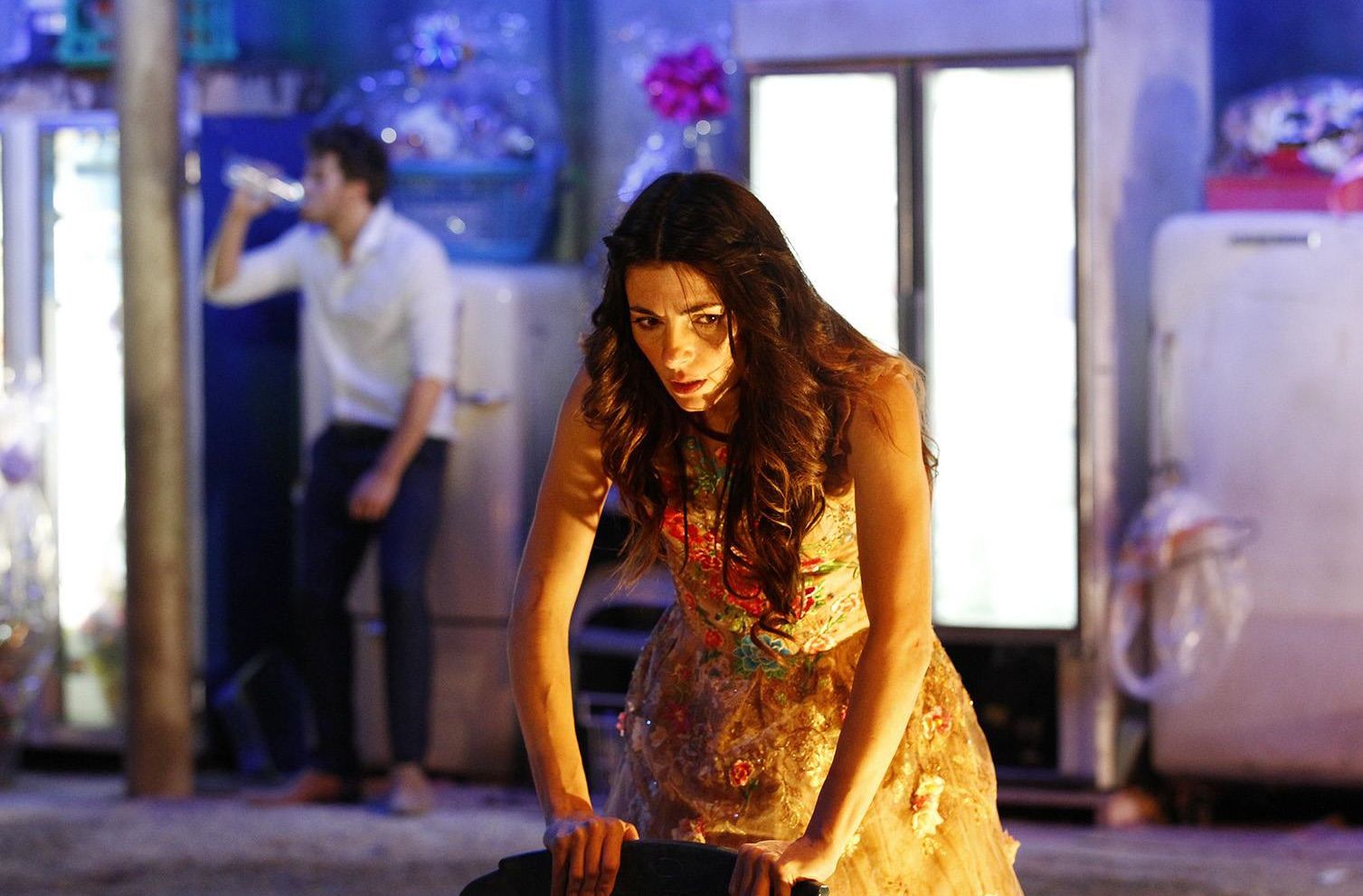
Eloise Mignon & David Woods. Blasted. Photo by Pia Johnson
 My review is in Time Out.

16 August 2017

Review: The Real and Imagined History of The Elephant Man

The Real and Imagined History of The Elephant Man
Malthouse Thearte
9 August 2017
Beckett Theatre
to 27 August
malthousetheatre.com.au

Daniel Monks. The Real and Imagined History of The Elephant Man. Photo by Pia Johnson

My first experience of Joseph Merrick's story was in 1980 with David Lynch's film The Elephant Man, on the big screen. I may have been too young to deal emotionally with the initial fear – and eventual love – created by Lynch, but it carved the story of the young man who few could see as human into my memory. Unlike the well-known stories of Merrick that run the gauntlet of extreme emotion and see Merrick with pity, director Matt Lutton and writer Tom Wright take us into Merrick's imagined thoughts in The Real and Imagined History of The Elephant Man at Malthouse.

The production begins in 1880s England with the audience being welcomed behind a giant sideshow curtain to gawp for the cost of our ticket. Once we're complicit freak gawpers, Merrick’s story is told chronologically from his impoverished childhood to circus exhibit to the questioned sanctuary of a hospital. Based on what is known about his life, each scene gets closer to his imagined thoughts until we're with Merrick and looking back at ourselves.

Daniel Monks performance as Merrick finds a personal and intriguing space where he lets the audience know that he knows he’s being looked at because he is an actor with a physical disability. Performing without prosthetics, Merrick’s “cauliflower squeezing into pigskin” growths are imagined and there’s much more power in his wearing and final rejection of his “gentleman’s” suit. It’s cool to be different as long as you’re trying to be the same as everyone else.

Marg Horwell's costume design stresses the sameness of Merrick’s world and her set (with Paul Jackson’s consistently-remarkable lighting) initially feels Lynchian with a wide-screen frame that opens in black and white. But any comfortable and safe idea of a flat and distanced world is dismissed when the smoke and fog of industrialisation can’t be controlled and makes the audience part of the world.

Having all other characters performed by women (Paula Arundell, Julie Forsyth, Emma J Hawkins and Sophie Ross) parallels the question about how we tell and remember stories though different eyes. So much of Merrick’s story is known because it was told by Frederick Treves, the doctor who brought him to the hospital. Treves isn't part of this story; this time it’s Merrick’s story.

Yet for all it’s visual power and emotional punch, the production is dramatically inconsistent and at times feels like it’s caught trying to reflect on perceptions of disability rather than exploring the imagined life of the man whose skeleton is still on display and is mostly remembered because of his moniker.

29 August 2015

Review: Antigone

Antigone
Malthouse Theatre
25 August 2015
Merlyn Theatre
to 13 September
malthousetheatre.com.au

Antigone. Emily Milledge. Photo by Pia Johnson

In a desolate concrete yard where the only hint of humanity is a prefab building on stilts, a naked young body is dumped on the ground. Malthouse Theatre's Antigone starts with the Classic story, but it's not Sophocles's Antigone but an Antigone for now that's set in an isolated world where political power is its own reward and where there are no gods to blame or bow to, and no public chorus to witness and comment.

In the 400 BCEs, Ancient Greek playwrights competed in festivals. Filled with reflections and commentary on contemporary society, festivals were the place to hear opinions and figure out your own thoughts about issues. It was a bit like Facebook, but with better spelling. Sophocles won a lot of thumbs up and prizes.

Antigone was the first written but the final of Sophocles's three Thebean plays (that start with baby Oedipus). The first is the best known being about how Oedipus became King of Thebes by unwittingly killing his father and marrying his mother, Jocasta. Jocasta and Oedipus had four children: sons, Polyneices and Eteocles; and daughters, Ismene and Antigone. Antigone followed her blind father into exile. The boys then killed each other fighting to be boss, leaving Jocasta's brother, Creon, as King, who declared that Eteocles was to be honoured while Polyneices was traitorous scum whose body was to rot in the open so the gods couldn't get his soul.

Antigone (Emily Milledge) wants to bury her brother. Her sister (Elizabeth Nabben) won't help her, Creon's son (Aaron Orzech) still wants to marry Antigone, and the unnamed Creon (Jane Montgomery Griffiths) wants Antigone and her defiance destroyed. The leader's husband is dead (for those wondering what happened to Eurydice) and the observing chorus are replaced by a guard/torturer (Josh Price) whose silence seems guaranteed.

Director Adena Jacobs and the design team (The Sisters Hayes, set and costume; Paul Jackson, lighting; Jethro Woodward, sound) create a bleak and godless world where hope is useless. The concrete is ice cold comfort and Jackson's lighting asks what's lurking in the surrounding black. Some of the most striking images come from the anticipation of one image and being confronted with something less gruesome but more horrific, like the revelation of tortured Antigone from behind black plastic sheets.

Montgomery Griffiths's text knows this story in many translations (including the Ancient Greek, which makes an unforgettable appearance). She rejects the parts she doesn't need and takes its themes, characters and familiarity to tell a story about now.

It's set in a country that has secret offshore facilities, known for their torture, and a leader who wears perfect black suits, argues that the state is right because it's the state, and refuses to listen to arguments, especially those from an angry and defiant young person. Even 12 months ago, this would have been a different play.

The contrast and similarity of Montgomery Griffiths and Milledge is what drives the work. One has power and age and knows she is right; the other has passion and youth and knows she is right. While a middle ground, cover up or lie seems an obvious solution, compromise is impossible for either woman and neither see how their destruction is mutual and far reaching.

Milledge is all contained passion and anger and Montgomery Griffiths uses the confidence of power to hide her doubts. Nabben shows how Iseme's inability to act comes from being torn in too many directions, Orzech shows how he is destroyed by trying to defy the woman who loves him for a woman she hates, and Price finds the least uncomfortable space between compliance and "don't ask".

There are times when the parallels are too obvious and there's room to tone down the references to Tones & Co (and I don't know what the pants pulling down was about), but if now isn't the time to put these issues to our stages, why do we bother to go to the theatre?

This was on AussieTheatre.com.

02 April 2015

Review: Endgame

Endgame
MTC
26 March 2015
The Sumner
to 25 April
mtc.com.au

Julie Forsyth & Rhys McConnochie. Photo by Jeff Busby

There's a double page in the program for the MTC's Endgame titled "explantion". It's about modernism, Absurdism and finding meaning in Samuel Beckett's writing. It's great for post-show conversations but it doesn't talk about the possibility of losing yourself in Beckett's world and not giving a toss about meaning.

For me, the joy of a Beckett stage is being lost in a WTF time and space with people for whom this is every day. There's a rhythm – a music – to his writing that moves his audiences through the text without having to stop to understand and interpret. This rhythm is easy to see in a script and it's a loss to anyone who doesn't let it beat on the stage.

The Endgame world is described as "grey light". Here Clov (Luke Mullins), who can't sit, is servant to Hamm (Colin Friels), who can't walk or see, and spends every day in a chair in the centre of the space. To his right are two large cans or bins where Nagg (Rhys McConnochie) and Nell (Julie Forsyth), Hamm's parents who have no legs, live. They talk about death and endings while knowing that the inevitable release may be too far away to offer much hope.

But it's not bleak, and being free to laugh is what makes it light and fun.

The essential grey light is created by designer Callum Mortum and lighting designer Paul Jackson (and not forgetting Eugyeene Teh's costumes). There's a literal fourth wall of grey cement slabs that disappears in the opening of perfect black out (and may those who chose that moment to deal with their phones, get parking tickets before the week is out); there's nothing like velvet of pure dark to guide us into the unknown.

The bare world is a bunker made of concrete slabs, and, even as it asks questions and offers answers from future apocalypse to last century's wars, we never know why or how or when. The passing of a day is in the lighting that's only black and white. The changes are imperceptible until the grey is darker or a shadow has moved. As the night draws in, the stage looks like it's pulling away from the audience and could be turned off with the flick of a remote control.

Sam Strong directs a cast who know Beckett and, at their best, bring a complex understanding to their characters that lets the audience find that rhythm. Mullins and Forsyth especially find the humanity and loss in the subtext, while still letting Clov and Nell be clowns.

But there are moments of indulgence that makes it all about the actors. This breaks the rhythm and takes us back to looking for an explanation rather being happily lost in the pulse of grey light.

This was on AussieTheatre.com

01 June 2014

Review: Ghosts

Ghosts
MTC
22 May 2014
The Sumner
to 21 June
mtc.com.au

Photo by Jeff Busby
Overwrought and underwhelming, the MTC's Ghosts is as haunting as the Luna Park ghost train, but not as fun.

The 1880s critics generally despised Henrik Ibsen's play for being a pit of degenerate ickiness that dared to talk about nice middle class people knowing about syphilis, sex and incest.

Widowed 40-something Helene Alving (Linda Cropper) is thrilled to have her 20-something son, Oswald (Ben Pfeiffer), back home from Paris and is excited that her old crush, Pastor Manders (Philip Quast), is visiting to bless and open the orphanage she built in honour of her late husband. Meanwhile her maid, Regina (Pip Edwards), is leaning français to impress Oswald and Regina's dad, Jacob (Richard Piper), wants Regina to work at his new house for wandering seamen.

Gale Edwards's translation so simplifies (and Aussifies) the script that the seamen pun is a highlight in a tale that now states the obvious, explains it a bit more and yells it again. And it's directed by Edwards to focus on that translated script.

In performances described to me as "a bit shouty" (I said over played and under felt, but shouty is better), it relies on its words to tell the story. Words tell a story in a novel, on a stage they are the base to start from.

To find the emotional connection with the world and its characters, there has to be a belief and understanding on the stage that sex outside of a good-god sanctified marriage is unforgivable. Unless we can understand and feel that, all that's left is a "so what?". Even the final scene between breaking mother and broken son are close to dull because there was no relationship in the space between the actors.

At least Shaun Gurton's striking design of rain and fog creates some mood and sense of place with Paul Jackson's lighting.

Perhaps the 1880s critics might have liked it.

This was on AussieTheatre.com.


17 May 2014

Review: Night on Bald Mountain

Night on Bald Mountain
Malthouse Theatre
8 May 2014
Merlyn Theatre
to 25 May
malthousetheatre.com.au


There's the moment when you walk into a theatre and get the first look of the world you're going to be playing in. And all fear of the play that Patrick White himself called "a dishonest play" flew when faced with a real bald mountain.

Dale Ferguson's design for Night on Bald Mountain is a roof-to-floor and wall-to-wall terraced mountain made of plywood with secret doors opening into endless black and secret goats for instant joy. With Paul Jackson's always-glorious lighting, we're taken from dawn to dawn on the mountain and into a house that wants to be part of a landscape that it doesn't belong in.

Neil Armfield, a close friend of White who directed many of his plays, once said in Meanjin that White's plays "only work in wonderful productions. Patrick knew this, and that is why he was so selective about his directors. And it’s not a case of bad writing needing to be rescued, or papered over; rather the plays present great challenges that need to be overcome."

Photo by Pia Johnson

Matthw Lutton directs this Mountain. He was a child when White died in 1990, so never saw the author-approved productions, yet his vision of this 50-year-old work finds a completeness in the difficult-to-perform play.

With its goat-lady chorus of one, an older couple who never found each other, a young couple who never have a chance to find each other, and outsiders who want to but can't escape the mountain, it's a psychological piece about character. But Lutton doesn't let this constant exploration dominate and his movement around and through the imposing mountain creates a pace that drives the story, lets the comedy come freely, and creates a tension that lets us hope for an ending that isn't pre-destined by the mountain's slippery paths and crevices.

Actors love White because there is so much in discover in his characters and his language. This cast – and it's worth seeing if only for the cast – approach their characters in ways that result in different styles of performance, and this somehow adds to the complexity without ruining the overall flavour. Nikki Sheils's sunny naturalism, Julie Forsyth's Brechtian distance and Melita Jurisic's anguished almost-expressionism should clash, but the combination of unique performer and character bring a closeness to the characters while still maintaining the distance that allows us to see the wholeness of the work.

This push-and-pull is supported by David Franzke's sound that mixes amplified and natural sound – and Ida Duelund Hansen's live music – to bring us into mountain and its people or leave us safely watching from afar.

It's a production that brings a very-now theatre aesthetic to a work that could easily get stuck in the 60s, and ultimately lets us see the writing of Patrick White though fresh eyes.

This was on AussieTheatre.com.

The tribute piece by Neil Armfield in Meanjin.


15 July 2013

Review: Gypsy

Gypsy
The Production Company
10 July 2013
State Theatre, Arts Centre Melbourne
to 14 July
theproductioncompany.com.au


Caroline O'Connor stars as Rose in Gypsy. Is there anything else you need to know! If you've seen Connor perform, you know you have to see her; if you haven't seen her, you've probably been told that you have to see her; if you have no idea who she is, have a google and you'll know you have to see her.

Caroline O'Connor is an old-style, belt it out with heart and guts super star and the State Theatre erupted for her last night.

Gypsy is the story of stage mother Rose, whose life is managing and creating the vaudeville act performed by her daughters Baby June and Louise. Abandoned by her own mother and three husbands, Rose holds on to what she loves most, refusing to marry the man who adores her (Herbie) and not noticing how much June wants to leave. When June abandons her family, Rose focuses on the less-talented Louise, finally convincing her to perform in a burlesque show. It's loosely based on the memoir of the 30s famous stripper Gypsy Rose Lee (called Louise).

Gypsy (Jule Styne, music; Arthur Laurents, book; Stephen Sondheim, lyrics) was first seen on Broadway from 1959 to 1961 with Ethel Merman as Rose. It was nominated for a pile of Tonys, but didn't win any. Revivals made up for this. Other famous Roses include Angela Lansbury, Tyne Daly, Bernadette Peters and Patti Lupone, and not to forget Rosalind Russell and Bette Midler in screen versions. Rose is the role that women of a certain age look forward to playing, written in a time when women of a certain age were loved and adored and written for.

O'Connor might have her name above the title, but the rest of the cast as just as super and starry. Matt Hetherington nearly grounds Rose as sensible and love-struck Herbie, Gemma-Ashley Kaplan brings guts to Baby June and Christina Tan transforms from downtrodden Louise to powerful Gypsy. And not to forget the scene-stealing cast of young performers, and Chloe Dallimore, Nicki Wendt and Ann Wood as the three strippers who show Louise that you gotta have a gimmick.

And the design team of Adam Gardnir (set), Tim Chappel (costume) and, Paul Jackson and Robert Cuddon (lights) create a stage that feels and looks as great as a multi-billion dollar show with a background of twinkling stars for the nostalgia-inspired back drops and the gorgeous, extra fun era-inspired costumes.

Now in their 15th year, The Production Company continue to produce the musicals that we'd never see from commercial or professional companies. With limited resources and rehearsal time, they give us the old-style shows we've only ever seen on film or ones that haven't been produced in Australia. They are more than concert versions, but less than a full production, but always made with a love of the work that makes them soar.

This was on AussieTheatre.com.

Photo by Belinda Strodder


05 July 2013

Review: The Crucible

The Crucible
MTC
27 June 2013
Southbank Theatre, The Sumner
to 3 August
mtc.com.au1


Arthur Miller's The Crucible was my favourite play when I was 17 and, along with Lillian Hellman, Miller was my favourite playwright. This play made me read the rest of his work and so many more by mid-twentieth-century American writers. It opened the door to an astonishing and powerful library. But it's been over a quarter of a century since I read it, so, yesterday, I grabbed my high school copy (which tells me I wrote an essay about its fire symbolism) and read it again.

It's definitely a product of his time. First performed in 1954, Miller wrote a play about the seventeenth century witch trials in Salem, Massachusetts, as a response to US Senator Mcarthy's communist trials in the 1950s, which were especially devastating to writers, performers and anyone connected to the evil liberal arts. In high school, we learnt that this was an allegory, a damn fine one.

Still, as I read it, I was struck by just how relevant and powerful a production could be today in Australia. It's a world where women (and their supporters) are attacked, trialled and killed for no reason other than their gender. They are trialled by middle-aged men who base their findings on a belief in a big male god and on their certain belief that young women must be possessed by the big male devil because they surely couldn't be behaving like scared children. The Crucible or Ditch the Witch or Grow up Lindsay. Or, it's a world where women – especially young women – are harlots or angels; a world where a middle-aged man possibly rapes his teenage servant (subtextually, it can go rape or consent) in a barn, who is then fired by the man's wife (ensuring she can't get work) and later declared a whore by the man who certainly took her virginity and treated her like crap.  Maybe the MTC's production isn't just a star vehicle for Diver Dan from Seachange?

With the text still very fresh in my mind, I was excited about this production.

My excitement lasted seconds.

I think director Sam Strong made a bad sit com about the Salem witch hunts (as a star vehicle for Diver Dan in the worst wig ever put on a stage) by ensuring that any faith, belief or hope is a joke.

But that's just me hazarding a guess. So, what about some facts? Well, there were a lot of giggles on opening night – and some guffaws. There are some jokes in the play, but it's not funny. On the page, the scene where Diver Dan declares "whore" and the teenage girls ensure his arrest are chilling; they got the biggest laughs of the night.

Why?

No one in that stage world believes in the god they profess to believe in. Every character in The Crucible acts from their belief in God AND Satan and their fear of eternal suffering. Even the non-believers believe to some extent; belief is the rule that governs this world. They believe in the same way that Senator McCarthy believed that communists were real and could destroy America. They believe it like we believe the sun will set tonight and that Myki is a force of evil.

A play about god and belief can never make sense in a stage world that's godless. I think that's why we laughed so much.

Or it could be the odd acting choices. Act 1 takes place in a girl's bedroom. Depending on the charaters' knowledge, this child is either very ill, terrified or possessed by the devil, but the unconscious child is ignored by everyone around her, unless she's being spoken to or examined. Eleven people pass through the room and 10 of them treat the child – who is either very ill, terrified or possessed by the devil – like she's a beige rug on the bed. No wonder we laughed when the good Reverend Hale asked for help in case she flew away. The eleventh character, Rebecca Nurse, was the only one who looked at the child with any semblance of care and tried to cover the girl's naked legs.

But would I have liked this production when I was 17? Maybe.

After all, Dale Ferguson's design of a pure white building in a hostile black world is stunning and made more so with Paul Jackson's lighting that creates a parallel shadow play. And Julia Blake (Rebecca Nurse), Sarah Ogden (Mary Warren), Anita Hegh (Elizabeth Proctor), John McTernan (Giles Corey) and Grant Cartwright (Reverand Hale and only after the interval) get close to overcoming their direction and bringing real life and pain to their characters. And Diver Dan? David Wenham's as authentic and engaging as his wig.

If this were part of an education season, I would have said it's a dull and oddly literal interpretation of a play that deserves better, but this is a $59 for under 30s and a $99 tickets for students on Saturday night ($115 for people not continuing or having completed their education) and you can see the kick-arse dancing monkey for that or take your family to Circus Oz or see the MTC's other work, Solomon and Marion. If I'd spent $59 to see this as a 17-year-old (or around $100 as a grown up), I would have hated the MTC for letting me down so much.

Photo by Jeff Busby.

This was on AussieTheatre.com.

26 November 2012

Review: Wild Surmise

Wild Surmise
Malthouse Theatre
Beckett Theatre, Malthouse
15 November
to 2 December
malthousetheatre.com.au


Jane Montgomery Griffiths says her adaption of Dorothy Porter's 2004 verse novel Wild Surmise "is an enactment of the act of love that is reading". Until now, I hadn't read Dorothy Porter. I'm nervous of verse novels; I think they're a bit pretentious. How great to be so wrong. This Malthouse production celebrates Porter and compels a reading of the novel, while relishing being told on a stage.

Alex is an astrobiologist and minor science celebrity. She's engulfed in an affair with Phoebe, an older American scientist, and married to poetry professor Daniel, who's had enough of corporate universities, dreams of getting back at pretentious students and is diagnosed with cancer. There's no comforting romance or confessional resolution in a story that hurts with the honesty that Alex and Daniel can never share.

The first thing seen on the stage is Humphrey Bower (Daniel) reading pages of verse; all the pages of his story that are stuck on the walls/window/mirror of his world. Designer Anna Tregloan and lighting designer Paul Jackson have created an exquisite double-mirrored world with reflections that distort and confuse like a Vegas magician but so beautifully open what feels like a new dimension on the stage where Alex and Daniel can simultaneously be in the same and different worlds.

Director Marion Potts captures why Porter's poetry is so loved, but brings a life and interpretation to the story that lets the theatre own this telling. Porter's words fly with their surprising rhythm and cosmic comparisons, ground with metaphors of terrible Elvis movies and unflusable big black turds, and comfort with the familiarity of St Kilda beach and Mario's coffee. Pott's encapsulates Alex being a Sydney girl with her fumbling with a red expresso machine and never lets the characters become as heroic or honest as their raw thoughts.

In a conventional narrative we hear conversations and imagine the unspoken; in verse we hear the unspoken and are left to imagine the awkward conversations that never share the emotional truth and poetry in their hearts and heads.

Montgomery Griffith and Bower speak verse like it's their only language and there's not a syllable uttered without understanding and intent. Their powerful and painfully truthful performances love the text but show what Alex and Daniel feel about each other beyond the words. They don't speak to each other, but are so aware of the other that they react when the other thinks or speaks about them. It's this detail that adds the heart that creates people we care about, even if their behaviour and thoughts are not what we'd chose.

When we read, we add the detail that makes a story ours.  This production adds the character detail for us, which leaves us free to really listen to Porter's words. It's not like reading, but it captures the passion of falling in love with a book and a writer because its damaged people are so clear that we feel like we're in their world with them.

This was on AussieTheatre.com

Photo by Pia Johnson

And please read Chris Boyd's review.


03 August 2012

Review: Blood Wedding

Blood Wedding
Malthouse Theatre
26 July 2012
Merlyn Theatre, The Malthouse
to 19 August
malthousetheatre.com.au


I wonder what Federico García Lorca would think about Blood Wedding being performed in Australia 80 years after he wrote it.

His work is so connected to Spain before the 1936–39 Civil War (it is believed he was assassinated by right wing forces days before the war broke out), but great writing comes from truth, and truth is what makes the personal universal. His writing doesn't need an understanding of the politics or the society it came from to tell its story.

Blood Wedding is summarised in its title. Young lovers want to marry, but there are old family issues and unresolved loves; it never offers hope that it's going to end well. For all its politics and anger, Lorca writes about suffering and grief and the utter absurdity of fighting over things that ultimately mean nothing when a love (partner/child/sibling/parent/friend) is destroyed. No wonder Lorca still reaches us.

Director Marion Potts connects the story to Spain with a bilingual adaption, by Ranters Theatre's Raimondo Cortese.  Even though this leaves most not understanding all the words of text and loses a fair chunk of the symbolism and poetry, it's a story that is easy to follow and the dual language gives a beautiful connection with the original writing that is rarely achieved with translation.

This duality of connection and contradiction is continued with a cast including prominent Spanish actors (Irene Del Pilar Gomez, Mariola Fuentes, Ruth Sanco Huerga) and locals (Silvia Colloca, Nicole De Silva, Ivan Donato, Matias Stevens, Greg Ulfan, David Valencia). There's an inconsistency in the overall performances, but it's endearing rather than distracting. Potts's direction seems to always start with character and by letting her cast find their unique connection to the character, the uneven passions always belong to characters.

The Sisters Hayes create the tone by bringing the languages and experiences together with a design that manages to be kitschly fun and dramatically epic. It somehow evokes the closeness of backyard urban Australia and the empty distance of rural Spain with vast wall of patterned bricks (made for Paul Jackson's always exquisite lighting), a row of fridges, a floor of dirt and the universal old-person floral recliner chair covered in protective plastic. Its intricacy draws the audience close and it contradiction instantly allows for the breathing space of laughs amongst the angst and inevitable grief.

I think Lorca would be astonished and proud and excited to see this production (and he'd love Melbourne). It's a production that shows the soul of Lorca and, even if it doesn't emotionally reach as strongly as it could, it's one to see for its understanding and connection and wholeness.

This review was on AussieTheatre.com

Photo by Jeff Busby


22 April 2012

Review: The Histrionic

The Histrionic
Malthouse Theatre and Sydney Theatre Company
15 April
Merlyn Theatre
to 5 May
malthouse.com.au


Until I hit Google, I didn't  know about Austrian writer Thomas Bernhard. A quote from the New York Times that his works are "the most significant literary achievement since World War II" crops up a lot. As an over-educated reader, I guess I should know him, but The Histrionic hasn't encouraged me to seek out more Bernhard.

In 1982 Bernhard had a super-hissy when a Saltzburg Festival theatre wouldn't turn off emergency EXIT signs and he cancelled the season because "A society that can't deal with two minutes of darkness can do without my play". He then went all meta and returned to the same theatre with a dark comedy about a living-treasure genius artist performing his greatest work in a town that's more interested in its pigs and sausages – complete with ironic rants about EXIT signs.

I love little more than art and writing, but I care little for self-important art and writers. Even with its satirical guise, The Histrionic is still so close to reality that I didn't care.

Billie Brown joyfully embodies Bruscon, the self-obsessed genius who has to perform even if his cast/ family and audiences don't live up to his standards. In a career-highlight performance, the work is mostly a one-sided conversation with Bruscon and for all its insight and genuine wit, I didn't care if he succeeded, failed or was eaten by the pigs.

I didn't care about the writer or his art because there's nothing he's saying that we don't know.  I know people like Bruscon and his cast and, even with their lost souls and broken hearts, I'm happy to light the way out and live without him.

But what makes this production so intriguing and enjoyable is that director Daniel Schlusser and his wonderful cast make us care for everyone else on the stage. The good-hearted landlord (Barry Otto), his wife (Kelly Butler) and daughter (Katherine Tobkin) and Bruscon's wife (Jennifer Vuletic) and children (Josh Price and Edwina Wren), say little, but great theatre and irresistible performance isn't really about getting the most lines.

As Bruscon pontificates, they accept and suffer in a marvellous backstage void filled with saw dust and old props that have been left to decay (designed by Marg Horwell and lit by Paul Jackson). With the likes of huge fruit and veg, a giant hand and massive moose, you can't not laugh at and love the artifice of theatre – and there's the bonus game of "what show is that prop from" (hooray for another appearance of the bi-polar bear).

Schlusser's voice is by far the more interesting one in The Histrionic and he balances the line between self-indulgence and art so deftly that even the likes of Bruscon are forgiven, if not loved.

This review appeared on AussieTheatre.com


13 March 2012

Review: Stripped

Stripped
La Mama
7 March 2012
La Mama Theatre
to 18 March


Writer, actor and creator Caroline Lee remains an unmissable force in independent theatre.  Stripped is a solo performance about the nakedness and exposure of death that strips away the pretence of performance to its core of raw emotion.

Working with her long-time collaborator and director Laurence Strangio and lighting designer Paul Jackson, this is Lee's stage adaption of the novel she started when studying Professional Writing at RMIT, and which was serialised in Meanjin and supported by the Marion Eldridge Award and City of Melbourne's arts grants.

Told through interconnecting first-person narratives, it starts as Lillian, a lawyer, is dying from cancer and her sister Sophie, a stripper, faces her own trauma. It's a fascinating adaption that left me wanting to read the novel.

As the writer, Lee's performance comes from such a closeness to her characters that she can concentrate on the subtleties that let her share this deep understanding with the audience, and Strangio shapes the story and brings a physicality that embodies the driving emotion of each scene.

On a coffin-sized light box stage, Lee evokes Melbourne from an inner-city strip club to Chadstone (where no one wants to die). Lit mostly from below, Jackson's lighting exposes the human without the niceties of make up and flattering light (think what you look like with a torch under your face) which continues to bring the internal to the surface.

Yet, for all its heartfelt intelligence and emotional rawness, the text is distracting. Eyes and ears process language so differently and what is exquisite on a page can seem forced on the stage, as we don't need the descriptive adverbs and gorgeous metaphors to create the world or show reaction. There's a moment when a character says "I walked gingerly" and my inner editor grabbed her red pen; telling what we can see takes away from the character and brings too much attention back to the words.

Lee writes stunning words, but stage stories are driven by emotion, and another edit to tighten will free its characters even more, while the words will still shine in print.

This review appeared on AussieTheatre.com

Photo by Pia Johnson

22 November 2011

Review: Little Match Girl

Little Match Girl
Malthouse Theatre and Meow Meow Revolution
16 November 2011
Merlyn Theatre, The Malthouse
to 4 December
www.malthousetheatre.com.au


What haven't I already said about absolute wonderfulness of Meow Meow? She's at the Malthouse this month with Little Match Girl and her hoards of international fans are squirming with jealousy that Melbourne (and then Sydney) have such access to this must-be-experienced diva who shreds perceptions of performance art.

Meow has recently graced shows like The Burlesque Hour with her glitter-lipped self, but her last full-length local cabaret was Vamp at The Malthouse in 2008. That show was based on Wilde's Salome, while Little Match Girl starts with Hans Christian Anderson's 1845 story of a little girl who freezes to death rather than return penniless to a violent home. Yet even as Meow reminds us that little has changed in civilised society, she still craves a fairy tale ending and looks for her perfect match as her flames fade and burn.

Like any fine cat, she's aloof, rightfully sure of her exquisite beauty (from the right angle), has remarkably flexile legs and appears contentedly independent until she pounces and demands immediate attention and physical love. But never believe those purrs are for you, as there's always a more enticing lap, and she may have found her flame in just-as-sensational Mitchell Butel, her saviour and handbag.

Working again with the delightful Iain Grandage (musical director and composition), it's bliss to hear Meow with a band and there are super new songs by Grandage and Megan Washington, and a too-delightful Noel Coward number, a "The Book of Love" to bring tears and touches of Richard Wagner, Cole Porter and Laurie Anderson for bonus perfection.

Meow resents attention flowing from her, but Marion Potts (director), Anna Cordingley (design) and Paul Jackson (lighting) create a shiny world worthy of her presence – Jackson's creative lighting is especially stunning – although it's doubtful that Meow will ever let us applaud Melissa Madden Gray.

This review originally appeared on AussieTheatre.com

Photo by Jeff Busby

27 July 2011

Review: Die Winterreise

Die Winterreise
Malthouse Theatre and Thinice
22 July 2011
Merlyn Thearte, CUB Malthouse
to 31 July 2011


I understand why Schubert purists are not enamored by Die Winterreise, but I'm a Schubert virgin, so was more than happy to go with the flow and the snow of this gorgeous meditation about the loneliness, guilt and sorrow of ageing.

Malthouse Theatre has again paired with Matthew Lutton's Thinice company from Perth  (The Trial) and bring together a creative dream-team to re-imagine the song cycle that Franz Schubert wrote a year before he died at 31 (in 1828).

Die Winterreise was based around the poems of Wilhelm Müller, who also died in his early 30s (in 1827). He and Schubert achieved their fame posthumously. Director Lutton, who has yet to hit the 30s danger zone and already enjoying artistic recognition, says that when he first listened to the cycle "the music aroused recollections in me I found difficult and painful to articulate". His finished work is a glimpse into the thoughts of a young man sharing the angst of his fellow-artists.

An old man (George Shevtsov) cooks a meal alone in his one-roomed flat. Listening to a Shubert recording, he faces his memories and his younger selves as they appear as a singer (Paul Capsis), dancer (James O'Hara) and pianist (Alistair Spence).

It's at times obvious, but its artistry turns even the more clichéd moments into something genuine, painful and beautiful. Chrissie Parrot's choreography, Adam Gardnir's design and Paul Jackson's lighting bring the multiple layers of this work out of the music and onto the stage. With such visceral visuals, the emotional impact of Die Winterreise is there without the music.

But this is a piece of music and it's far from a Schubert chamber concert. Sound designer Kelly Ryall and arranger Spence have deconstructed the music so that isn't so much an arrangement of Die Winterreise, but a complex sampling that lets us hear the beauty of the music, but forces the focus onto the stage story rather than the story in the score.

As a piece for voice, cabaret-favourite Paul Capsis was a curious choice, and a wonderful one.  With the help of music supervisor Iain Grandage, Capsis has let go of his show mask and by being more subtle in his performance, he's found a rounder and fuller voice that brings him so much closer to the hearts of his audience. I'm looking forward to seeing how he brings this into his cabaret shows.

The work ends with a monologue, written by Tom Holloway, which gives it an unexpected and defining narrative. Although it's beautifully sad, and Shevtsov's performance is heart breaking, it takes away the personal images and stories the audience were creating for themselves.

Die Winterreise is already dividing opinion, which is always a good reason to see something and decide for yourself.


This review appeared on  AussieTheatre.com

21 July 2011

Review: A Golem Story

A Golem Story
Malthouse Theatre
17 June 2011
Merlyn Theatre
www.malthousetheatre.com.au


I don't want a year without a new play by Lally Katz. Until now, her addictive black writing has usually left me in tears of laughter, but she has bounded into new ground with A Golem Story: an exquisite exploration about the place of God and the sacred in our lives.

In Prague in 1580, Ahava (Yael Stone) wakes up in a Synagogue with a disjointed memory of her dead husband and believes his Dybbuk (spirit) has passed into her. The Rabbi  (Katz favourite, Brian Lipson) invites her to stay, but his student Amos (Dan Speilman) fears her, especially when the Rabbi asks her to help make a Golem that can protect the local Jews and stop local children from being killed.  Meanwhile, the Christian guard (Greg Stone) will go to any length to prove that the blood of Christ is enough for him, but his Emperor (Mark Jones) is willing to share an apple with Jew.

Drawing on Jewish culture and with live music led by Cantor Michel Laloum, director Michael Kantor reveals his heart and soul in this work. I've often felt distanced by Kantor's work, where I could see the intent and the creativity, but never felt for the world or the characters. God sits in the heart of this world. Each character sees him/her/it as something different, but each yearns for the deep comfort that sacred beliefs bring. It's not a Jew versus Christian tale, but it uses these two great faiths to let us examine where we'd be if the space filled by what we hold scared became empty.

The outstanding cast clearly draw on their own beliefs to bring the contractions of fear and faith, secular and sacred, and God and human to each character, who are all struggling to make decisions that will bring God closer to their lives.

Designers Anna Cordingley (costume and set) and Paul Jackson (lighting) create this world with a combination of the warm darkness of 16th century Prague and the coldness of clean contemporary light. I've found Cordingley's designs distracting in the past, but her distinct sense of detail and remarkable aesthetic support every element of the script and I can't imagine one without the other. Jackson's use of burning candles and electric light is stunning and his light-only Golem evokes a fascinating contradiction of fear and love. I know I say it every time, but there isn't a lighting designer in this town who comes near to Jackson.

A Golem Story retains Katz's gorgeously unique voice, but it doesn't rely on humour to create emotion. By losing the comfortable buffer of laughs, her characters are left more emotionally vulnerable and we have no choice but to feel with them. This is beautiful, emotive writing and evidence that this wonderful writer is going to be one of our unforgettable playwrights.

This review originally appeared on AussieTheatre.com.


28 December 2010

What I loved 2010 (best of...)

Sometimes we all need a break and for the first time in a long time I avoided the theatre for a month.

Already there are shows I wish I'd seen and I didn't make 100 reviews for the year, but there's 2011 to reach that goal.

So before 2011 reminds us how we're all a year older, thank you to everyone who reads Sometimes Melbourne. Google Analytics shows me that there are a lot of you and I'm thrilled every time you drop by or chat to me in real life.

I also want to thank the lovely JoJohn, Karla and James for their guest reviews during the year and everyone who reviews for AussieTheatre.com.

And thanks to everyone else who reviews, blogs, tweets, comments or joins in wine-fuelled post-show conversations. It's not always easy to put your name to your honest opinion, so I especially love people like Alison, Chris, John, Richard and Cameron, who all see over 100 shows a year and – even when there's bickering and name calling (only sometimes by me) – they all love and support Melbourne's theatre and art.

Sure reviewers certainly don't always agree with each other, and their readers are rarely shy to express their own disagreement, but even when we see the same shows, we all see something different. That's the joy of art. If it were objective and clinical, it wouldn't touch our hearts and we would never care enough to spend such chunks of our lives creating it, sharing it and indulging in as much of it as we can.

So it's time to remember another year of amazing theatre in Melbourne and those shows that made me so glad that I went out instead of staying home to watch Masterchef. 

Outstanding Artists 2010


WRITING
Raimondo Cortese for Intimacy
and 

Declan Greene for Moth
with bonus points, to be shared with Ash Flanders, for
 Little Mercy
and ... Gingo.

DESIGN
Anna Cordingle
y (set and costumes) and Paul Jackson (lighting) for Sappho... in 9 Fragments


PERFORMANCE

Hannah Norris
for 
My Name is Rachel Corrie
 
and
Phil Zachariah for Charles Dickens performs A Christmas Carol


I'm sorry that I didn't write a review for this bloody gorgeous show. After years of taking it to country towns and suburban town halls (with a visit to the Carlton Courthouse and the Famous Speigeltent), Phil Zachiriah and director James Adler made it to the centre of Melbourne and the gold-leaf splendour of The Athenaeum theatre. And this tiny show had standing ovations and teary-eyed cheers each night of its short run. Not only does it remind us what a master storyteller Dickens was (really, if you're a writer and anyone has ever mentioned that you need to think about your story... read this bloke), but it lets Phil be Charles Dickens – the role he was born to play. Dickens staged readings of his stories and, as he's no longer around, he's passed the spirit to Phil.  From Scrooge to Tiny Tim, Phil inhabits every character with the kind of love that makes them as real as our own mad families at Christmas time and it's the kind of holiday tradition that transcends faith-based celebrations to sit as one of the great stories of love and redemption that should be an end-of-year tradition for everyone.


Outstanding Productions 2010 

CABARET

Kunst Rock: Die Roten Punkte – Button Eye Productions and Full Tilt
and
Carnival of Mysteries – Finucane & Smith

Special mention

Miles O'Neil's World Around Us

COMMERCIAL
Boston Marriage – MTC

CIRCUS
Dos or Duo – Stuart Christie and Kane Petersen


MUSICAL
[title of show] –  Magnormos


Special mention

Another Opening, Another Show –  Manilla Street Productions


and I really enjoyed Mary Poppins

DANCE
Human Interest Story –  Malthouse Theatre, Lucy Guerin and Perth International Arts Festival 

COMEDY

Special mention

Monster of the Deep 3D –  Claudia O'Doherty

Best of the Best

Bare Witness  La Mama and fortyfivedownstairs 
and
That Face  Red Stitch Actors Theatre
and
Intimacy – 
Ranters TheatreMalthouse TheatreMelbourne International Arts Festival


Special mention
Happily Ever After – La Mama

My Favourite of 2010

Tomorrow, in a year  Hotel Pro Forma, Melbourne International Arts Festival