Showing posts with label Marg Horwell. Show all posts

17 March 2023

Review: Bernhardt/Hamlet

Bernhardt/Hamlet|
Melbourne Theatre Company

11 March 2023
The Sumner, Southbank Theatre
To 15 April 2023
mtc.com.au

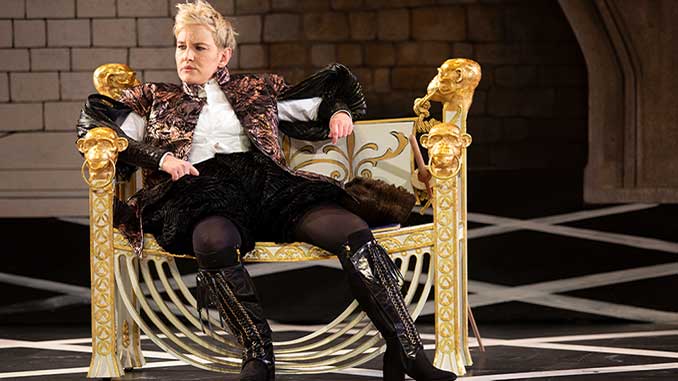
Kate Mulvany in "Bernhardt-Hamlet". Photo by Pia Johnson


My review is on Australian Arts Review.


11 April 2021

Review: Because The Night

Because the Night
Malthouse

9 April 2021
All of Malthouse
The season is sold out, but keep an eye on the website
www.malthousetheatre.com.au

"Because the Night" Malthouse . Photo by Pia Johnson


Hamlet as a choose-your-own-adventure, escape-room, gallery, anonymous-dress-up, wear-comfy-shoes, live-mystery, 1980’s-trip-to-Tassie, deconstructed-text, maze, open-stranger’s-drawers, op-shop-rummage, carnival-spook-house, re-imaging response to the natural world fighting back as humans kill each other for power? Hells, yes! 

Welcome to Malthouse’s Because the Night

The inherent nature of art is a unique experience. Any experience of this immersive experience is impossible to recreate as everyone is encouraged to explore the 30-plus rooms, follow any of the six actors and make their own story. 

"Because the Night" Malthouse . Photo by Pia Johnson


Conceived in lockdown, Because the Night is as much director Matthew Lutton’s response to Covid as a response to Hamlet. With a text by Kamarra Bell-Wykes, Ra Chapman and Lutton, this Elsinore is a 1980’s Tasmanian Kingdom forestry town where ancient giant trees are the impending threat. A basic knowledge of Hamlet is assumed*, but it can be enjoyed without engaging with more than the overarching story. 

Once bags are put in lockers, everyone in the 60-person audience is given a black cloak and papier-mâché mask to become a ghost – non-distracting identical ghosts haunting the space is a brilliant move – and begin in three different rooms. I saw Hamlet (Khisraw Jones-Shukoor; Keegan Joyce is in the other cast) and kick-arse Ophelia (Tahlee Fereday or Artemis Ioannides) in the gym, and so want to see how it begins for Gertrude (Belinda McClory or Jennifer Vuletic), Claudia (Maria Theodorakis or Nicole Nabout), Laertes (Harvey Zielinski or Ras-Samuel Welda’abzgi) and Polonius (Rodney Afif or Syd Brisbane). 


"Because the Night" Malthouse . Photo by Pia Johnson


These six are the only characters and while it’s cool to not be bothered by the outside commentary from the rest of the castle, another way to dive into this story is to be Rosencranz, Horatio or dead King Hamlet and find your scenes. If you miss THE soliloquy, I can’t imagine anyone stopping you from having a go yourself (quietly) when you find Yorick’s skull. 

If you really miss the text, it’s all in the design. Dale Ferguson (architecture), Marg Horwell and Matilda Woodroofe (interiors), Kat Chan (costumes), J Davide Franzke (sound) and Amelia Lever-Davidson (lighting) tell Shakespeare’s Hamlet and Because the Night. Explore! Push the “don’t push” buttons feel, watch, touch, open, get lost and listen. The detail is exquisite. From being able to see Claudia on the royal-office phone while hanging out with Gertrude in her flower-clad bedroom to feeling the empty air in front of you as you inch into a pitch-black room, the spoilers aren’t in the story but in the secrets of the design.


"Because the Night" Malthouse . Photo by Pia Johnson


There are clues everywhere. Some are obvious and others would take multiple visits to begin to figure out. But open draws, look in folders, go down anything that looks like it might be a room – I thought I’d found them all; I didn’t. But I found Hamlet’s childhood diary, King Hamlet’s autopsy report and Polonius’s secret bunker. I watched Laertes leave notes, Ophelia hide a weapon and Gertrude run her hands through the dirt of her husband’s grave. I followed actors and was distracted by rooms and lights and sounds. The story is clear no matter what you see or miss, but I knew we were more than half-way though when distraught Hamlet ran past me in a corridor convincing himself that “it was an accident”.


"Because the Night" Malthouse . Photo by Pia Johnson


The breathtaking complexity of Because the Night overcomes any fear of gimmick or even comparison to other immersive works based on Shakespeare. It’s sold out, but that only means that it’s something that Melbourne audiences really want more of. And multiple visits to. So keep an eye on the Malthouse web site for news. And next time, it would be amazing to have an immersive Australian story like Don’s Party, Summer of the 17th Doll or another Cloudstreet


"Because the Night" Malthouse . Photo by Pia Johnson

 
 * King Hamlet is dead and possibly haunting his castle. His wife Gertrude quickly married the King's brother/sister Claudius/a, who became monarch. His son Hamlet isn't happy. Polonius is advisor to the monarch and has two children, Laertes and Ophelia. Teenagers Prince Hamlet and Ophelia are hot for each other. There’s a lot of angst and the only option for a Shakespearian ending is “everyone gets married” or “everyone dies”.

05 October 2019

MIAF: Anthem

MELBOURNE INTERNATIONAL ARTS FESTIVAL
Anthem

3 October 2019
Playhouse, Arts Centre Melbourne
to 6 October
www.festival.melbourne

"Anthem". Photo by Pia Johnson

Anthem
is the 20-year follow up to the much celebrated 1988 production of the Melbourne Workers Theatre's Who's Afraid of the Working Class. I didn't see it. I wasn't living in Melbourne and somehow even missed the tour. When I moved to Melbourne, I saw some of the MWT's last productions but still regret missing Who's Afraid. And I miss an arts political culture that supported a company called the Melbourne Workers Theatre (1987–2007). Sometimes we don't realise how important some voices are until they are gone – even if it's nice to not hear so much of Kennett.

The Who's Afraid writers were Andrew Bovell, Patricia Cornelius, Melissa Reeves and Christos Tsiolkas, who have since individually made significant impacts on our theatre and other writing. Each have also written at least one thing that I've loved so much – SO much – that I've asked myself why I haven't loved all of their work.

To see them all writing new work for a main stage in an international arts festival is something to cheer about. Thank you Arts Centre Melbourne.

To re-visit independent theatre 20 years after it was first made, find a way to get the gang back together – including director Susie Dee, who conceived the idea of original work, and composer Irine Vela –, and to offer enough financial support to cast, create and stage a follow up is so positive and exciting that it offers hope in a bleak arts scene. Let's hope it also leads to re-staging some of those Cornelius, Reeves and Bovell plays that only got one run; Tsiolkas is already read by a lot of people.

On a simple level, Anthem asks what we sing about today; hands up if you know your AFL team's song and mumble the words to Australia's national anthem. Like the first play, the four wrote an individual story and these stories are interwoven into a bigger story about the issues that face our city, and world, today.

Their common ground is trains. Trains are a social equalisers in Melbourne with most lines beginning in very far out suburbs and passing through some of our wealthiest suburbs.

"Anthem". Photo by Pia Johnson

Marg Horwell's striking design creates the mood. Her designs consistently get into the heads of the writers and bring their worlds to a visual life that I doubt any writer could imagine until they saw it. It looks like an underground station that reminds me of the old Spencer Street station. But they could be anywhere with functional concrete walls, stairs to the places we don't see and benches that are moved and reconfigured to create the feel of crowded trains while giving the stories as much emotional space as they need.

With a consistently remarkable cast of 14 – bloody Nora, they are good –, Vela's score played live and building the emotional complexity, and Dee's direction that never lets go of the big picture, it's easy to see it as one work, even if the writing voices are different.

Bovell's chorus of commuters makes the ritual of public transport feel mythic and his story of a Myki ticket confrontation leaves it impossible to chose whose side you're on. Cornelius brings the still-too-rare sight of middle aged and ageing women onto the stage. These women should be at the best time of their lives and yet have no way to even imagine a safe, let alone a comfortable, future. Reeve's story of exploitation and unpaid wages becomes a love story that finds joy even when everything else is pretty horrible. And Tsiolkas's continues to create Melbourne characters who are so recognisable that I don't want to see him write a middle-aged arts writer still struggling to rent in the Bayside area.

There's empathy, anger and frustration in these stories but it's hard to know who this show is talking to and what we are laughing at when it's easier to laugh than to despair. We happily cheer a woman singing for coins on a fictional train, but did any of us give $1 to the young woman begging for change on Princes Bridge when we walked back to Flinders Street station to get a train home?

And I didn't even do that; I drove because the Frankston line only runs a twice an hour after 10.00, which correlates to who catches the trains at night (end of the line suburbs) compared to those who catch it during the day (close to the city suburbs). Try relying on trains if you don't have a car, live way beyond the tram zone and don't have an Uber account because you don't have a credit card. Public transport might be an equaliser if it really served the people who need it.

And try talking about class, race and equity during a capital-A Arts festival.

Anthem is a passionate reflection of a city that struggles with its own inequity, even as it sings along to that Courtney Barnett song about having to move to Preston. But there's a degree of political and social writersplaining that takes away from its authenticity; you has me at Northcunt and lost me at nihilism.

These are stories about people who face so many of the barriers explored in this work that they may never see themselves on the stage.

And perhaps that's the point.

Having a large cast means that there are always observers to each story. And while we're following stories, it's being with the observers that create the moments when Anthem spits on our assumptions and forces us to be on the train wondering what we would do if it were us. Or what we didn't do the time it was us. Or when we complained that a train was delayed...

The biggest hope is that this isn't the only production of Anthem. Like its inspiration, it's a work that needs to develop and be seen far wider than a festival audience.
03 September 2018

Review: Blasted

Blasted
Malthouse Theatre
Merlyn Theatre
29 August 2018
To 16 September
malthousetheatre.com.au

Eloise Mignon & David Woods. Blasted. Photo by Pia Johnson
 My review is in Time Out.

16 August 2017

Review: The Real and Imagined History of The Elephant Man

The Real and Imagined History of The Elephant Man
Malthouse Thearte
9 August 2017
Beckett Theatre
to 27 August
malthousetheatre.com.au

Daniel Monks. The Real and Imagined History of The Elephant Man. Photo by Pia Johnson

My first experience of Joseph Merrick's story was in 1980 with David Lynch's film The Elephant Man, on the big screen. I may have been too young to deal emotionally with the initial fear – and eventual love – created by Lynch, but it carved the story of the young man who few could see as human into my memory. Unlike the well-known stories of Merrick that run the gauntlet of extreme emotion and see Merrick with pity, director Matt Lutton and writer Tom Wright take us into Merrick's imagined thoughts in The Real and Imagined History of The Elephant Man at Malthouse.

The production begins in 1880s England with the audience being welcomed behind a giant sideshow curtain to gawp for the cost of our ticket. Once we're complicit freak gawpers, Merrick’s story is told chronologically from his impoverished childhood to circus exhibit to the questioned sanctuary of a hospital. Based on what is known about his life, each scene gets closer to his imagined thoughts until we're with Merrick and looking back at ourselves.

Daniel Monks performance as Merrick finds a personal and intriguing space where he lets the audience know that he knows he’s being looked at because he is an actor with a physical disability. Performing without prosthetics, Merrick’s “cauliflower squeezing into pigskin” growths are imagined and there’s much more power in his wearing and final rejection of his “gentleman’s” suit. It’s cool to be different as long as you’re trying to be the same as everyone else.

Marg Horwell's costume design stresses the sameness of Merrick’s world and her set (with Paul Jackson’s consistently-remarkable lighting) initially feels Lynchian with a wide-screen frame that opens in black and white. But any comfortable and safe idea of a flat and distanced world is dismissed when the smoke and fog of industrialisation can’t be controlled and makes the audience part of the world.

Having all other characters performed by women (Paula Arundell, Julie Forsyth, Emma J Hawkins and Sophie Ross) parallels the question about how we tell and remember stories though different eyes. So much of Merrick’s story is known because it was told by Frederick Treves, the doctor who brought him to the hospital. Treves isn't part of this story; this time it’s Merrick’s story.

Yet for all it’s visual power and emotional punch, the production is dramatically inconsistent and at times feels like it’s caught trying to reflect on perceptions of disability rather than exploring the imagined life of the man whose skeleton is still on display and is mostly remembered because of his moniker.

07 September 2016

Review: Lilith, The Jungle Girl

Lilith: The Jungle Girl
Neon Next and Sisters Grimm
3 September 2016
The Lawler
to 1 October
mtc.com.au

Candy Bowers, Genevieve Giuffre in Lilith: The Jungle Girl. Photo by Jeff Busby

My review is in The Age/SMH.

Ash Flanders in Lilith: The Jungle Girl. Photo by Jeff Busby

28 April 2016

Review: Peddling

Peddling
MTC Education and Families program
22 April 2016
The Lawler
to 6 May
mtc.com.au

Darcy Brown. Peddling. Photo by Jeff Busby

After its Melbourne season, Peddling is touring to regional Victoria in May. Part of the MTC Education and Families program, the script is on the  2016 VCE drama playlist and although aimed at school groups and students, it welcomes a broader audience.

A teenage Boy is living on the London streets and peddling toilet paper and sponges door-to-door under the guise of a young offenders program. It's written – and was originally performed in the UK and USA – by young UK playwright and actor Harry Melling. He's known for playing Dudley Dursley in the Harry Potter films; it shouldn't matter, but the distance between spoilt and loved Duddles and the Boy in Peddling is so vast that it's impossible not to compare

The monologue's exploration of poverty, loss and despair is compelling, more so than the writer's experiment with poetic form. His story is real, but his poetry feels forced.

But director Susie Dee has worked with musician Bec Matthews to make the self-conscious rhythm an asset. Matthews plays a live percussion soundtrack (with Kelly Ryall's sound) that creates tension and an emotional counterbalance when it's most needed. The music makes the text sound almost operatic, but never takes it out of the dismal streets where it's set.

Performing like Matthews is beating the rhythm of the Boy's heart is NIDA graduate Darcy Brown. Using every millimetre of Marg Horwell's cardboard skate ramp design, he brings a passion, honesty and physical intensity that makes the awkwardness of the text feel natural. He opens up beyond the words to let the subtext, and everything he hides from the world, create compassion, empathy, and fear when he's lost all hope.

This is exciting theatre being made for young people. It's gritty and real and shows that theatre is far more than text written by dead or old people.

The review was on AussieTheatre.com.au.


30 June 2015

Review: Shit

Shit
Dee & Cornelius
26 June 2015
Southbank Theatre, The Lawler
to 5 July


Shit is the shit. The fourth show of the 2015 MTC Neon Festival of Independent Theatre screams louder and stronger than the women it's about and inspires us to make our support for independent theatre as louder than possible.

Writer Patricia Cornelius says, "Really good independent theatre is radical. It is actually going to shock you. It is actually going to make you think differently." Shit is astonishing independent theatre. 

I don't understand why every theatre company in the country (and beyond) isn't competing to get the next Patricia Cornelius and Susie Dee play. From their days with the Melbourne Workers Theatre to their 2103 award-winning and independently-produced Savages, their consistent accolades somehow don't translate to commercial demand.

Shit is about three women who have been arrested and are locked up. Their crime isn't revealed until later – and shown remarkably with Marg Horwell's design – but the act isn't what the work's about.

Nicci Wilkes, Peta Brady, Sara Ward

Sam, Bobby and Billy are women whose stories are rarely told on our don't-upset-the-subscribers or our let's-talk-about-me stages. If we do see them, they are characters to laugh at; they are not "us" who go to the nice theatre. They are women who punch and fight. They are women who have never felt safe and joke about having a bed room door with a lock, wanting a bed with sheets and a doona cover, or remembering if someone ever hugged them as a child.

Their stories are confronting and raw, but not because of who they are. They confront who the audience are. The talk about being on public transport and knowing that all it takes to make someone get off is to yell at them. I would, and if I saw them at the train station, I'd get in the safe and crowded front carriage. This is theatre that lets us see ourselves through someone else's eyes; eyes we may never have thought of looking through.

Cornelius's writing leaves me shaking. Her dialogue sounds natural but it isn't like spoken language. She makes the profane poetic and lets language be so much more than words with assumed meaning. Her text has shape and rhythm and feels like it's beating to the heartbeats of her characters. It makes us listen to every "fuck" and "cunt" – and there are many – and really hear what they mean. And she only tells what needs to be told, leaving the subtext and the untold as the voice on stage that sneaks into your guts and doesn't let go.

This text is given life by Susie Dee's direction. Dee lets the actors be everything their character asks, while still working as one. She finds ways to make the shape of Cornelius's words become visible. She take us from violent gutter back to the stage and reminds us that we are watching theatre and, as such, are complicit in creating the world and the lives we see.

All of which is nothing without Peta Brady, Sarah Ward and Nicci Wilks as Sam, Billy and Bobby. Each embody the pain and anger that fuel these broken women while never letting the audience feel pity. They put up walls but the truth seeps out as they show us why we're laughing at the type of darkness and violence that can only be laughed at to save yourself from despair.

This Shit is why we go to theatre. This Shit is real. It's what can happen when a creative ensemble are given the resources to work together and not be concerned with pleasing or fitting criteria. It's astonishing theatre that needs to be presented as far as it can be seen. It's unmissable.

This was on AussieTheatre.com . 


19 July 2014

Last Chance: The Good Person of Szechuan

The Good Person of Szechuan
Malthouse Theatre and National Theatre of China
2 July 2014
Merlyn Theatre
to 20 July
malthousetheatre.com.au

Photo by Pia Johnson

The Good Person of Szechuan. Epic!

And it finishes on Sunday. So there's still a chance to see it again.

The cast and performances are divine (even the ones playing gods), the design is somewhere between wtf and wow, the text is Aussie and the direction's Chinese. And it's as Brechtian as Brecht can be.

Brecht was a German modernist and a Marxist who rejected the emotional heart-grab of namby pamby naturalism and wrote theatre that was about understanding the manipulation and falsity of realistic storytelling in order to see the creation of fiction by rulers, governments and politicians. He wrote because he saw his world being torn apart.

Be it sense, fate or luck, he left his home in Germany in 1933 and moved around Europe (avoiding German invasion) and before going to the USA in 1941. He began Good Person in 1938 and completed it in 1943; no wonder there's enough content in this play to make it feel like it's written for any audience who have seen it since.

Set in a fictional Szechuan-cum-Berlin-cum-Melbourne-cum-AnyCity, it's about three gods coming to earth to find good people. It doesn't take long for them to settle for finding one good person. With the help of a water seller, they meet prostitute Shen Te, who gives them a room for the night and is rewarded with enough money to buy a tobacco shop. And then it gets really hard for her to maintain her goodness.

Photo by Pia Johnson

This version is by Tom Wright, who makes it sound like it was written in Melbourne. And it's directed (in translation) by Chinese director Meng Jinghui, whose work in China comes close to having a cult following. His Rhinoceros in Love was part of the 2011 Melbourne International Arts Festival. I didn't get it. However, I was sitting next to a group of young Chinese women who didn't stop laughing. It clearly spoke to them, and to so many others; it's been in ongoing production in China since 1999. I wanted to know what I was missing.

But I got The Good Person of Szechuan. Perhaps all I needed was a slither of familiarity.

And from the gods arriving with shopping bags and looking like bridezilla Madonna (Christian and pop) icons (design by Marg Horwell), it's a world that's filled with the nearly unrecognisable familiar.

From designer dresses (thank you audience member for telling me that they are genuine expensive frocks and not be-dazzled K-Mart t-shirts) to the smoke machine, piles of baby dolls and the live musician (THE SWEATS) in a glass box, there are no secrets but this forced distancing is combined with performances that draw us back into the world and make us see it as us and ours.

And Moira Finucane, Genevieve Giuffre, Emily Milledge, Josh Price, Bert LaBonté, Richard Pyros, Aljin Abella and Daniel Frederiksen! What more do I need to say.

The friend who came with me did have something else to say and she said it to the man who was sitting two rows behind us, Minister Malcolm Turnball.
"At the after party, I slyly bumped into him accidentally, so he had to notice me. After introductions, I questioned him about what was happening to the boatload of Tamil asylum seekers. His answer was, 'I don't know'. He tried to reassure me they were safe because we were 'looking after them'. I politely berated him about it and he really didn't have much to say. Finally I said, 'You've just seen a play by Brecht. What do you think he'd have to say about this?' Malcolm: 'I know what he'd have to say'. Me: 'Exactly."
I loved this production because it must be talking to those who don't care about Tamil refugees and carbon taxes and slow internet. It's made for our Malcolm Turnballs. If those in power can see the world how we do, surely they'll change.

Nup.


PS. I'm blaming my computer for losing my real review. And by computer, I mean I accidentally deleted it.

21 June 2014

Review: Resplendence

NEON
Respelendence
Angus Cerini/Doubletap
13 June 2014
The Lawler
to 22 June
mtc.com.au

Photo by Sebastian Bourges  
Angus Cerini scares me.

In a good way.

In a way that I know his work is likely to disturb and confront me and make me want a glass of wine and some alone time after a show.

His company, Doubletap, are next in this year's NEON Festival of Independent Theatre with a piece written and performed by Cereni, with dramturgy by Susie Dee, where it's impossible to take you're eyes away from him.

Resplendence is ostensibly about a man who goes down to the shops for something to eat and sees an accident. But its story, although powerful, is only there to show us the man.

Cereni's work shows me parts of the male psyche that I don't understand; those parts that I see and want to run from rather than try to understand.

He's supported by a design so integral to the experience that the work couldn't exist if one element were missing. Marg Horwell's design, Jethro Woodward's sound and Andy Turner's lighting put him on a raised catwalk where his walk and turn take us into his thoughts and away from a performer  on a stage.

The language of the text is so inner voice that it's easy to forget when it's recorded sound or live voice. He's never speaking to us, always to himself in his re-telling of his story. And in doing so, his language has found a space that's neither poetic nor natural, but something that shows us his thoughts in ways that language sometimes misses because we censor and control thoughts when we make them words.

And this language is connected to a physicality that's so linked to the psyche that it almost doesn't need the words.

Resplendence is a man who's impotent anger and fear comes from a loneliness that comes from an impotent anger and fear that craves violence or connection or understanding or just a shared laugh from a world that he's already too lost to. It's extraordinary theatre.

This was on AussieTheatre.com.

23 December 2013

What I loved 2013: the Best of Melbourne Theatre

I was determined to see more than 100 shows this year and on my rough count I made it to 187. (If I count Life and Times as three shows, I get to 190; and if I count all the short plays, I can bluff a 250+!)

And I still missed too many!

Over December, we've heard what 51 people from Melbourne's theatre community loved in 2013, but here are my What I Loved awards.

There's still nothing shiny to take away.

As always, my criteria is simply what I loved the most; what shows and artists I remembered beyond the final applause.

Some were easy picks, while others were impossible to choose between and there are shows that I can't believe didn't make my own list!

Outstanding Artists 2013

WRITING

Patricia Cornelius for Savages, fortyfivedownstairs

Patricia Cornelius
Special mentions

May Jasper for Not a very good story, La Mama

Lally Katz for Stories I want to tell you in person, Malthouse Theatre, Belvoir

Sarah Hamilton and Justine Campbell for They saw a thylacine, Melbourne Fringe

DESIGN


Sunday in the Park with George

Anna Cordingley for Sunday in the Park with George, Victoria Opera
and
Kate Davis for Story of O, The Rabble at NEON

Special mention

Eugyeene Teh, design; Russell Goldsmith, sound;  Rob Sowinski, lighting for Palace of the End, Theatre Works

LIGHTING 

Richard Vabre for night maybe, Stuck Pigs Squealing, Theatre Works

PERFORMANCE


The Sovereign Wife

Hannah Norris for Palace of the End, Theatre Works
and
Mary Helen Sassman for Story of O, The Rabble at NEON
and
Ash Flanders for The Sovereign Wife, Sisters Grimm at NEON
and
The cast of Death in the Family, Ward Theatre Company

Special mentions
(or who to watch out for, because wow!)

Peter Paltos
Emily Milledge
Emily Tomlins
Genevieve Giuffre 

DIRECTION 


Palace of the End

Leticia Caceres for Constellations, MTC (and a special mention for The Tall Man, La Mama)
and
Emma Valente for Story of O, The Rabble at NEON

Special mentions

Daniel Clarke for Palace of the End, Theatre Works

Daniel Lammin for Columbine, MUST

Stephen Nicolazzo for Psycho Beach Party

EVERYTHING THEY DO ROCKS

Summertime in the Garden of Eden

Marg Horwell for her astonishing design for Constellations, MTC; By their own hands, The Hayloft Project at NEON; Savages, fortyfivedownstairs; and Summertime in the garden of Eden, Sisters Grimm and Theatre Works.

Marg consistently bring a visual narrative that's far beyond what the writers could ever have imagined, but makes the world look like it could never have been anything else. 

Story of O
and

The Rabble for  Story of O at NEON, and  Room of Regret, Theatre Works at Melbourne Festival.

I've run out of words to describe this company. I love them to pieces. All I know is that there's nothing on a Rabble stage that feels out of place. For a company with such a complex improvisational development process, they let process be process and only bring what's absolutely necessary to the stage.

Outstanding Productions 2012

CABARET


Between the Cracks

Between the Cracks, Yana Alana at Melbourne Cabaret Festival

Special mention

Stranger, Geraldine Quinn at Melbourne Fringe. 

COMMERCIAL SHOW

Constellations, MTC
and
War Horse, National Theatre of Great Britain and Global Creatures in association with Arts Centre Melbourne

MUSICAL


Flowerchildren: The Mamas and Papas Story

Sunday in the Park with George, Victorian Opera
and
Flowerchildren: The Mamas and Papas Story, Magnormos

Special mention

Wolf Creek, the Musical, at Melbourne Fringe

COMEDY


Happiness is a bedside table

Happiness is a bedside table, Hannah Gadsby at Melbourne International Comedy Festival

Special mentions


Slutmonster and friends

Slutmonster and Friends at Melbourne International Comedy Festival

Famoucity!, Lessons with Luis at at Melbourne International Comedy Festival

DANCE

Conversation Piece, Lucy Guerin Inc, Belvoir and Arts House

OPERA


Nixon in China

Nixon in China, Victorian Opera

And the Melbourne Ring Cycle was very cool, even the not-for-review dress rehearsals.

BEST OF THE BEST


The Rape of Lucrece

The Rape of Lucrece, Royal Shakespeare Company, Arts Projects Australia

Einstein on the Beach, Arts Centre Melbourne, Pomegranate Arts

Story of O, The Rabble at NEON

The Sovereign Wife, Sisters Grimm at NEON

Kids Killing Kids, MKA and Q Theatre Company at Melbourne Fringe

MY FAVOURITE SHOW OF 2013

Life and Times: Episodes 1–4National Theater of Oklahoma at Melbourne Festival


17 November 2013

Review: Summertime in the Garden of Eden

Summertime in the Garden of Eden
Sisters Grimm and Theatre Works
10 November 2013
Theatre Works
to 16 November (and then to GriffinTheatre in Sydney)
theatreworks.org.au


Last year, the Sisters Grimm put on a show in a backyard shed in Thornbury. They pushed the crap aside and brought in some op shop curtains and folding chairs. It was nigh on impossible to get one of those seats and Melbourne was split into those who saw Summertime in the Garden of Eden and those who did not.

But – praise be – Summertime's deep south has returned to Melbourne's inner south and there might be some tickets left for the Theatre Works season, but get in quick because ticket sales prove that missing it isn't an option, unless you go to Sydney for the Griffin season.

Declan Greene and Ash Flanders formed the Sisters because they were bored to tears by the dullness of mainstream  theatre. From making venues out of any available space, they're now being invited onto mainstream stages (Little Mercy recently went to the STC and The Sovereign Wife was created for the MTC's Neon program), but they have consistently ensured that they embrace the extra budget and broader audience with the same mix of disdain and love that got them there in the first place.

Summertime (written by Greene and Flanders) is a Gone-With-the-Wind-cum-Tennessee-Williams Georgia. The rumblings of war and change are heard, but mean little as Daisy Mae (Agent Cleave), Big Daddy (Bessie Holland), Mammy (Genevieve Giuffre) and Daisy's beau (Peter Paltos) prepare for the return of prodigal sister Honey Sue (Olympia Bukkakis).

Saying more about gender, race and class (and theatre audiences) than a posh university full of earnest arts students, their shocking secrets are revealed in a story that makes perfect sense in the world where debutantes have full beards and a golliwog doll is cheered.

And, being a Sisters's show, it's tear-wiping painfully funny. It's not easy to laugh at the likes of Big Daddy's abuse of Mammy and the revelation of what Honey Sue saw in the greenhouse, but it's impossible not to.

Following the shed-chic of its first outing, first-time Sister and designer Marg Horwell had to create a new world to bring it into a theatre.  In this south, the cotton is high, the horse is crocheted and the flowering plant holders are macrame, and – along with Katie Sfetkidis's emotion-churning lighting – this overwhelmingly beautiful world re-defines high-camp trash with a look that's as outrageously glorious and sharply intelligent as its writing.

And the costumes! From Mammy's white trash wigger garb to dangerously swirly hooped dresses and a finger licking Big Daddy, the costumes show character with a glance and suit each performer so much that it's hard to imagine anyone else wearing them.

And the cast! With Greene's direction keeping the story tight and forcing everyone to the edge of no return, they balance a pin head between caricature and originality that teases with its familiarity and turns to run squealing into the unexpected. And their endless pain and repression is shriekingly funny.

I loved the backyard chooks and VB fridge of the shed show, but all little Sisters grow up to discard their training bras and dance in a bigger world. Summertime in the Garden of Eden is as shocking and hilarious as any of their earlier works, but they've transformed their atrocious aesthetic into something exquisite.

This was on AussieTheatre.com.


21 June 2013

Review: By Their Own Hands

NEON Festival of Independent Theatre
By Their Own Hands
The Hayloft Project
14 June 2013
The Lawler
to 23 June
mtc.com.au


I can't say enough wonderful about the MTC's Neon Festival of Independent Theatre. Five of Melbourne's most loved, most successful and most challenging independent companies were asked to create something new – no restraints.

We're still talking about Daniel Schlusser Ensemble's Menagerie (based on the works of Tennessee Williams) and Fraught Outfit's On the bodily education of young girls (based on a 1903 novella and developed with a cast of teenagers from St Martins Youth Theatre). I wrote about them here.

The Hayloft Project's Benedict Hardie and Anne-Louise Sarks also adapted.  By Their Own Hands is the story of Oedipus and Jocasta; loved by the ancient Greeks and so popular that Freud based his own legacy on it. But do we really know the story and the people in it?

Anne-Louise and Benedict begin by simply telling the story, and telling it in a way that gets the audience involved without any embarrassment. There's nothing to be feared when they ask the audience to join them on the stage, and you might only be disappointed if you're not chosen as a cast member. (As Sphinx, I can end the year happy that I was recognised for my true talent.)

Then we're sent back to our seats and they tell the story again. It's now that a huge plastic curtain and Marg Horwell's design comes into play and they tell the tale in ways that remind us how these ancient tales are as much about now and us as they were 2500 years ago when Sophocles, Euripides and Aeschylus were all the rage.

The title alone takes responsibility away from the gods and fate. They show how conflicted a man must be to consider killing his baby, and the moment when Jocasta realises who she married is soul chilling.

There's been a lot of boring hoo-ha in recent weeks about the evils of adaption V original work. This season is proving that there's nothing unoriginal about adaption. These works are sending us back to the source texts (what would Freud say about me having all the Electras and none of the Oedipuses in my book shelf?) and letting us see them again with such fresh eyes.

I don't like the phrase "intelligent theatre", but By Their Own Hands explores the relationship between audience and stage and re-tells a known story so powerfully and originally that I could feel new brain cells growing.

And we have The Rabble's Story of O (after Pauline Réage's novel) and Sisters Grimm's The Sovereign Wife (inspired by Aussie-Aussie-Aussie cultural icons like Ken Done and The Man From Snowy River) to look forward to. After The Rabble's astonishing Orlando at last year's Melbourne Festival and having recently read O, I think this may be one of the most unforgettable shows of the year, unless they're outdone by the glorious camp trashiness of the Sisters who have promised/threatened the likes of a character called Poof Cop.

This was on AussieTheatre.com.

21 February 2011

Review: Save For Crying

Save For Crying
La Mama
20 February 2011
La Mama Theatre
to 6 March
www.lamama.com.au


"Nice people make matter," says Luv in Save For Crying. Call La Mama NOW and book because it's beautiful and uncomfortable and funny, because it will be sold out and because it's a gut kick reminder about why theatre matters.

Angus Cerini wrote and directed Save for Crying. Cerini writes about people and lives that educated, inner-city, latte-drinking theatre goers (like me) are more comfortable avoiding, ignoring or buying a Big Issue from. He says he writes about bad stuff and what we do about it and tries to answer it in the "art stuff" he makes. Like the bad stuff in life, there isn't a clear answer and Cerini never gives ones. Instead he leaves his writing in a much stronger and more disturbing position where we question our own lives and the bad stuff we turn away from.

Walking into near darkness, it's easy to feel uneasy and also easy to distance ourselves from the action of these people in a cell who are not "one of us".   The genius of this work is how is it creeps up on us until there's no comforting distance and it has become our story.

Luv (Peta Brady), and Alfie (Ben Grant) have their share of bad stuff. They know that five dollars isn't enough for fish and chips, but they can keep it from Ratspunk (LeRoy Parsons) who "everyday he does the not nice things". Each performer is so embodied in their character that there's no time to admire their acting; so much that their "real" selves final bow is a sharp jolt back to reality.

The artistic collaboration on this work has made an astonishing script an unforgettable show. As the actors create broken souls, the design (Marg Horwell) and lighting (Rachel Burke) hide and reveal action and characters in ways that the mere words of a script can never achieve and Kelly Ryall's astonishing music and sound design is almost inseparable from the words.

And Cerini's words are as beautiful as they are disturbing and terrifying. He writes with a language that plays with word order and strips away everything that isn't needed. In the wrong hands, it could feel forced, but it sounds natural in this world. It's a language that is pure emotion and makes us feel the pain, hope and humiliation that these people are trying so hard to block from their lives, without forcing us to justify, over-think or even completely understand what's going on.

Save For Crying is confronting theatre told with humanity and guts. Don't regret missing it.

This review appears on AussieTheatre.com

22 August 2010

Review: Do not go gentle...

Do not go gentle…
fortyfivedownstairs
11 August 2010
fortyfivedownstairs
to 29 August
www.fortyfivedownstairs.com


In 2006, Melbourne playwright Patricia Cornelius won the Patrick White Playwrights’ Award and the RE Ross Trust Playwrights award for Do not go gentle… Finally, we get to see a production (thank you fortyfivedownstairs) and the full theatre, longish run and sold out nights are proving that award-winning plays aren’t real until they are produced and shared with an audience.

Cornelius uses the metaphor of Scott’s Antarctic expedition (yep, the one that didn’t end well) to tell the story of six people dealing with the consequences of aging. They trudge through the frozen world and are in a “home”. Some fight their pasts and disappointments at not having fulfilled a single dream, others find happiness and total acceptance, and some struggle with their own brains and memories that won’t let them understand.

Told with delicious humour, Do not go gentle… takes the rage that Dylan Thomas speaks of in his famous poem and makes it palpable. The experienced cast (Paul English, Jan Friedl, Rhys McConnochie, Terry Norris, Anne Phelan, Pamela Rabe and Malcolm Robertson) prove the value of experience and bring a personal element to their characters. Rabe is especially powerful as a woman facing early onset Alzheimer's and Phelan wins every heart as she loses her inhibitions and finally feels loved.

Marg Horwell’s design, Irine Vela's sound and Richard Vabre’s lighting use the vastness of fortyfivedownstairs beautifully, letting the emptiness and the collapsed roof infuse the world with unspoken emotion and gave the script room to fill in the spaces with humour or poignancy. And, under Julian Meyrick’s clear direction, this is the production that Cornelius must have dreamt about.

But for all it’s goodness, I was left as cold as Scott’s team – and I so wanted to warm to it. Cornelius language brings stunning images to the stage, but I felt that the metaphors were overused and that issues were leading the story rather than the characters. With so much time spent telling us about each character’s old-age problem, there was little space to start loving the person. Instead of dispelling myths about age, they almost confirmed the stereotypes they were trying to liberate from assumptions.

But this show is enthralling and talking to its audience, who will happily rage, rage against any dissenting opinions.


This review appears on AussieTheatre.com