Showing posts with label writing. Show all posts

04 March 2015

Ten tips to get a Comedy Festival review

Or, How to make an arts writer read your email and say "Yes!"

The Melbourne International Comedy Festival starts on 25 March.


For arts writers, this means that we get more emails and messages than usual. Some won’t be read.

This festival, there are 559 shows wanting reviews. That’s 558 shows that your approach has to be better than.

Most review publications use the official festival media request form because it’s easier than making individual requests. (It’s by no means easy for the festival publicists, whom you should always be lovely to because they are awesome and put up with arts writers when we're difficult, tired or ditzy.)

BUT that doesn’t mean that your email – whether you're using a professional publicist or doing your own publicity – won't get a result.

1. Make it personal

“Dear reviewer” or “Hey guys” says, “I have no idea who you are and don’t read anything you write”. If you don’t know the name of the person you’re contacting, are you sure you want them to come?

Sending cut-and-paste individual emails isn’t much better. I’ve received emails asking me to review for publications I don’t write for and ones where my name has changed during the email.

And if you don’t know the person you’re writing to, introduce yourself.

2. Know what you want

Do you want your email to result in an interview, a listing, a review, an opinion piece, a news story, a ticket giveaway, an audition notice …

Tell the writer what you want.
And don’t ask for something that they don't do.

I’ve had complaints that I wasn't at shows I was “invited” to. Sending a media release with no other information is NOT an invitation.

3. Write a good subject line

Don’t write a witty or an obscure subject line, write a good one. A good subject line makes it easy to know what you want (and easy to search for when we need to check something).

For example:

Invitation: Name of show
Review/interview/listing request: Name of show
Reminder: Name of show (I appreciate reminder emails.)
Follow up: Name of show
Images: Name of show (the next ten tips will be all about images)

Media release: Name of show? – see point 2

4. Put the information in the body of the email

A beautifully designed pdf is cool, but make sure that the vital info is also in the body of the email. Opening an attachment takes time, is annoying to do on a phone and is one more excuse to move onto the next message.

Plain text also makes it easier to cut and paste so that names are spelt right.

5. Check spelling and grammar

This festival, I want to read ONE – really, just one – email or media release that has been proofread.

Writers do judge you by your ability to use an apostrophe.

6. Do your research

Read the writer and the publication. What do they like seeing and writing about? Do they interview? Do they review? Who else do they write for?

And check if the writer had reviewed the show/artist before. I’ve had invitations to review shows I’ve already seen – and not liked. Google really is your best friend.

7. Who, what, when, where

If the name, time, date and place of the show aren’t on your message, media release, invitation, web page, flyer and everything else about your show, don’t be upset if people don’t turn up.

8. Find the magic time

There’s a time that’s not too early or too late to make contact. It differs for everyone. For me, it’s four to five weeks from opening. Too late and I'm booked up, too early and I'm not ready to commit.

Some writers, especially those with mainstream publications, need longer, but a last-minute request can work, especially during a festival.

The secret to finding the magic time: ask the writer.

9. Follow up

A follow-up email is a great idea.
A second follow-up can work.
A third is a waste of time.

10. Be nice

558 other festival shows want reviews. As do the all the other shows on during March and April. Arts writers love seeing your shows (it’s why we do this, after all) and try to see as many as possible.

But this means that not everything will get a review.

This can be a kindness, or it can be because their brains imploded, the extra day in the week doesn't exist (it takes time to write reviews), they're sick or there wasn’t room to publish.

Never assume the worst, don’t get shitty and be happy with a tweet. And remember that a lot of word-of-mouth really is word-of-mouth.


05 August 2013

On Writing: Patrick Pittman

Prompter
Hydrapoesis
Arts House, Meat Market
9–18 August


Patrick Pittman is a writer, editor and radio broadcaster who loves pushing magazines to feature more about development politics. Based in Perth, he was the editor of the interview magazine Dumbo Feather and is the Melbourne correspondent for Monocle magazine and Monocle 24 radio.

Prompter is his first play, which has its premiere season at the Arts House Meat Market from 9 to 18 August.

Taking place in a “surreal newsroom studio and merging theatre, dance, performance art and digital media, Prompter explores the ethics and conflicts of today’s media, journalism and digital culture.

In this series about writers and writing, Patrick talks  about what it was like to create his first work for theatre, learning from playwright Stephen Sewell and how all writers should know about The Paris Review.

What made you want to write this play?
I didn't know Sam when he first approached me to collaborate on Prompter, and I'd never written theatre (that anybody had read) before. He'd heard me on Perth radio, and seen me read some of my sad short stories at a Perth spoken word night I co-organised. I had (and have) this obsession with writing in left-behind post-colonial spaces, to look at the effects of conflict, and how our understanding of these worlds is mediated. Which is pretty much what he said he wanted to do a play about, and it was going to have a teleprompter. That was the brief, and we figured out the rest from there.

How long did it take you to write/re-write it? 
We've been working on this off and on for about four years. Now that Sam and I are on opposite sides of the country, we've only been getting together to work on it maybe two, three times a year. Every time we do, though, we have a tendency to kill off characters, or scenes, or plots. I think we finally got it to something we were happy to call finished just before it became a running joke amongst our friends.

What was it like having Stephen Sewell as a writing consultant?
Stephen was brutal, honest, and encouraging. He could clearly tell I was an amateur at this theatre game, but never patronised, and got deep inside the world of the play with Sam and me. I was as thrilled by what he didn't like as what he did, and it was a rare privilege to get such a crash course in the art, spending day after day drawing elaborate plans together on the walls of Sam's studio.

As a journalist, what led you to play writing? 
I was approached to work on this; my long-held desire to write for the stage being something I'd pretty much kept to myself. But my shelves have always been stacked with theatre, from Beckett to Brecht, and Shepard to Sewell. You'd often find me, while trying to figure out in my earlier years what it meant to be a writer, poring over David Mamet's various treatise on the subject. I love the risk of the stage and, as I've learnt over the past four years, I love the capacity to throw out the rules of representation and narrative and instead focus on engaging with an audience on a completely different level. Theatre is the best!

How are journalism and play writing similar?
Well it's all storytelling, isn't it? I'm not a news journalist, I don't do much in the way of straight reporting. I wish I had those skills, but I figured out pretty early on that that's a different breed of person, and so I merely admire them from afar. My work outside of radio has been a fair bit slower: feature writing, long languid 20-page interviews and that kind of thing. But for me, in whatever I'm doing, I'm just trying to tell stories about how I think the world works. Sometimes that's flying to a developing country to write about its economic policies and interview a head of state. Sometimes it's writing about Australian food politics and speaking to farmers. Other times, it's sitting in a dark room with headphones on trying to rewrite lines of dialogue. That's been my past couple of weeks, and somehow it all fits together.

This work seems to be inspired by the explosion of social media. What’s something that you love about social media?
Instant connection to writers and creators and politicians and activists and heroes and villains. Foraging through the tangled webs of conversation, sometimes just watching them fly by, without participating, can be invigorating.


What’s something that you hate about social media?
Hating on social media seems like a waste of energy. I am deeply ambivalent towards the slacktivist tendencies it encourages in people, and don't have much time for protest by hashtag. But, it's had more profound social and political impact than we could have possibly imagined, so I don't think there's much point in harping on that. If the play has anything to say about social media, it's not that it's "good" or "bad", it's to look at how all of these different modes of communicating we have at our disposal shape a story and shape our selves.

What’s it like collaborating with your director and co-writer Sam Fox?
We didn't know each other at all when we started out, but we've developed remarkable collaborative rhythms over the years. Put the two of us in a room for even half a day and we'll be off building whole new worlds. We often passionately disagree (one of us likes to be more didactic than the other!), but from those arguments, some of the best stuff has come.

Who wins if you disagree?
I can't think of a single disagreement that wasn't somehow mediated to something that was the best of both points of view. Maybe that's my time chairing boards that makes me think that way. That said, Sam has probably changed the script entirely during rehearsals in some kind of final victory over my opinions.

Apart from this play, what other writing of yours are you most proud of?
It's not one a lot of people have read, but I think a piece I wrote for a friend's magazine, Stop, Drop and Roll, a few years back, “The Government Game”, would have to be a candidate. It's the only time I've written properly about my own family heritage, on an abandoned island off of Newfoundland. One day, I'll write a lot more about this, but I felt it was important to at least start to tell the sad story of its resettlement.

What playwright do you read when you need inspiration?
You probably won't pick much of it up in this play, but I think I'd have to say Sam Shepard. Somewhere in the vast space between Buried Child and The Tooth of Crime, you'll find me curled up and cosy.

Any hints to over come writer’s block?
Refuse to accept that it exists, for a start. Don't bother with internet blocking software; if your mind is wandering and you want to read Buzzfeed lists, just do it. The energy will come when it comes. But in the end, try to write every day. And when deadline looms, strap on that great pair of headphones you spent too much money on and fill your ears with either Max Richter (if you want sad and mournful and beautiful undertones) or Fuck Buttons (if you just want to write more efficiently than you've ever written before). Also, stop trying to write in Word. And, when trying to figure out how to make things work, just go read any one of The Paris Review's marvellously craft-focussed interviews on writing from over the years, and figure out how somebody better than you does it. I particularly recommend Joan Didion's, but Gay Talese's advice on when to wear a tracksuit is also worthwhile.

Do you ever hand write or is everything on screen?
I was born with the kind of hand tremor that makes everybody think I'm all nerves, all the time. As a result, my handwriting is illegible even to me. I write on screen, almost exclusively using the beautiful minimalist Mac writing app Ulysses, which removes all of the dreck and the clutter from the process and lets you focus on words, words, and words. I've found the Fountain format incredibly liberating for script work – it's let me stay in my plain text editors and not have to go anywhere near the Word and Final Draft beasts.

How does it feel when you’re sitting in a theatre audience watching your play?
I'll tell you in August!

Who do you go to for feedback about your writing?
My wife, Josephine Rowe, is a phenomenally talented fiction writer. She knows more instinctively about how to write than I will learn in this life time, and I happen to believe I'm okay at it. She makes me a better writer every day.

Do you think actors and directors should be able to change something you’ve written? (Is the playwright always right?) 
Yes. The best part of this work has been developing it in collaboration with not only Sam but also the actors. We built this work together, and just as I'm happy for a magazine editor to make changes to my work, I'm happy for anything that makes something better. If you make it worse, though – run.

What’s your advice on taking criticism?
Well, many years back, in the street press era of my glittering career, I used to review theatre. One time, I had to review a show when I was the only audience member, and they knew I was the critic. They stopped at the intermission and asked me if I'd like them to go on. After that, I just couldn’t review another thing – except movies, because they’re all far away and magical. Once in Perth, it is rumoured in rock and roll lore, a band looked into taking out a hit on me.

But, as I would be advised to remind myself when the reviews come in for Prompter, when I was negative, even when I was brutal, it was only because I saw potential and knew the people involved could do better. That band went on to be one of my favourites. There are critics out there who are just mean, sure, but you can ignore them. The ones you shouldn't ignore are the ones who have something to say; a good writer is always learning how to be better. That's a project that's never finished.

This was on AussieTheatre.com.


04 August 2013

On Writing: Fleur Kilpatrick

The Container Festival
MUST
Monash University, Clayton
2–20 August
Braves: 8 August at 8.00pm, 15 August at 6.00 pm, 16 August at 6.00 pm


Fleur Kilpatrick was 17 when she was the co-winner of the State Theatre Company of South Australia’s Young Playwrights Award. She’s since completed a theatre degree at Monash University in Melbourne, studied directing at VCA and competed a Masters of Performance Writing at VCA. She’s worked as an assistant director for Bell Shakespeare and Red Stitch; is artistic director of independent company Quiet Little Fox and her most recently performed play, Insomnia Cat Came to Stay, was nominated for best theatre at the 2013 Perth Fringe, won audience and critical support at its Adelaide and Melbourne seasons, and is part of the 2013 Brisbane Arts Festival program in September.


She’s written her newest work, Braves, specifically for The Container Festival at Monash University in August. It’s a cabaret-style piece that was motivated by her hatred of homophobia and inequality and one of its biggest challenges was creating a piece that would suit the intimacy of a being performed in a shipping container.

She talks about how finding the right collaborators is vital for theatre writers; how playwrights should read plays, newspapers and children’s books; and how the only way to over come writer’s block is to keep writing.

What made you want to write Braves?
Braves took up residence in my head a long time ago. I used to have conversations with my beloved grandmother in which she would tell me how “there are such a lot of gays in the world today” and I point out that there were just as many in her youth but they were all in unhappy marriages. Braves is the story of one such marriage. My grandmother is not around to see it but, in a way, it is a loving jab at her and a not-so-loving punch in the face of homophobia. I believe that the effects of such bigotry are more far reaching than many would have us believe. Bullying damages not only the bullied. By not standing up to homophobia, even the straightest of us are doing ourselves a disservice and allowing our community to be shaped by intolerance and fear. That’s what made me write it. Then I threw in songs, the occasional laugh and a dig at some of the worst lyrics in the history of musical theatre.

How long did it take you to write it/how many drafts? 
I tend to think of myself as quite a slow writer and usually take months to approach anything like a first draft, but I actually wrote the majority of this in a two-week binge. It is still being drafted and, as a new work, I will be looking at this initial season at The Container Festival as a development rather than a finished product.

Did you write it specifically for The Container Festival?
I did. I am so proud of MUST for curating this season and, as alumni, I was delighted to be given the chance to create something new for them. That said, I’m certain this will go on to have a life outside of the festival, but it felt like a wonderful chance for me to try something quite different.

Why are festivals like this so important?
I love festivals of all shapes and sizes. For artists, there is something so invigorating about getting to create and perform work alongside your fellow creatives but festivals like The Container Festival are sometimes even more exciting than the big city ones. For us, it is a chance to do something different and make a truly intimate piece of theatre/cabaret – something to fit into a shipping container. I make my living off of my art but I love working without the pressure of having to make money. It is so rare to just be able to take some risks and I think it brings out the best us all. The Container Festival has not even begun and already there is a sense of breathless, manic creativity in the air at Monash.  I am returning to MUST for the first time since 2008 because I want in on that!


As you’re a writer, performer and director, is Braves a piece you’d like to hand over to an actor or is it something just for you to perform?
Ha! I do have a habit of writing things for myself then handing them on to other actors!

This piece may well end up going the same way of Insomnia Cat Came To Stay, which began with me multitasking as writer/director/actor before I handed it over to director Danny Delahunty and actor Joanne Sutton (along with an incredible design and animation team). I’ve no doubt its next stage of development will see Braves with a new director and a couple of the incredible actors from Quite Little Fox have already put bids on the role of Molly, but it has been really special to get to work in this in a paired back way. I am actually incredibly excited to perform the role. I write best when I really understand the voice I am writing for and I think this was the reason this piece wrote itself with such ease; it has been a long time since I have written for myself but I haven’t forgotten my voice. I am also more ruthless with my own writing than any director I have yet encountered. Plus actor Fleur is very understanding when writer Fleur cuts whole pages so I think it has been invaluable for this process.

What’s it like working with Roderick Cairns on this piece?
Working with Roderick is just a joy. Like all my favourite collaborators, he is extremely multitalented (in addition to his outstanding musicianship, he is a WAAPA-trained actor) which makes him the perfect collaborator for a new work.  He has a lot of input into all elements of the production and I really appreciate this. This is my second collaboration with Roderick Cairns and he brings such a unique sound to the work and plenty of opinions, which I love.

Can you remember when you knew you wanted to be a writer?
I was the co-winner of the South Australian State Theatre Company’s Young Playwrights Award when I was 17. Part of the prize was having our scripts workshopped and given a rehearsing reading by the company. My script was embarrassing but the process absolutely blew my mind. This was my first introduction of the collaborative nature of writing for theatre and I just fell in love. All those individual minds working to bring a single, unified artwork to the stage! I was smitten. I initially trained at VCA as a director, but I think from that moment on I always knew that writing and directing would be of equal importance to me.

What playwrights do you read for inspiration? 
Who ever I can get my hands on. Here in Australia we have such outstanding writers and I learn so much from them on every read. Daniel Keene, Raimondo Cortese and Patricia Cornelius each take up a fair bit of my bookshelf. I love what comes out of the Royal Court Theatre in England and have a fairly decent collection of American plays, but I think our own writers are world class. They are pushing the art form to its limits and exploring with true subtly and insight our ever-changing national identity.

Apart from plays, what else do you love reading?
I have a particular love of children’s books. Those authors know how to capture the imagination in an opening line and hold the most hyperactive of audiences spellbound. They feed the reader’s imagination and create imagery so powerful that years later, we still know what it felt like to climb into a wardrobe, have snow crunch beneath our feet and coats give way to the branches of trees. We know the way to Neverland: “Second star to the right and straight on ‘til morning”. These stories stay with us.

Any hints to overcome writer’s block?
Just keep writing. Fill page after page with terrible writing and eventually you will break through and find the gold again. But I would also add that playwrights have a unique advantage: we work in a collaborative art form. I am so blessed to have a strong, supportive company around me and, when I get stuck, it is often their input that helps me find a new path forwards. Find your collaborators. Find the people who will read your work to you and, for the price of a cup of tea, will help you untangle the mess you have made for yourself.

Do you ever hand write or is everything on screen?
All my first drafts are handwritten. There is something so tactile and private and immediate about sitting down with just a pen and an empty page. It unlocks a part of my brain that a screen and a keyboard seldom can.

How does it feel when you’re sitting in a theatre audience watching your play?
I love it. In theatre we need to relinquish our words. They become something greater than us. It never stops being nerve wrecking but I write plays to seen by an audience and there is nothing like hearing your words hold an audience spellbound.

And how does it feel when you’re performing your own work to an audience?
Oh gosh. I try to forget just how sick performing Insomnia Cat made me and this will be the first time I have performed since then, so I’ll get back to you on that one. But I do think Insomnia Cat was quite a different thing because it was about my own battle with insomnia and what a failure I felt like for not being able to do something as simple and fundamental as sleep, so hopefully Braves will be a very different experience! I am playing a character instead of myself and I have always loved performing cabaret as it is just so immediate and intimate. Plus I love that I have Roderick Cairns up there with me so I’m actually incredibly excited.

Who do you go to for feedback about your writing?
I am so fortunate in this regard. This part of the process is so vital. New writing is a fragile thing and I am so lucky to have a group around me who encourage when encouragement is needed and butcher when butchery is called for. Frequently I am writing with a cast and crew in mind and so the actors and creatives can have a say from the very start of the play’s life. I am drawn to actors who have a bit of a dramaturge brain and their generosity and insight never ceases to amaze and humble me.

Do you think actors and directors should be able to change something you’ve written? (Is the playwright always right?)
The playwright isn’t always right and the director and actors will definitely discover new things in the room. I am quite irreverent with my words and am almost always eager to change things if they seem to not be working on the floor, but I don’t believe they should make major alternations to the words without involving the playwright.

What advice can you give to emerging playwrights?
Find your people. Revel in collaboration. See and read as much theatre as possible. Plays are written for the stage and you need to understand your medium. Never underestimate the value of a good story and always remember that you are writing words for an audience. A script is to be spoken aloud and it needs to evolve and grow beyond the page. You must give it room to grow.

What do you suggest emerging playwrights read?
The newspaper. Look for where your own downfalls are (say structure or character or dialogue) and seek out playwrights that do these things exceptionally well.

Do you read your reviews?
I don’t seek them out but I read them when people send them to me. Even with my most devastating reviews, I usually end up agreeing with a reviewer eventually. I try hard not to give reviewers opinions more weight than those of any other audience members but it can be hard and I’ll admit to being able to recite Cameron Woodhead’s  (The Age) most damning review almost word for word. Sometimes a good memory is a curse.

What’s your advice on taking criticism? 
There is an art to taking criticism and there is also an art to giving it. Find the people that know how to critique a play in a way that starts a conversation rather than ends it. As brutal as it may be, criticism should make you want to race back to your desk and keep working. If it is crushing your love of the story then perhaps you are valuing the wrong opinions. Criticism is so important for our growth as artists, but it can hurt a lot. What makes us good at our jobs is that we really, really want to be good at our jobs so it will always be hard but when all else fails, go and watch Tim Minchin’s ‘Song For Phil Doust’ and swear along with him. Then have a cup of tea and go write your next play.

Can you tell readers how easy it is to get to Monash University for The Container Festival?
By car, it is the easiest thing in the world! Just jump on the Monash Freeway and go see some art. Public transport has not been kind to Clayton but this festival will be worth the travel. Container after container packed with theatre, cabaret, music, dance, visual art, games, burlesque, poetry, puppetry, exhibitions and more. The festival runs from 2 to 20 August, so come and get some art in you!

Headshot by Sarah Walker

This was on AussieTheatre.com.

25 July 2013

On Writing: Patricia Cornelius

Savages
fortyfivedownstairs
16 August – 8 September
fortyfivedownstairs


Patricia Cornelius is a playwright, novelist, film writer, writing teacher and dramaturge, a founding member of Melbourne Workers Theatre, and a mentor to many emerging playwrights.

Her many awards include the 2012 Patrick White Fellowship, the 2011 Victorian and NSW Premier’s literary awards, the 2003 Wal Cherry Award and 10 Australian Writers Guild Awgies.

Her next play is Savages, is at fortyfivedownstairs from 16 August to 8 September. 

Directed by her long-time collaborator Susie Dee, it explores masculinity, misogyny and the dark side of mateship. Here she talks about the inequity of male and female characters, writing for actors and reminds writers to see lots of theatre and read lots of plays.

What made you want to write this play?
I have written a number of plays that take on the issue of gender. Most of them have concentrated on young women but there have been so many dire incidents with groups of men in teams and on tours and on trips in the news that I wanted to take them on. I wanted to make sense of these men individually and in a pack. Many of the real incidents in the news have made an indelible bruise on our national psyche. They were powerful and called out to be explored.

How long did it take you to write it?
I’ve lost sight of how long. It takes such a long time now to get a work on that the process of workshopping and rewrites and tinkering go on for it seems an age.

Savages is a story about men written and directed by woman; do you expect anyone to comment on this?
I do expect some reaction but I can’t be bothered with it really. Men’s business is solely the domain of male artists? Why should it be? I think that male and female artists should look at both genders in their work. Part of the problem with too many plays is that female characters are poorly represented and all playwrights need to address this inequity.

You’ve worked a lot with director Susie Dee? Tell us something about working with her?
Who wins if you disagree?
Susie Dee is a fine director and she’s also a friend. The friendship means we’ve had the luxury of talking about theatre for decades. We argue of course but we agree about the essential elements that make great theatre. We both love actors and she is great at enabling them to take the material into terrific and powerful and funny territory. She likes text and can make it sing. She’s unafraid of going deep and will try everything to make a scene work. Neither of us is sentimental which means we like to cut to the chase.

Can you remember when you knew you wanted to be a writer?
I resisted being a writer for a long time. I tried to be a good actor and never got over feeling too afraid. I always wanted to make good theatre and it took me awhile to be satisfied with the plays I wrote. Now I don’t think about it anymore. It’s like I paid my dues. Wrote some early and inspired gems, wrote some stodgy numbers, experimented as much as I could, wrote mostly what I wanted to write and always wanted to say something, something strong enough to feel like a punch in the guts.

How many plays have you written? How many have been produced?
Is there an unproduced one that you’d love to see on stage?I’ve written about 30 plays. There is only one work, an opera titled Cunning written in collaboration with the wonderful composer Irine Vela, which has never been produced. It’s a huge work and it’s got something grand about it. It’s about resistance and what one does to survive: perfect operatic material.

Tell us a story about being part of the Melbourne Workers Theatre?
Performing in the first play State of Defence by Andrew Bovell on the back of a semi-trailer on a building site that was to become the Melbourne Tennis Centre, a hundred or so rowdy building workers looking on and me thinking, shit, they’re going to eat us alive.

What other writing do you do? 
I write prose and film scripts. I’m working with Decade films on a project called Dust. And I’m working up to write my second novel, an adaptation of my play Love.

What playwright do you read when you need inspiration?
I read a lot of plays. I read Australian playwrights as much as possible. I don’t read them so much for inspiration but I do often come away inspired. I read them because I want to know what they are writing about and how they are writing them. You learn heaps about your craft.

Apart from plays, what else do you love reading?
I read fiction.

Any hints to overcome writer’s block?
Walk. Long walks on your own.

What was the title of your first play?
Witch.


Do you ever hand write or is everything on screen?
I do both. I write notes in a writing book and use them to elaborate on the computer. Sometimes I take off then because the next step becomes suddenly clear.


How does it feel when you’re sitting in a theatre audience watching one of your plays?
It’s the most torturous experience and one I keep repeating. It takes many sittings before I can truly look at the work and be relaxed about it. Actually I’m never relaxed about it. It is something similar to someone driving you in a fast racing car and they take corners so sharply you are pounded against the door and every now and then it seems the driver has lost control and the car spins or lifts up on two wheels or turns over but then it rights itself once again and drives on.

Do you have a writing routine?
I sit at my computer most days, but I think I have a very scatty routing. It’s not always about the discipline of sitting at your desk and writing for a particular number of hours, although that is finally what one needs to do to get the play actually written. Once I’m into a play, I find myself taking my characters everywhere with me. We spend quite a lot of time in bed. I’m constantly placing them in a situation or in a discussion or getting inside their mind, looking for the way I can make them speak.

Are you an early-morning or a late-night writer?
I’m an anytime of the day writer.

Who do you go to for feedback about your writing?
I ask a small number of fellow playwrights and their responses are always invaluable. I also have a couple of directors who I get to read my work. And then there are friends – some friends who have read my work since I began to write and who have nothing to do with the theatre but have great politics and understanding of how the world works.

What’s one of your favourite quotes about writing?
"When I am writing a play I am sometimes frustrated by how stupid I am, and wish I were some sort of philosopher historian playwright, who could make sense of it all, explain it all, like a Freud or a Marx or a mother or a father or a god. But I have realised there are advantages to stupidity. And even though I have not quite lost the desire to make sense of the world, I have become more cynical about it, and watchful of stories or characters or images that comfortably reduce the world, rather than acknowledge its complexity." Melissa Reeves (Melbourne playwright)

Do you think actors and directors should be able to change something you’ve written? (Is the playwright always right?)
I think a new play will always have room to change and actors and directors will find better solutions to problems in rehearsal and to not go with these would be madness. I think if the work is being changed in a fundamental way and has become more a blue print for another work then the director has no faith in the original and has another agenda. I think go find another play. Part of making a play live on stage is committing to it, remembering why you chose it in the first place.

What advice can you give to emerging playwrights?
Read plays. And, don’t get stuck with a play in endless workshops and readings. Get it on as soon as you can. Find people who want to put on plays, form a company, find a space, do it, then do the next one.

What do you love most about writing for the stage?
There are so many elements to consider when writing for the theatre, but writing for actors is a fabulous thing. Giving actors enough, to do, to say, to think about, to transform is what I love the best.

Do you read your reviews?
Yes, of course I read them. Theatre criticism is important and can and should be elucidating. I’ve learnt things from critics. I don’t pretend I haven’t felt hurt and misunderstood but mostly playwrights want to know what a critic thinks.

What’s your advice on taking criticism?
I think all you can do is take it on. If it’s negative don’t be disheartened. One thing to remember is word of mouth is more powerful.

You’ve won many awards, which one meant the most?
The Australian Writer’s Guild awards (Awgies) have meant the most to me. They are awards that have been selected by your peers and I’ve always felt especially proud to receive them.

As a creator, you have to hand your characters over to actors so that they can live. When has an actor made one of your characters into something more than you imagined?
It’s a symbiotic relationship between the playwright and actor. The writing has to give enough and the actor has to take it and make sense of it and fly with it. I’m constantly thrilled and amazed and surprised how an actor can take my words and own them and allow them to unleash emotions and ideas that I wasn’t conscious were hidden there.

This was on AussieTheatre.com.

13 June 2013

Write Up Festival

How many writers festivals are there in Melbourne and Victoria? Lots!


The City of Kingston has its first literary festival called Write Up,  21–23 June, offering discussions, readings, workshops and performances.

If you're a writer on the bay side of town, Friday 21 June from 6.30 to 9.30 is Meet the Locals at the Kinston Arts Centre. The night includes short play readings, a spotlight on local playwright Kieran Carroll, an open mic and a Writers' Club (yes with the apostrophe there), where local writers can meet and sell their work. It's free, but bookings are essential. I'd love to say, see you there, but I'm already booked to review that night.

More info at kingstonarts.com.au.


20 May 2013

On Writing: Jane Miller

True Love Travels on a Gravel Road
fortyfive downstairs
fortyfivedownstairs.com

In the first of a series with writers, Jane Miller talks about True Love Travels on a Gravel Road (which I'm seeing alter this week).


What made you want to write this play?
I was asked to write a piece for the National Theatre Drama School and started working on a few scenes. Unfortunately work commitments meant I couldn’t pursue the opportunity but I had written a scene between two guys on a street undertaking a business transaction with a dog barking continually and interrupting them. The rest of the play evolved from my curiosity about that transaction.

How long did it take you to write it/how many drafts?
I wrote the first scene in 2009 and finished the first draft in January 2011. I kept leaving it and coming back to it in between other projects but once I finished the complete first draft, I worked on it consistently through the readings and The R E Ross Trust Development process. We are rehearsing version 16.

Is there a character you relate strongly to?
All of them. They all have something in them that I love even when they do things I don’t understand. My characters are never directly based on myself or people I know, but they all have different little pieces of me in them.

Can you remember where you were when Elvis died?
Sadly yes, which puts me in a demographic minority in this production! I was very young and watching the Early Bird Show before school when they announced it on the news.

What’s your favourite Elvis song?
“Kentucky Rain” and “True Love Travels on a Gravel Road”, of course.

Where’s your Graceland?
New York. It is just the best place to go for a holiday and I always bring home stacks of plays from The Drama Bookshop.

What’s it like working closely with director, Beng Oh?
An absolute pleasure.  It is a collaboration that we didn’t plan but, for me in particular, has been incredibly significant. I appreciate his honesty, his eye for detail and his ability to see the possibilities for a text even as a first draft. Beng has great judgement, which I trust completely, and I have learned a huge amount about how plays work on stage working with him. He is very open to having me attend rehearsals, which is a wonderful for me as a writer because I don’t think I fully understand my work until I see it in the hands of actors and a director.  As a theatre goer, I am always excited to see what he does next and can’t wait for his production at La Mama in August of George Tabori’s Mein Kempf.

Who wins if you disagree?
The art wins.

Can you remember when you knew you wanted to be a writer?
High School. We had a fully equipped theatre and I knew I loved drama, but also knew I wasn’t an actor.

What other writing do you do? 
Not much really apart from my day job.

What playwright do you read when you need inspiration?
Sam Shepherd, Tracy Letts, Paula Vogel, Edward Albee, Sarah Kane and lots of others. I read a lot of plays. I also love hearing playwrights talk about their process.

Apart from plays, what else do you love reading?
Scandinavian murder mysteries. I absolutely love them and when Henning Mankell autographed one of his books for me at the Melbourne Writers’ Festival a few years ago I was wildly excited.

Any hints to over come writer’s block?
Read plays and see theatre. Whenever I go to the theatre, I feel absolutely inspired all over again by possibilities. Even if it is not a great play, there is something exciting about watching actors and a creative team that just makes me want to write.

What was the title of your first play?
It was actually a play I wrote in year 10 drama called Where There’s a Will… . It was a country house murder mystery. A couple of years later I co-wrote our Year 12 production, a western called Black Cactus and that is the one that confirmed my desire to write.

Do you ever hand write or is everything on screen?
Everything on computer….and Dropbox.

Do you keep a writer’s diary?
Not a diary, but I have a folder called BitsnPieces on my computer where I keep odds and ends.

How does it feel when you’re sitting in a theatre audience watching your play?
Terrifying and amazing. I see the play completely differently with an audience. I tend to go a lot during a run because I love what that experience teaches me about writing for both performance and an audience.

Do you have a writing routine?
Not enough of one. I try to write something every day, but I work full time so it is not always easy to be disciplined when I get home.

Are you an early-morning or a late-night writer?
Late night.

Who do you go to for feedback about your writing?
Beng is great about providing feedback and advice. I sent him True Love Travels as soon as the first draft was finished. I sometimes get my family and friends to read a draft but I really need to see actors read a piece to see what state it is in. The opportunities I had, starting off, with Short + Sweet, Melbourne Writers' Theatre and Crash Test Drama were brilliant for me and great places to meet actors, directors and other writers.

What’s one of your favourite quotes about writing?
I think it is attributed to Ernest Hemingway, “Write drunk, edit sober”. I like it not because I literally think it’s necessary to write in a constant state of inebriation but it captures the openness and freedom you need to give yourself when writing a first draft and the subsequent hard headed work of redrafting and editing.

Do you think actors and directors should be able to change something you’ve written? (Is the playwright always right?)
I am a big believer in the text serving the performance. It’s not a novel, so if it doesn’t work for the performance you can’t preserve it in stone. I have been very fortunate to sit in on rehearsals so I can make changes and rework things that are not working. My experience is that I am usually the one who wants to cut a line or change it and actors and directors will do their best to work with what you have provided. I appreciate a director flagging changes with me and I have usually been incredibly lucky with the directors I have worked with.

What advice can you give to emerging playwrights?
Write, read and see as many as plays as you can. Take your stuff to things like Cold Readings Series and Crash Test Drama and see actors read it.

What do you suggest emerging playwrights read?
Plays.

Why do you write for the stage, instead of film, tv or novels?
I love actors. I also really enjoy seeing work engage with an audience. It is so immediate, which can be wonderful and scary.

Do you read your reviews?
I do, which is probably not the answer a writer is supposed to give.

What’s your advice on taking criticism?
It’s tough, but if it is constructive and well reasoned, you appreciate it and learn a lot from it. Sometimes the stuff that touches a nerve does so because it resonates with something you knew or suspected about the work. However, the other side of it is that art is subjective and in the eye of the beholder and you have to stay true to yourself and what you envisaged for the piece when you wrote it. Good criticism can really aid development but sometimes that can be with a bit of hindsight.

As a creator, you have to hand your characters over to actors so that they can live. When has an actor made one of your characters into something more than you imagined?
Every time they go on stage. The characters you give to actors are the starting point. The collaborative nature of theatre means that they always become more than you imagined. I learn new things about the six characters in True Love Travels every time I see a rehearsal.

This was on AussieTheatre.com.


25 January 2013

All-a-twitter over Midsumma's Henry

Here Lies Henry at Theatre Works is about a liar and #Midsumma is a all-a-twitter because reviewers don't agree and never lie.

The Midsumma festival celebrates that we all see the world differently and that it's ok to be exactly who you are, unless you're a theatre critic who doesn't explode a glitter bomb of quotables for every show.

I love reading a review that is so different from my own that I wonder if we saw the same show, and embrace such a diversity of opinion because if we all agreed, I can assure you that the only thing that show would be is BORING.

Matt Hyde in front of his poster. Pic nicked from @Theatre_Works 

On Arts Hub, Nicole Eckersly liked the Henry.

"... an epic monologue, veering like a Mad Mouse between endearing, witty, existential, awkward, hilarious, black, insightful, and, more often than not, several of the above simultaneously."


In The Age, Cameron Woodhead wasn't so keen.

"Much of the gay stuff feels grafted on, gratuitous. The stereotype isn't playfully explored. Mainstream gay male culture comes across as superficial and boring and the shallowness represented lacks complexity and affective range - and, therefore, anything in the way of effective critique."

That makes me want to read more and find out why he didn't like it. He tells us. A good review doesn't mean praise.

I was somewhere in between.

"You don't have to believe someone to enjoy their tales, but reviewers never lie, so don't be scared to get to Here Lies Henry before it ends on Sunday. It's intense and mad and will leave you wondering."


"You don't have to believe someone to enjoy their tales ..."

Reviewers are writers. Writers tell stories.

I read other reviews to see a show from eyes other than my own. I know what I think. I want to know what goes on inside other people's heads.

PS: "Cameron hated it" will get more people along to see Here Lies Henry than "A-M liked it".

02 January 2013

War Horse review preview

War Horse
National Theatre of Great Britain and Global Creatures in association with Arts Centre Melbourne
31 December 2012
State Theatre, Arts Centre Melbourne
to 3 March, then touring Sydney, Brisbane, New Zealand


Joey the horse is clearly three people in a horse suit and his story is emotionally manipulative, a bit schmaltzy and narratively safe, but I wasn't the only person crying for that horse on New Year's Eve. If the passionate standing ovation from opening night is a hint of the love for this show, gallop to get your tickets for War Horse.

I read horse books as a pre-teen. I loved a ponymance tale of a lass and her beast with a tail. As I got older, I liked the ones where there pony was dumped for a sullen boy and cried my eyes out in K M Peyton's Flambards series. 

If I'd read War Horse at the time, there would have been more tears. British author Michael Morpurgo is best known for his stories for children and he's written over 120 books. His War Horse (1982) has always been popular, but the stage production by the National Theatre of Great Britain (2007–)  and Steven Speilberg's film (2011) have assured that it's now sold over a million copies.

.....

War Horse is stunning. The story isn't as tight as some may want, but it's a story written so everyone can enjoy it, and enjoy its heartbreak without being traumatised and still want to re-visit it by reading the book and calling the next pet in your home Joey.


There's also a series of War Horse creative workshops at the Arts Centre including Writing for the Stage and Creating Puppets. Details here.

And here's writer  Michael Morpurgo's top writing tips, from The Guardian on 8/12/12.
  1. Live an interesting life. Meet people. Read a lot and widely, learn from the great writers.
  2. Write just a little every day.
  3. Settle on an idea that you care about, that you're really passionate about, then research around it and dream it out in your mind. I don't plan out the plot, rather let it emerge as I write.
  4. When I write I try as far as possible to forget I'm writing it at all. I tell it down onto the page, as if I'm telling it to one person only, my best friend
  5. Remember to write for yourself, not for a market and give yourself time to develop your own style, your own voice. It takes a lifetime. Enjoy it!


13 March 2011

Terrific Writing Tips #4: read Amy's blog

Tell us your story
Aim to Change BLOG


The more I learn to write, the more I get that it's just telling our stories.  Amy would blush if I called her a writer, but her story is inspiring.

Sharing what happened to us (even through fictional worlds and folk) is when writers, performers and people connect with other people. How amazing is it to see a play, read a book/article/blog/poem on the back of a toilet door and feel that it was written for us? Of course it wasn't and the writer has no idea who we are, yet we recognise ourselves in their work because their writing comes from something real.

This is such a different experience from respecting or acknowledging the wordy aptitude or dictionary knowledge of a writer, but ultimately being a bit bored. Writing that isn't from some part of our selves doesn't connect.

It's hard and brave to write from the heart and it's something I'm still working on. It's easier to hide in words that are composed to tell anything but our truths.

So, I want to share the story of a young woman whose words have been inspiring others for three years.

I read Amy's story after I had a bit of a health hiccough,  saw a couple of horror photos and realised that I wasn't the hot and healthy 30-something I imagined myself to be. Seeing the word obese next to your name is hard and I felt as angry and frustrated as I did when I was a miserable and lonely fat teenager. For all the talk of accepting people for who they are, being a chubster still sucks.

So, it was off to the doctor and time to acknowledge that my clothes really didn't shrink in my wardrobe. And it's going well. I'll never be the size 12 I was in my 20s (for a few weeks), but I won't be heading to diabetes either.

Amy is a stranger who has inspired me and convinced me that giving up isn't an option. This is the beginning of her blog called Aim to Change.

She's already lost over 80 kg as a member of the online Biggest Loser Club (yes the TV show one) – and let's not argue the rights and wrongs of reality TV.

Amy has been a member for three years and in that time has been active in the forums. Here people (mostly women) share their stories and frustrations.  Some are heartbreaking. It's sometimes easier to tell invisible strangers how you feel than to tell your closest and most loved.  Amy is one of the most supportive and encouraging people on the forums. Her advice is always positive and never judgemental (so we know she's not a reviewer) and she's beginning to realise just how much sharing her story has helped people.

I sometimes chat on the forums and am continually inspired by the support and encouragement that strangers – who often have nothing in common except a struggle with weight – give to each other simply by sharing their experiences. (I don't even care that some don't care about spelling and grammar or think that Comic Sans is an acceptable font.)

Even if weight isn't your issue,  read Aim to Change. It's a story about overcoming the overwhelming by taking lots of small steps and reaching out when you need help, by a writer who is brave enough to be honest.

Today it was announced that Amy will appear on the finale of the TV show, which will take her from being a hero to a small group of people to being an inspiration to thousands. I've never met her, but couldn't be more proud and excited for her.


05 April 2010

Reviewing The Age

The only thing performers hate more than Public Liability Insurance is reviews. But they love that insurance when a claim is made and...

According to Facebook, one popular performer around town (whom I have showered with praise and begged to do better) isn't keen on The Age reviews this festival and neither is this blogger who has decided to review the reviews.

So anyone up for reviewing the review of the reviews?  You have to file it before 9am (sleep is irrelevant), you only have 150 words and have to follow The Age style guide.

11 February 2010

Terrific writing tips # 3a: The Writers Tale

The Writers Tale: The Final chapter

Sleeping, watching Dr Who and uploading holiday pics to Facebook weren't serving as adequate procrastination activities today, so it was off to the beach before summer runs out – and I took The Writers Tale:The Final Chapter with me, so that I could justify the lazing on the sand time as kind of work.

The Writers Tale began as an exchange of emails between journalist Benjamin Cook and writer Russell T Davies, as Benjamin thought he might put together a good magazine story about RTD's creation and writing of series 4 of Dr Who. He ended up with a book – and an extended version of the same book, which has just been released and takes us through to the end of series 4.

(For Australian readers, RTD and David Tennant's final episodes are on the ABC over the next two weekends.

And here is the cheapest way to get a copy of the book in Australia - and it will only take a week to arrive.)


I discovered RTD in 2003. A Scottish aerialist and actor was staying in my spare room (now the writing room) and came back from Out Video with Tales of the City (and a copy of the book), Will and Grace, Queer as Folk and Bob and Rose. Spot the theme?

Not only did I discover Armistead Mauphin and an American sit com that I loved, but I found the television writing of RTD.

It's not like RTD and I had similar lives. He spent his youth drinking too much and dancing with pretty boys in gay night clubs in Manchester. I spent my youth drinking too much and dancing with pretty boys in gay night clubs in Adelaide. Totally different accents.

We have different lives, but in his stories I saw someone who created a world that I believed. A world where the people and their lives were so recogniseable, even if I'd never experienced anything they had, I never doubted them and was drawn into their fictional lives like they were my own.

"I consider that I've something to say when I've thought of a person, a moment, a single beat of the heart, that I think is true and interesting, and therefore should be seen."                            The Writers Tale: The Final Chapter,  p 57
Needless to say, having watched Dr Who most weekdays of my childhood, I was bit too excited when he took on the challenge of bringing our Time Lord back to the BBC.


And rightly so. Fans don't need me to rave about the Dr Who. They know it's brilliant.

And so is The Writers Tale:The Final Chapter.


On opening the book at the beach, my procrastinating self was ironically confronted with RTD discussing procrastination, the fear of being crap, the excuses made not to write, not seeing family and friends because you're 'writing' (meaning NOT writing and hating yourself for not writing) and wanting to be more like Jeanette Winterson. He once read an interview with Jeanette (another one of my favourite writers) where she said writing was like flying. I'm googling around for it now, but glad I never read it, as I too feel the fear, fear not having the fear and will do anything to avoid the writing, even though its the one thing I want to do. I'm more comforted knowing that writers need a bit of temporary self-loathing.

I'm only 90-odd pages in (it's a mighty tome at 700 pages), but I can't imagine reading a better book about the process of writing. And I've read a lot of them.

As writers, artists or people, we have constant chatter in our heads. Even as I do the dishes (on those rare occassions) I'm over analysing everything I've seen or heard that day (and my whole life), there's a few different stories trying to make sense in my head, a handful of characters trying to come to life, I'm writing and re-writing blogs and reviews, planning what I'm having for dinner, thinking who I could invite over for dinner and replaying everything past, present and future in dozens of different ways.

Our brains are never still and (luckily) we only ever let a tiny bit of that chatter leak out to the world.

The Writers Tale is a door to Russell's inner chatter. Reading his long, detailed emails is like hearing his brain at work.  You can see the seeds of wonderful scenes appearing as chat and minor ideas. You see episodes (and companions) that never were - and why they were scrapped.You see the doubt and the confidence and the craft and the skill.  He talks about the need to suffer and the total bollocks of the suffering artist.

As a writer, he talks to other writers about how they can write. Isn't that what we want to hear? That we can do it.

RTD is only part of the book. As a worthy companion  Benjamin Cook asks the questions. Every writer should have a Benjamin to question them. Writers could  just read Benjamin's questions to Russell and see how they answer them.

Amazing writing is meant to inspire new (and old) writers, but sometimes it just scares the bejesus out of me. As I watch or read something that is so far out of my reach as a writer, I'm more likely to head to the couch than the computer. Russell is one of those writers for me. His work scares me.

Reading this book is already taking away some of that fear and self-doubt. Seeing how he works and recognising so much of it, takes the halo off his head and brings him back down to the pub having a beer. And it is sending me to the computer (when I'm not on the couch watching his writing or reading this wonderful book).

If you are a Dr Who fan, there is no question of not owning this book. Like your K9 mouse mat and Dalek keychain, your life won't be complete without it.

If you don't dream of travelling in the TARDIS, but love television or just love writing, give this a go. The knowledge of the telly series helps, but not having it doesn't hinder.

However, you will then be compelled to watch all of Dr Who and Queer as Folk (UK version then US version) and Bob and Rose (still my favourite telly series) and The Second Coming and everything else Russell has touched, but you may also be inspired to get to the keyboard and see what stories are lurking in the chatter in your head.


Series 4 of Dr Who says farewell to RTD, but the new head writer is the equally marvellous Steven Moffat, who wrote my favourite episode of  Dr Who, 'Blink,' and he wrote the wonderful sitcom Coupling (that I love as much as Will and Grace).


So RTD, we will miss you, but we have no fear that Dr Who is going to be just as addictive. And I've just read that Neil Gaimen (yes, Neil Gaimen!) will be writing an episode of Series 6. Again, I'm a bit too excited.
 
 
PS - My Scottish actor friend is living in London and he would be a wonderful alien, companion or evil genius for Series 6.


08 February 2010

Coming Soon


I had great plans to blog while I was away, but that didn't even get near happening.

I managed some daily Facebook updates (so my mum knew that I was still alive), but blogging isn't a priority when you're collapsing exhausted or re-packing your case and wishing that the next bus or flight didn't leave at 7am. And blogging is no where near as fun as sitting on a tiny plastic stool in the middle of a polluted street drinking cheap beer with amazing people from all over the world.

But I'm back in Melbourne. The streets are so clean and the traffic is so sparse and so orderly. I can pat animals again, brush my teeth with water from the tap and I don't have to carry anti-diarrhoea tablets and a bottle of hand disinfectant everywhere. I am clean, I have access to a hair straightener and I'm not wearing my Kathmandu travel pants for three days in a row. And everyone is so white and fat and healthy.

That sounds like I don't love south east Asia. I do. I love the chaos, the madness, the wonderful people (even the rude bastards who yell and lie and try and get every dollar they can out of you) and being in places that are both beautiful and heartbreaking.

But I'm home, I'm eating Vegemite on multigrain toast, and coming soon (I'd like to say this week, but I make no promises) is:
  • A review of The Pyramid. Another wonderful, wonderful script presented by Three to a Room.
  • A review of Dispatch. A gorgeous and moving work from Barking Spider theatre.
(I knew I was home when I saw two shows the day I was back.)
  • A guest blog on Aerohaveno Tim Richards's terrific travel blog. I think it'll be about eating insects and spiders. Ok, I admit that I piked on the tarantulas, but I thought about it.
  • A review of The Writers Tale. I 've already started reading it and have over 700 pages of Saint Russell T Davies talking about writing Dr Who to go. And I have my 150,000 dong pirate DVD of seasons 1-4 of the new Dr Who to refresh my memory.
  • All old reviews from 2007 and 2008.
  • Some musing on Kuala Lumpur, Siem Reap, Phnom Penh, Saigon, Hoi an, Ha noi and Ha long. 

04 January 2010

Terrific writing tips # 3: Doctor Who

Doctor Who: The End of Time

It's a slow theatre month (and we all need some time away from analysing the meta significance of everything on a stage), we're getting bored of watching Seinfeld reruns on Go! and the leftovers are running out, so, according to Facebook updates over the last day, most theatre nerds have turned to the interweb to watch the Doctor Who Christmas Special: Doctor Who: The End of Time. Aside from the fact that the My Friends:Theatre Nerd: Dr Who Fan  ratio is about 10:9:8, the passion about this episode is as oozy and complex as an Ood's face.

I've formed alliances with strangers and scoffed at friends because they didn't blub as the hot doctor said his last farwells and turned into a school boy (whom I just want to make a sandwich for and send off to a G rated movie).

This special episode is also the farewell to writer Russell T Davies and, to my joy, much FB comment has been about the writing of RTD (or Saint RTD, as I like to call him).  More than one person said that they didn't like the writing, but still cried at the end. You keep watching and end up in tears - I know many writers who would be very happy with that result.


Us who loved Queer as Folk, Bob and Rose (which may be my favourite telly series) and The Second Coming knew that Russell could tell a very fine story, but his recreation of the Doctor has reset the bar for Sci-Fi story telling for the telly.

I try and watch his shows to understand the craft and always end up being so engrossed with the story and the characters that I forget to take notes. But hopefully this book will help me out a bit as RTD writes about his writing of Doctor Who. The hardback version is favoured by many a geek, but this new paperback edition takes us through to the end. I'm sure I'll be quoting it in furture reviews - and reviewing the book itself (my copy is in the post).

Please read what Justin Hamilton (who penned and performed my fav comedy show of 09) thought about The End of Time and RTD. May I say 'ditto' and it's also kind of nice to know that we would have been reaching for the tissues at the same time as we witnessed the deaths of Henry Blake, ThirtySomething Gary, and everyone in Six Feet Under.


05 November 2009

Terrific writing tips #2

Writing Tips
from Jackie French


Jackie is an amazing children's writer. Diary of a Wombat is one of the best picture books ever, but what I love about her stories is that you are always totally with the charaters and with the moment. She doesn't distact readers with her writerly cleverness - and she is one very clever writer.

Here are some of Jackie's tips about writing. Some are specifically about writing for children, but I find them invaluable when your writing for anyone.

Terrific writing tips #1

Writing Tips
Audition
by Michael Shurtleff


This is a book that helped me to understand why what looks like terrific writing on a page can fall flat in theatre and film.

First published in 1978, Audition has never been out of print. It’s about how to turn a dead scene into an unforgettable moment. If you don’t understand why a scene isn’t working, Shurtleff’s “Twelve Guideposts” can help uncover the problem - just substitute the word ‘writer’ for ‘actor’. If you are writing for actors, it's  also an invaluable insight into understanding how actors read scripts.

Actors love it too. I've stopped lending my copy to actors, because it's hard to get back.

Forgive my foray in advertising, but this is the cheapest place I've found it – and they deliver for free.

18 June 2009

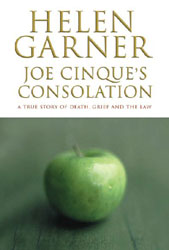
Book Review: Joe Cinque’s Consolation

Joe Cinque’s Consolation
Helen Garner, 2004, Pan Macmillan, Australia
June 2009

http://www.bookdepository.com/?a_aid=SometimesMelbourne
“I can’t promise to write the book you want, Mrs Cinque’, I said. ‘I’d have to listen to both sides. I would never want to do anything that made you suffer more – but I can’t promise not to – because whatever anyone writes will hurt you.”
Helen Garner, Joe Cinque’s Consolation
On Sunday 26 October 1997, Joe Cinque died from an overdose of Rohypnol and heroin. He died in the bedroom of his inner-suburban Canberra townhouse, after a dinner party where his girlfriend, Anu Singh, had told her friends she was planning to kill herself. Singh was convicted of his manslaughter, and her friend, Madhavi Rao, was found not guilty of any charges relating to his death. When Helen Garner’s book Joe Cinque’s Consolation was released in 2004, Singh was on parole, Rao was living overseas under a new name and Cinque was still dead.

“Joe Cinque is dead” is the mantra guiding Garner and her reader through her book. After five years of research and deliberation, Garner wrote her story, describing the trials and the characters with a personal narrative that reflects on the case, the law, her involvement with the families and her ongoing dilemma about whether to write and what to write about.

Intertwined amongst the facts and the dramatisations are glimpses of Garner’s life, including her recent divorce, her new flat in Sydney, her demented mother, her taxi drivers and even the affront to her ego when Dr Singh (Anu’s father) dared to suggest that he could help pay for the publication of a book.

Garner positions herself as a “normal” person reflecting on the nature of the legal system, and it is this position that sets the tone of her book and directs the attention and sympathies of the reader.

What is the crime?

Writing an investigative, non-fiction or true crime book gives an author the freedom to approach a story differently from the factual reporting of a print journalist. Generally written after an event, true crime writers tend to have the enviable knowledge of hindsight, a full public record and the personal accounts of those involved.

With the “whodunit” question usually already answered, author’s try to answer a “why” - why they “dunit” or why the system failed. Garner was unable to answer why Singh killed Cinque or why no one stopped her, so she questioned the legal system and the nature of justice.

The assumption of innocence?

The Australian legal system is built on the assumption of innocence. Australian arrestees “have the right to remain silent”, with the burden of proof on the prosecution to establish guilt. Singh and Rao did not have to prove their innocence, so and neither spoke at their trials, denying reporters, spectators and Garner their voices or perspectives.

The cases were tried in the ACT, which allows the defense the choice of a jury or judge trial. Singh and Rao’s defense teams chose a judge over the emotional decision of a jury. As Justice Ken Crispin made his decisions based on the evidence presented, Garner questions the laws of evidence, such as why the prosecutor’s psychiatrists could not examine Singh, but her defense team had full access and therefore able to present more credible evidence. The answer remains that Australian courts assume innocence, but the emotions of a grieving family blur its clarity.

Garner’s “fantasy of journalistic even-handedness” gave way when the system supported the silence of the defendants and when Singh and Rao maintained their rightful silence by denying Garner’s interview requests. At this point, Garner describes her decision not to write the book and lets the reader believe that her decision was overturned by a meeting with Maria Cinque (Joe’s mother) and what, may have, started as a true crime reportage book, became a quest, as Garner told The 7.30 Report in 2004, to “restore some dignity to Joe Cinque”.

Getting to know Joe?

Joe Cinque’s Consolation is about Joe Cinque. He is described by his family and friends as a loving, devoted and loyal, and Garner never appears to seek any alternative opinions.

The same rose-coloured glasses are not applied to Garner’s portrait of Singh. Garner describes her first impressions of Joe and Anu from a photo in a newspaper.

“He held his chin up with a shy, almost defensive smile, while the girl in his embrace turned her head to beam into the camera with the ease of someone accustomed to being adored and to looking good in photos…Anu Singh raised my girl-hackles in a bristle. Joe Cinque provoked a blur of warmth… These were my instinctive responses, and over the ensuing years, as I hacked a path through this terrible storm they remained remarkable stable.”

This photo was printed in a newspaper and easily found on the internet, but is not reproduced in the book. With the exception of a small black and white picture of Joe, there are no photos in Garner’s book (which is unusual for true crime), which leaves the reader with little choice, but to accept Garner’s descriptions and interpretations.

Getting to know Anu?

Family and friends recount Joe, but there is no corresponding portrait by people who love Anu. She is described by her appearance on the security tape after her arrest and as a woman wearing high heels and adjusting her hair at her trial.

Garner’s descriptions of Singh and the dramatisations of the events leading to Cinque’s death leave a negative, almost stereotypical, picture of a cold, manipulative, irrational woman – a character designed to raise a reader’s “girl-hackles”.

Singh’s verdict and sentencing were based on a defense of diminished responsibility due to psychological illness, but Garner gently dismisses the medical evidence by joking with the “young journalists” covering the trial that eating disorders and paranoia are normal for 20-somethings. She reports the medical evidence, but never lets the reader get close enough to explore or understand it.

She distances and distracts the reader further by comparing her own adolescent choices (her manipulation of men and her decision to hide an abortion from her parents) to Singh’s behaviour. This cleverly leads the reader to compare their own life choices to Singh’s and search for a time when they behaved irrationally. Garner assumes that her readers cannot see themselves taking a life.

Hearing Anu?

On the release of the book in 2004, Anu Singh was also very aware that her voice is missing from the account and was interviewed, in her parent’s home, by Phillip Adams for ABC radio’s Late Night Live.
Adams shares with Singh that her character in the book is “terrifying” and that “Lady Macbeth comes off better”. Singh admits that she can see herself in Garner’s “unfortunate”, description, but it’s “very exaggerated … because she hasn’t spoken to me and she decided on what I was like by a photo”.

Singh insists that she would have been happy to talk to Garner, but that her request (documented in the book) came at a time when she was physically and mentally unable, and wishes that Garner had asked her again.

Singh’s real voice in the radio interview is quite different from her dramatised voice in the book. Her Australian accent doesn’t place her as Indian (a fact regularly discussed by Garner) and she speaks with a rationality and calmness denied her semi-fictional self. Adams’s interview continues to seek the same answer denied to Garner and he asks Singh why she killed Joe Cinque. Singh answers:

“There’s absolutely no legitimate or rational motivation at all. And the few days prior to that, my memories of it, is still a little bit hazy and the details are sketchy. But, I can’t. It’s terrible being in a state of mental health wellbeing, and trying to put myself back there, and determine what was going on and what I was thinking.”

Singh gives the same answer put forward by her defense seven years earlier.

Would Maria kill Anu?

Adams also interviewed Joe’s parents, Maria and Nino Cinque. After watching them at the trials and sitting in their Newcastle home with Garner, the Cinques’s voices are recognized like old friends. They tell Adams that they are “very happy” with Garner’s book and the story they share with Adams is almost exactly that which Garner reports.

They are naturally still in pain, they still want justice and do not believe that Singh was “sick”. Singh told Adams that she was interested in pursuing a program of restorative justice and he brought a message to the Cinques:

Phillip Adams: Well as I said, I bring you a message from Anu, who extends to you her profound regrets and wants to in fact involve you, if it were possible, in a restorative justice program, and your answer is No?

Maria Cinque: No way, no. She can rot in hell, forever. She said she was going to kill herself, what she is waiting for?I
In Garner’s book, Garner records Maria Cinque’s declarations that she would run over Anu Singh if she saw her on the street and wishes Singh would follow through with her talk of suicide.

Much of the book questions the inaction of Singh and Cinque’s friends as Singh talked about Joe’s death. The case attracted so much attention because “farewell” dinners held at Singh and Cinque’s house. She had often talked of suicide and even discussed taking Joe with her, but none of the friends in contact with Singh over that week did anything to stop her, even when it was known that she had injected her partner with heroin.

Rao was the only friend charged, while others were called as witnesses. Again, Garner dismisses the process of the law that deemed these friends and acquaintances free from responsibility or legal guilt. She dramatised conversations and events leading up to the death, based on the evidence presented in the courts, rather than reporting the facts third hand, bringing the reader as close as possible to the situation where these young people appear incapable of doing the right thing.

The friend characters are young, intelligent law students, studying at Australia’s national university, and some involved are practicing professionals today. Garner is appalled by the “gross fact” that women trade sex for drugs and draws attention the homeless, “junkies” wandering Canberra’s Garema place. Her description of drug users is hopeless, mindless and wasted people, and she does not appear to believe that a heroin user can be a middle class, active member of our society – let alone an intelligent student.

Drugs were a part of Singh’s university and social culture. No one involved seemed shocked or concerned about Singh’s drug use or her talk of suicide, as it wasn’t considered unusual. Singh herself said she was surprised at how many people talked about suicide with her.

Viewed from a point after the death of Cinque, it is easy to see when and how people could have stepped in and possibly prevented his death, but according to the evidence, no one believed that Singh was ever going to act, seeing her erratic behaviour as a result of her eating disorder and her drug use.

Clearly Garner believes that Maria Cinque had no real intention of running over Anu Singh, as this conversation is reported as a poignant reminder of the mother’s grief. Garner doesn’t stop Maria Cinque from driving a car, as no one stopped Anu Singh.

Conclusion

Despite the legally conclusive results of Anu Singh and Madhavi Rao’s trials, Helen Garner does not know why Joe Cinque died and wants her readers to question the justice received by his family.

Singh’s right to remain silent and her decision to remain silent leave little room for Garner to present an opinion that could see her positively or even with empathy or understanding, and Rao is discussed as someone totally in Singh’s control. Even without their active participation, there was evidence and opinion that could have led Garner to different conclusions, but it is doubtful that alternative conclusions would have pleased the Cinques.

The writer’s journey through Joe Cinque’s Consolation vividly describes the Cinques’s grief and the senseless nature of Joe’s death, and she joins his family in their anger towards the legal system and their belief that justice has not been served. Her personal reflections and observations bring the reader intimately into her personal experience and ensure that the appealing and loving Joe Cinque will not be forgotten by anyone who reads the book.


Review of Criminology, a play based on the same case.